


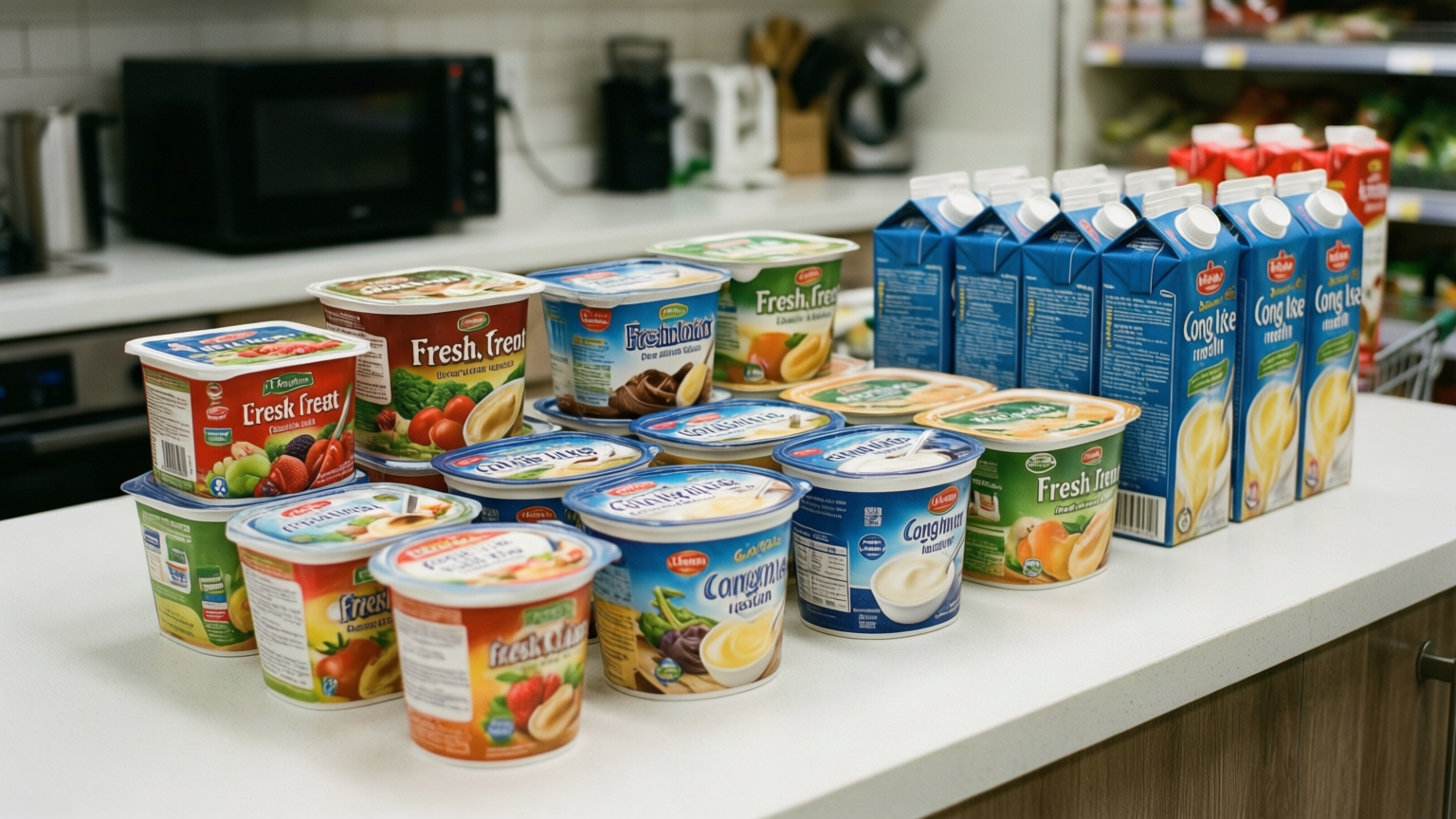
A recent taste test of 10 ready-made supermarket custards has highlighted a clear divide between fresh chilled products and long-life alternatives. The Guardian’s Filter team analyzed each option for aroma, texture, and taste, awarding points for the use of free-range eggs and minimal processing while deducting marks for palm oil, modified maize starches, and artificial colorings.
Fresh Custard Outperforms Long-Life Options
The primary conclusion from the tasting is that fresh custard, typically found in the chiller section, provides a superior experience. These products mimic a proper crème anglaise, made with hot vanilla-infused cream, milk, egg yolks, and sugar. In contrast, canned and long-life cartons, while convenient for quick desserts, often lack the depth and authentic texture of their fresh counterparts.
Several fresh pots stood out for their quality. One medium-thick, pale cream-colored custard made with West Country milk and cream was described as “outrageously good.” It features a seductive sweetness with 11.9% total sugar and is thickened using tapioca starch and free-range eggs. Another strong contender, made with Jersey and Guernsey cows’ milk and British cream, was noted for its super-sweet profile (12.1% sugar) and use of tapioca starch, cornflour, and free-range eggs.
Other fresh options also received high marks. A very thick, pale cream-colored custard speckled with vanilla seeds was praised for being not too sweet (8.4%) and thickened with tapioca starch, cornflour, and indoor-reared eggs. Another addictive, very creamy pale custard was highlighted for its clean dairy and egg flavor, thin saucy consistency, and minimally processed ingredients, despite being quite sweet at 11%.
Long-Life Cartons and Cans Fall Short
The long-life cartons and cans generally received lower scores due to their reliance on additives to replace the color, fat, and thickening ability of eggs. One very thick, pale yellow custard was described as velvety-smooth but gloopy and lacking in substance. It is egg-free, using buttermilk and vanilla extract, and is thickened with “sustainable” palm oil and modified starches. It also contains colors such as plain caramel and carotene, with a sweetness level of 11.1%.
Another thick, pale custard with speckled vanilla was found to be beautifully sweet (10.3%) but had a slimy texture due to the use of maize starch, tapioca starch, and carob gum stabilizer. While it contains eggs, no welfare data was specified for the source.
Several egg-free imitation custards performed poorly. One thick, bright yellow product was deemed an “OK imitation” rather than true custard. It is thickened with modified maize starch, buttermilk, and whey powders, and contains palm oil and flavoring. Despite being insanely cheap, it lacks the authentic dairy and egg profile.
Another thin, canary-yellow custard smelled and tasted of raw cornflour. It is egg-free, made with modified maize starch, palm oil, and flavorings, and has a sweetness level of 10.4%. A final egg-free option, made with reconstituted skimmed milk and buttermilk, was described as smooth and thin but with a slightly powdery texture. It contains palm oil and carotene coloring, with a sweetness of 11%.
The test underscores the importance of checking labels for additives. Consumers seeking the real custard experience are advised to choose fresh products and look for those made with free-range eggs and minimal processing. For those needing a quick dessert, canned or carton options remain available, but they often sacrifice texture and flavor for convenience and shelf life.
Source: The Guardian
