


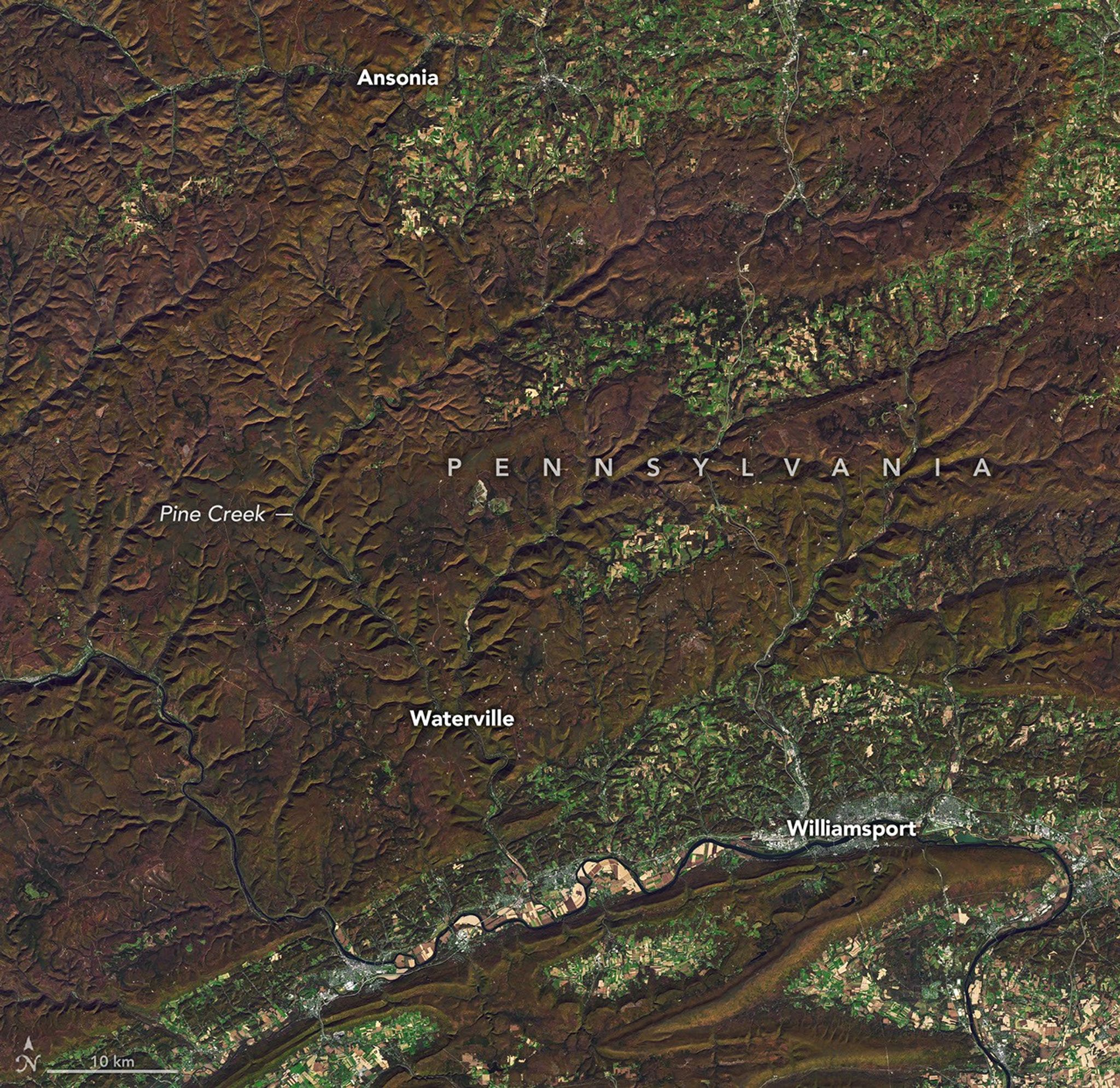
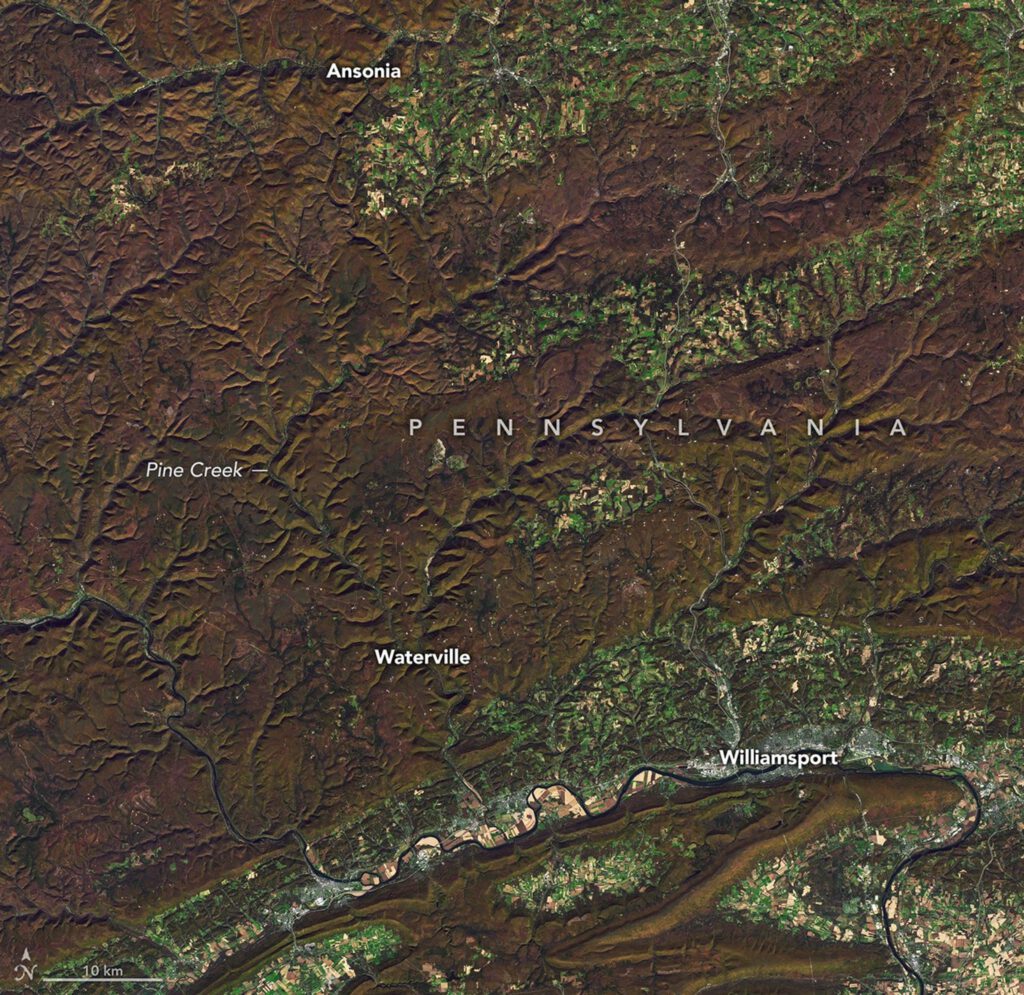
A deep, winding scar cuts through the forested hills of north-central Pennsylvania, offering a landscape that rivals the famous canyons of the American Southwest. Known as the Pennsylvania Grand Canyon, this geological feature is Pine Creek Gorge, a 45-mile stretch that plunges up to 1,500 feet into the Allegheny Plateau. The gorge runs from Ansonia south to its confluence with the West Branch Susquehanna River, with its deepest points located near Waterville.
Glacial Dams Reshaped the River
The dramatic topography of the gorge was not created by the river alone. According to NASA Earth Observatory, glaciers played a decisive role in forming the canyon during the last ice age. Pine Creek originally flowed northward, but advancing ice from the northeast blocked the river’s path. This blockage created large lakes that eventually overflowed, forcing the water to reverse direction and flow south.

As the ice retreated, the river had already begun to cut into the new southward course. Deposits of sand and rock left by the melting glaciers prevented the water from returning to its original northern path. Continuous glacial meltwater rushed through the valley, deepening the channel and establishing the gorge’s current shape.
From Pennsylvania Desert to National Landmark
The lush forests that now blanket the gorge’s slopes tell a different story from the early 19th century. At that time, the area was heavily logged for its massive white pine and hemlock trees. These trees were critical for ship masts and leather tanning. Before the advent of railroads, loggers floated timber down Pine Creek to the Susquehanna River in massive drives.

Decades of intensive logging stripped the land bare. By the early 20th century, the deforested slopes were so barren that locals nicknamed the area the “Pennsylvania Desert.” The landscape has since recovered, with northern hardwood and mixed oak forests returning to the hillsides. The area was designated a National Natural Landmark in 1968, covering 30,000 acres.
Today, the gorge supports a diverse ecosystem including black bears, coyotes, bobcats, and timber rattlesnakes. Visitors can access the natural splendor through multiple state parks and the Pine Creek Rail Trail. The recent return of the forest has restored the visual appeal that draws leaf-peepers each autumn, when the deciduous trees turn the slopes red and gold.
Source: NASA
