


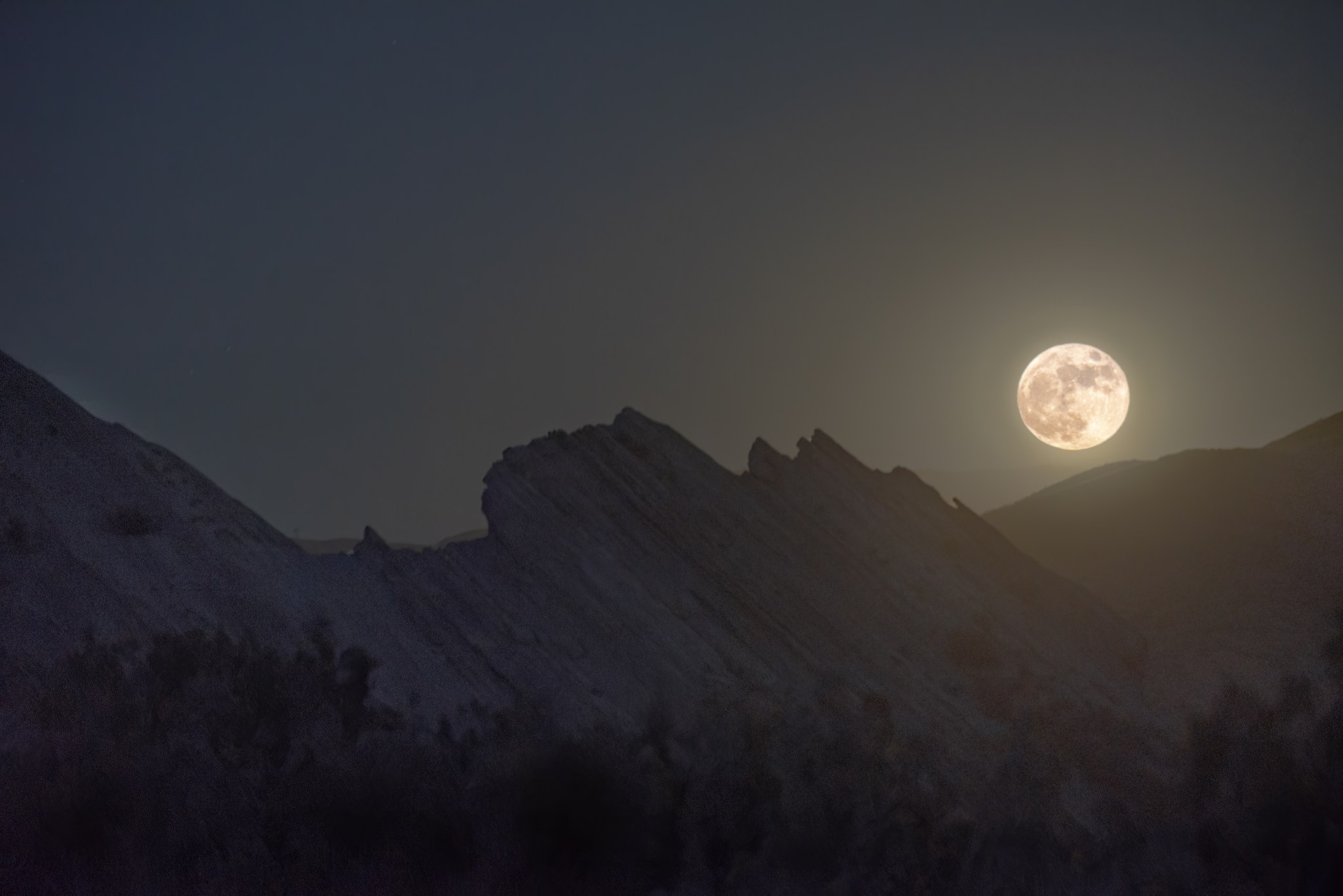
Taurid and Leonid Meteor Showers
November presents a series of opportunities to observe meteors streaking across the night sky, according to NASA. The month begins with the Southern Taurid shower, which peaks around November 5. This is followed by the Northern Taurid shower, peaking approximately a week later on November 12. The names of these events refer to the constellation Taurus, where the meteors appear to radiate from.
Under ideal conditions, each Taurid shower produces roughly five meteors per hour. While the rate is modest, observers may occasionally see a bright fireball, which can make the wait worthwhile. To improve the viewing experience, NASA recommends finding a dark location away from city lights and allowing eyes about 30 minutes to adjust to the darkness. Viewers are advised to look at as much of the sky as possible.
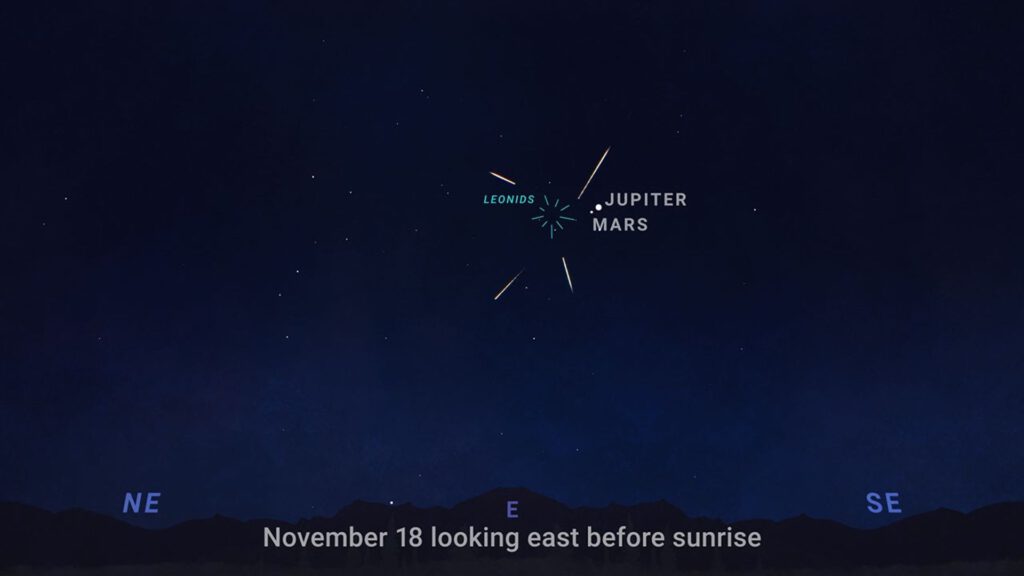
Later in the month, the Leonid meteor shower offers a slightly higher potential rate. The best viewing times are in the early morning hours of November 17 and 18, after the Moon has set. Under ideal conditions, the shower could produce around 15 meteors per hour, though most viewers will likely see fewer. As with the Taurids, a dark sky and patient observation are key.
Planetary Pairing and Voyager 1 Milestone
Mid-month offers a chance to see two planets appear close together in the sky. On the mornings of November 15 and 16, observers can look southeast before sunrise to spot Mars and Jupiter. The two planets will appear about 1.2 degrees apart, which is slightly more than the width of two full Moons side by side. Jupiter will be the brighter point of light, with reddish Mars nearby.
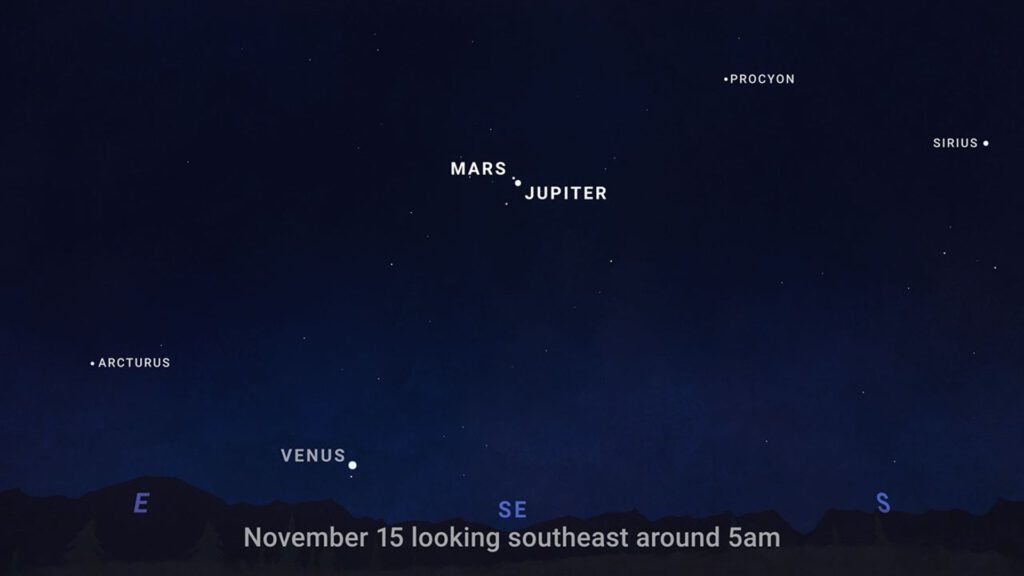
Both planets are visible to the unaided eye. Although they are far apart in space, they appear almost side by side from Earth. Observers can watch over several mornings to see the planets draw closer together before moving apart again.
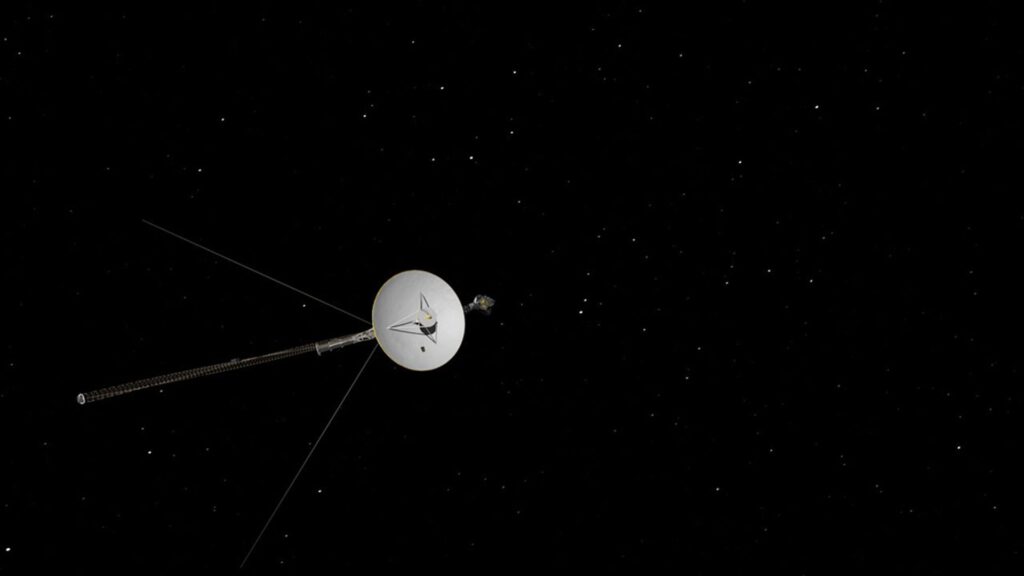
Meanwhile, NASA’s Voyager 1 spacecraft is approaching a historic milestone. The probe will become the first human-made object to travel one light-day from Earth. This distance means that a signal traveling at the speed of light takes 24 hours to reach the spacecraft and another 24 hours for a response to return. Voyager 1 is currently traveling in the direction of the constellation Ophiuchus, also known as the Serpent Bearer.
To mark this achievement, NASA is hosting a Shine Bright for Voyager’s Light-Day activation on November 17. More information is available at nasa.gov/voyager.
November Supermoon Series
The month concludes with a supermoon on November 24. A supermoon occurs when the full Moon is at its closest point to Earth in its slightly oval orbit, making it appear larger and brighter than average. The difference in size can be subtle to the naked eye.
This event kicks off a series of three consecutive supermoons occurring in November, December, and January. To view the November supermoon, look east around sunset as it rises. The Moon may appear larger near the horizon due to the Moon illusion, a common effect with any full Moon.

Raquel Villanueva from NASA’s Jet Propulsion Laboratory presented these skywatching tips as part of the What’s Up series. The Night Sky Network, a coalition of amateur astronomy clubs, helps bring the science of NASA’s missions to the public.
Source: NASA
