


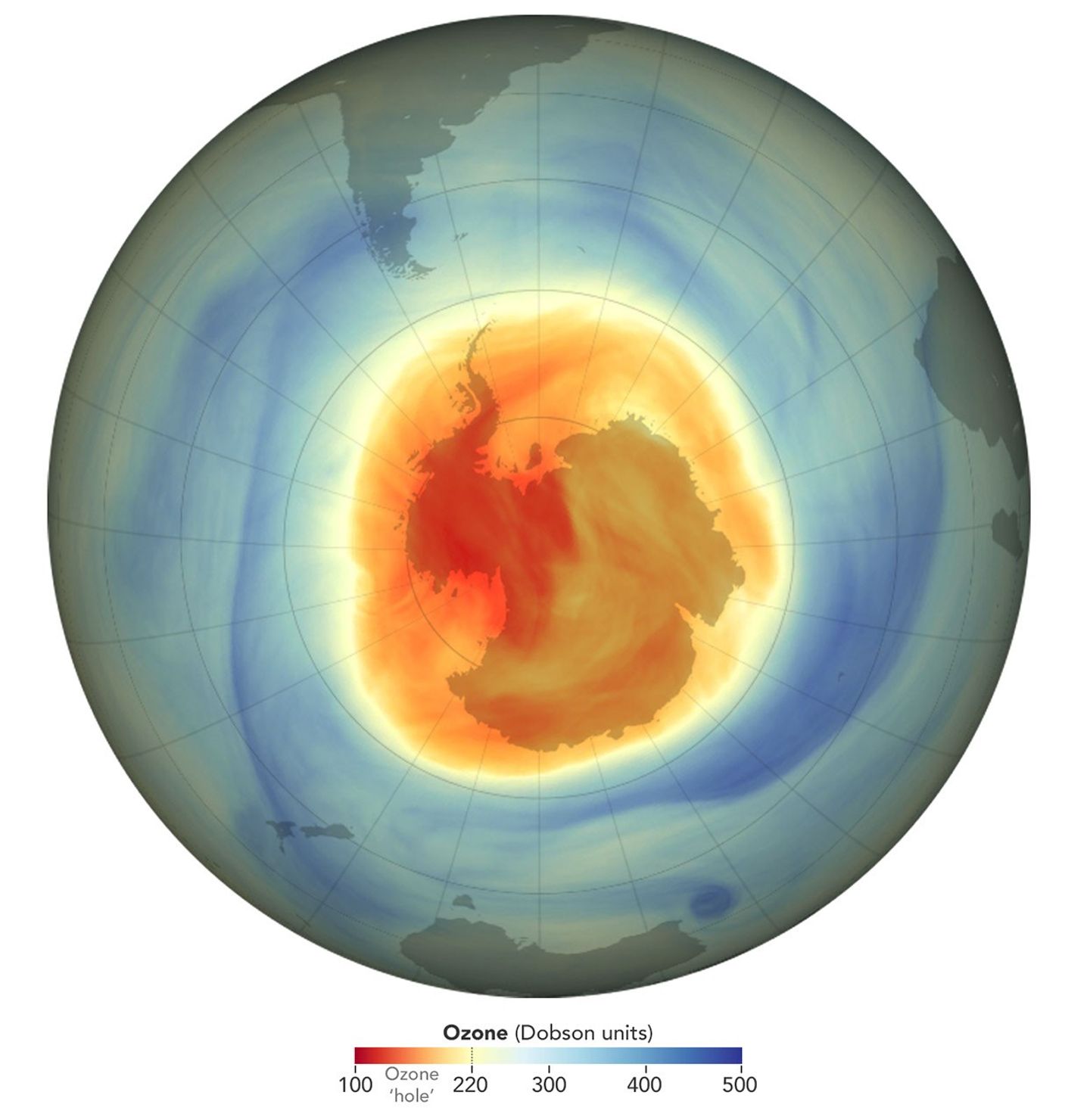
NASA satellite data confirms that the Antarctic ozone hole reached its maximum area on September 18, 2026. The event ranks as the seventh largest in 48 years of continuous monitoring, according to the National Aeronautics and Space Administration.
While the spatial extent of the depletion was significant, the hole was not as deep as other major events recorded in the historical data. The measurement relies on a threshold of 220 Dobson Units (DU), a standard established to identify areas where ozone concentrations drop low enough to be classified as a hole.
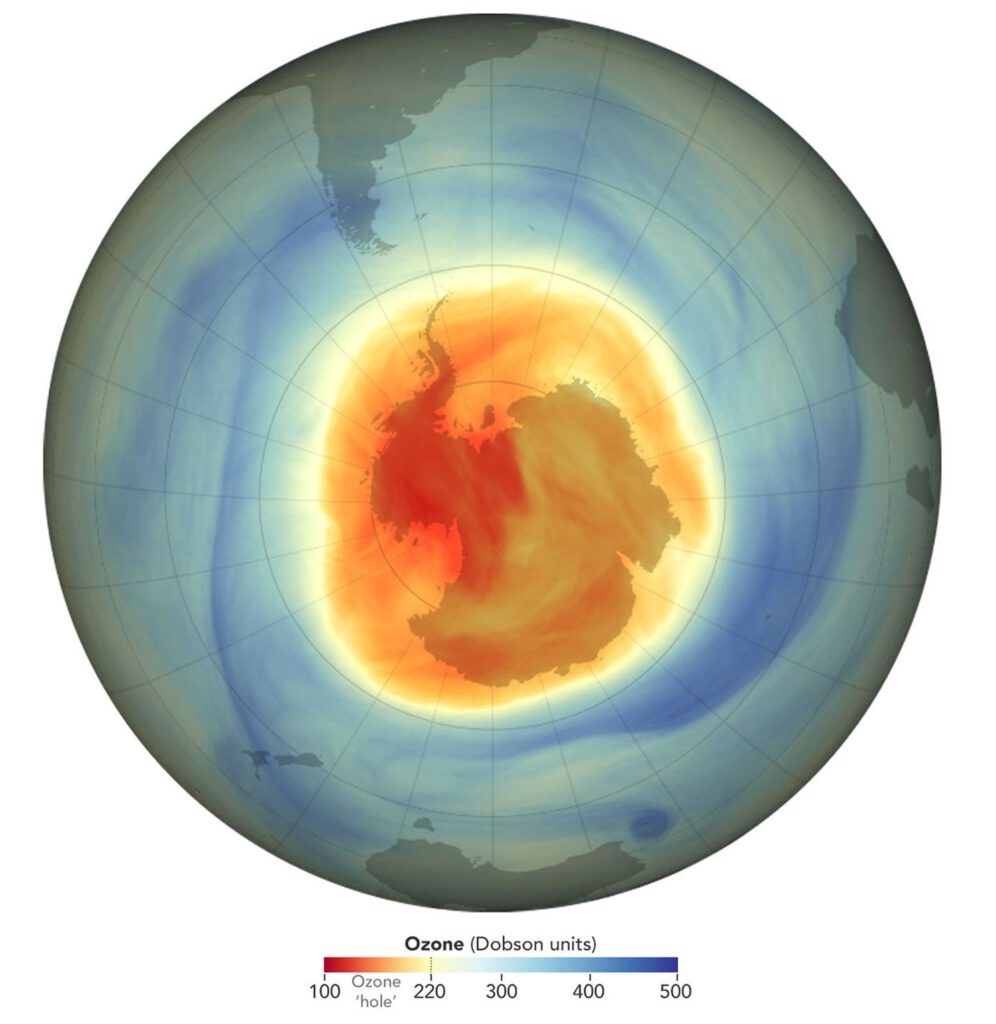
2026 Ozone Hole Size and Depth
The size of the ozone hole fluctuates annually based on stratospheric temperature and circulation patterns. In 2026, an unusually strong Antarctic polar vortex created ideal conditions for ozone depletion over a large area. This meteorological setup allowed the hole to expand significantly during the peak depletion season, which runs from September 7 to October 13.
Despite the large area, the concentration of ozone within the core did not fall as low as it did in some previous years. The deepest ozone hole on record occurred in 1994, when concentrations dropped to 73 DU. In contrast, the 2026 event, while extensive, maintained higher ozone levels in its center compared to those extreme historical lows.
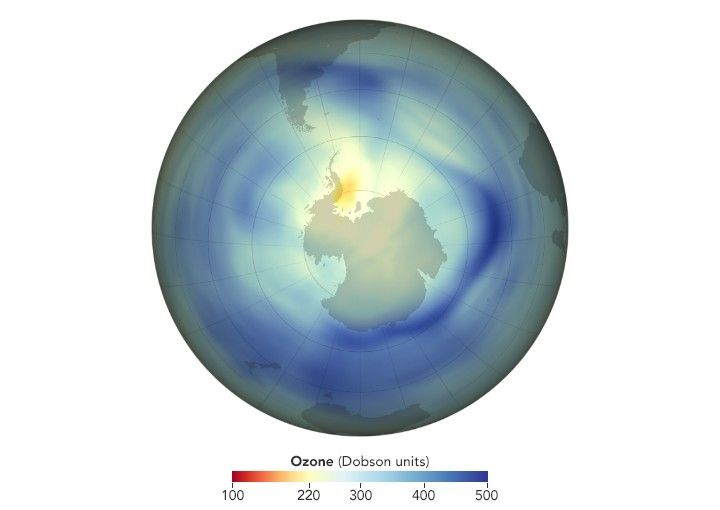
Scientists use the term “hole” as a metaphor for the region where ozone levels are critically low. No area is completely empty of ozone. The data visualizations from NASA Earth Observatory show the state of the atmosphere on the day of maximum depth for each year from 1979 through 2026.
Historical Context and Recovery Trends
The monitoring of the Antarctic ozone layer began in 1979. For the first few years, the maximum depth of the hole remained in the 190s DU. However, the situation deteriorated rapidly in the early 1980s. By 1985, concentrations had fallen to 124 DU, and by 1991, they dropped below 100 DU for the first time.
The discovery of this thinning was a pivotal moment in environmental science. British Antarctic Survey scientists first reported the dramatic thinning in 1985 using ground-based measurements. NASA satellites later revealed the continental scale of the phenomenon, confirming that human activity was driving the depletion.
The primary driver of this depletion is chlorofluorocarbons (CFCs). These long-lived chemicals, used in refrigeration and aerosols since the 1930s, circulate in the lower atmosphere for decades. When they reach the stratosphere, ultraviolet light breaks them apart, releasing chlorine. This chlorine catalyzes the destruction of ozone molecules.
The global response to this threat was the 1987 Montreal Protocol. This treaty phased out the production and consumption of ozone-depleting substances. Scientists estimate that approximately 80 percent of the chlorine currently in the stratosphere originates from human sources rather than natural ones.
Recovery is a slow process. Models suggest that chlorine concentrations will not return to pre-1980 levels until later in the 21st century. In 2018, scientists reported the first direct satellite evidence of recovery, noting a 20 percent decrease in ozone depletion between 2005 and 2016. The Antarctic ozone layer is projected to return to 1980 levels in the 2070s.
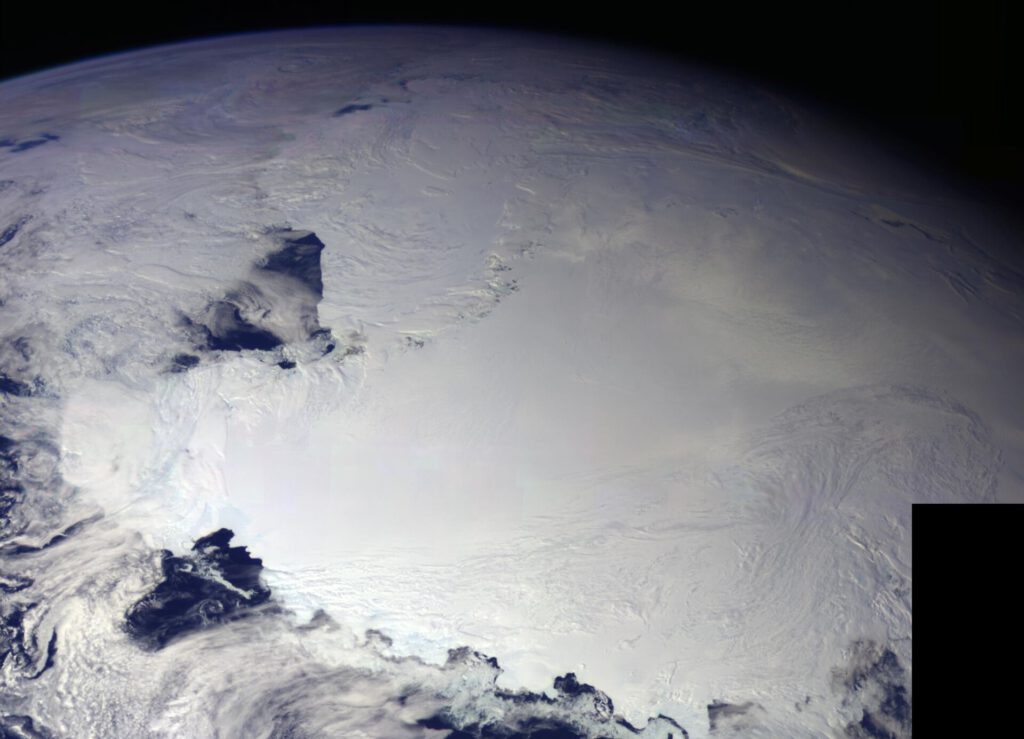
The 2026 data continues to show the impact of weather variability on ozone levels. In 2019, abnormal weather patterns limited depletion, resulting in the smallest hole since 1982. The 2026 maximum demonstrates that while the long-term trend is toward recovery, annual conditions can still produce large holes.
Source: NASA
