


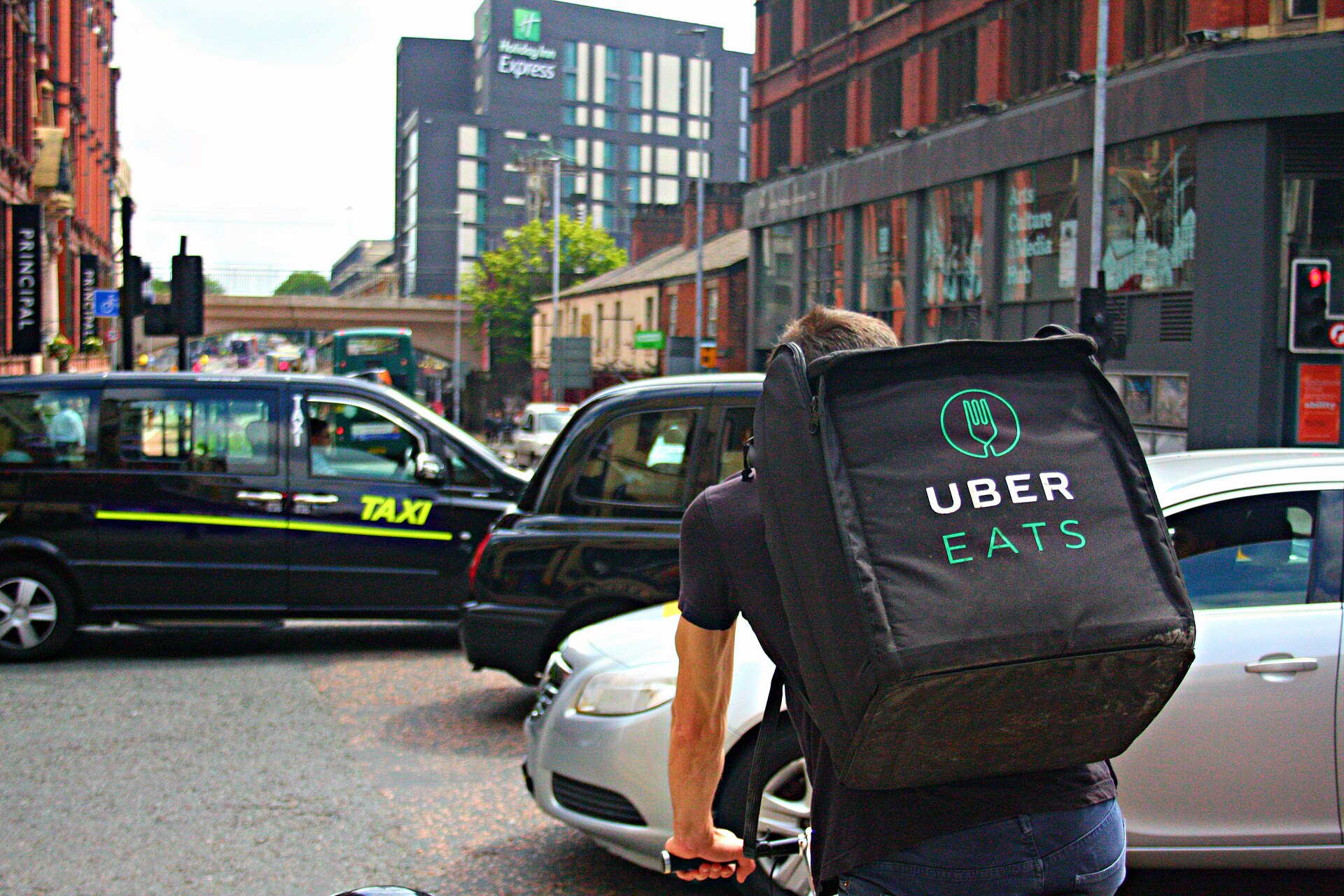
Amazon has launched a new partnership with Uber Eats that allows Prime members to receive free restaurant delivery on orders exceeding $25. The announcement has caused a significant drop in DoorDash shares, according to reports from The Wall Street Journal (WSJ). The market reaction suggests investors are concerned about the competitive pressure this alliance places on the leading food delivery platform.
Market Reaction to Amazon Uber Eats Deal
The WSJ reported on Sunday, November 8, that the sell-off in DoorDash stock was “overdone.” The newspaper argued that the new collaboration with Uber Eats simply replaces an earlier partnership with Grubhub. That previous arrangement did not result in a boost to DoorDash’s share price, suggesting the current market panic may be excessive. The new service is available in nearly 10,000 U.S. cities and towns, covering major metro areas like Atlanta, Boston, and Los Angeles, as well as rural and suburban locations.
Andrew Macdonald, president and chief operating officer of Uber, stated that the company built the experience to make restaurant delivery feel natural and affordable for Prime members. He emphasized the goal of connecting Uber’s restaurant community with new Prime fans. The integration aims to streamline the ordering process for users who already utilize Amazon’s ecosystem for other purchases.
Grocery Delivery and Instacart Acquisition
Beyond restaurant meals, the partnership highlights the broader battle for the grocery delivery market. DoorDash recently announced a $17 billion acquisition of Instacart, a move designed to help it compete with Amazon and Walmart in this sector. Emarketer data indicates that eCommerce will account for 15.5% of grocery sales this year, a segment described as relatively untapped by major players.
DoorDash CEO Tony Xu noted during a recent earnings call that grocery delivery represents only a fraction of its potential. He pointed out that shoppers are currently paying a premium for imperfect service. To address this, DoorDash plans to invest substantial sums in direct inventory management, including warehousing and autonomous delivery technology. The company aims to create a more efficient supply chain that can rival established retailers.
The financial scale of this challenge remains unclear. DoorDash’s capital expenditures for last year were roughly 4% of Walmart’s U.S. supply chain, customer-facing initiatives, and technology investments. This disparity highlights the massive resources Walmart and Amazon deploy to maintain their dominance in the grocery sector.
Walmart currently controls approximately 21% of U.S. food and beverage spending, while Amazon holds around 3%. Food and beverage account for roughly 60% of Walmart’s retail business. Research from PYMNTS Intelligence shows that Walmart’s advantage has expanded since 2019, even as Amazon has nearly doubled its overall retail share. The frequency of grocery shopping provides Walmart with a recurring customer base that drives long-term value.
DoorDash must now determine if its Instacart acquisition and planned infrastructure investments can effectively challenge the entrenched positions of Amazon and Walmart in the grocery delivery space.
Source: PYMNTS
