


European officials will attend U.S.-mediated peace talks between Russia and Ukraine in the United Arab Emirates this week, marking a significant shift from the Kremlin’s earlier insistence that European powers had no role in the meeting. France’s foreign minister, Jean-Noël Barrot, confirmed on Sunday that Paris would be present to ensure Europe’s voice is heard, though he did not specify whether French or other European delegates would participate directly in negotiations or simply observe.
The meetings, scheduled for Tuesday and Wednesday in Abu Dhabi, were initially presented as a trilateral session involving Washington, Moscow, and Kyiv. Kremlin spokesman Dmitry Peskov had previously ruled out a European role, stating that the three-way format had already been agreed upon. On Friday, he accused European governments of failing to decide who speaks for them, while acknowledging that security talks would eventually require Europe’s involvement.
Trump’s Broader Vision and Yalta Comparison
The inclusion of European powers comes days after President Trump met with Kremlin envoy Kirill Dmitriev on Thursday. During that meeting, Trump stated that a coming agreement was “going to involve more than Ukraine,” adding that he could say it “might involve all of Europe.” This comment suggests a broader geopolitical framework for any potential settlement, extending beyond the immediate conflict to encompass wider European security arrangements.
Ukrainian President Volodymyr Zelenskyy responded to Trump’s comments in a CNN interview on Friday, noting that he had not been given details of the agreement Trump referenced. Zelenskyy warned that the situation was “not simple” and “can be dangerous,” invoking the 1945 Yalta conference where Allied leaders settled Europe’s division without the involvement of several affected countries. His reference highlighted concerns among Kyiv and its allies about being sidelined in decisions that directly impact their sovereignty.
Witkoff’s Visit and Russian Delegation
This will be the fourth round of talks between the two warring nations brokered by the Trump administration, and the first since those in Geneva this February. Earlier U.S.-brokered meetings have made little progress, and the chances of a breakthrough have been reduced as the Trump administration focused on its war with Iran. Moscow confirmed it would return to the negotiating table only following a visit by U.S. envoy Steve Witkoff to meet Russian President Vladimir Putin in St. Petersburg in October.
Those talks saw Putin announce the release of an American prisoner from a Russian jail, an apparent Kremlin gesture to President Trump’s earlier lifting of sanctions on Russian diesel exports. Ukraine was vehemently opposed to the fuel sales, arguing they helped replenish Moscow’s war chest. Witkoff has said the agenda for these latest talks will include postwar security arrangements, de-escalation of the conflict, and humanitarian issues, shortly after Melania Trump helped broker a limited ceasefire that allowed humanitarian aid to enter a town inside Russian-occupied Ukraine.
Russia’s delegation will again be led by Vladimir Medinsky, a hardline Putin aide who has participated in most talks with Ukraine since the unsuccessful first set of discussions all the way back in March 2022. For the first time, these talks will also include Deputy Foreign Ministers Sergei Ryabkov and Mikhail Galuzin, as well as Yury Zhigarlovsky, a deputy head of the General Staff’s operations directorate, alongside military intelligence chief Igor Kostyukov. This more senior lineup could indicate that Moscow is readier than before to address thorny political and military questions, though the U.S. think tank Institute for the Study of War suggested some of those same Russian officials have in fact previously sought to slow down previous talks or push harder on Moscow’s demands.
Ongoing Conflict and Political Timing
The gaps between the two countries remain substantial. Russia has demanded that Ukraine give up large parts of its territory and renounce NATO membership. Zelenskyy has repeatedly insisted any security commitments should be clearly spelled out, including who would act, and how, if Russia attacked again. Some analysts expect little. In an op-ed for the Atlantic Council think tank, the former U.S. ambassador to Ukraine John Herbst argued that Putin had rejected every U.S. proposal Kyiv accepted and preferred participating in peace talks than pursuing actual peace. “Perhaps the only outcome of the talks,” he wrote, “will be to agree to another round.”
The meetings in the United Arab Emirates also follow Democrats’ midterm victories, which Zelenskyy said could improve Ukraine’s chances of more U.S. aid. Russia, too, may be looking to push for the Trump administration’s outlines of a Ukraine deal before a Democratic-controlled Congress arrives come January. Also hovering over the talks is the prospect of Trump, Xi, and Putin gathering for a trilateral meeting at the Asia-Pacific Economic Cooperation summit in Shenzhen, China later this month. While details remain murky, all sides have confirmed discussions are underway.
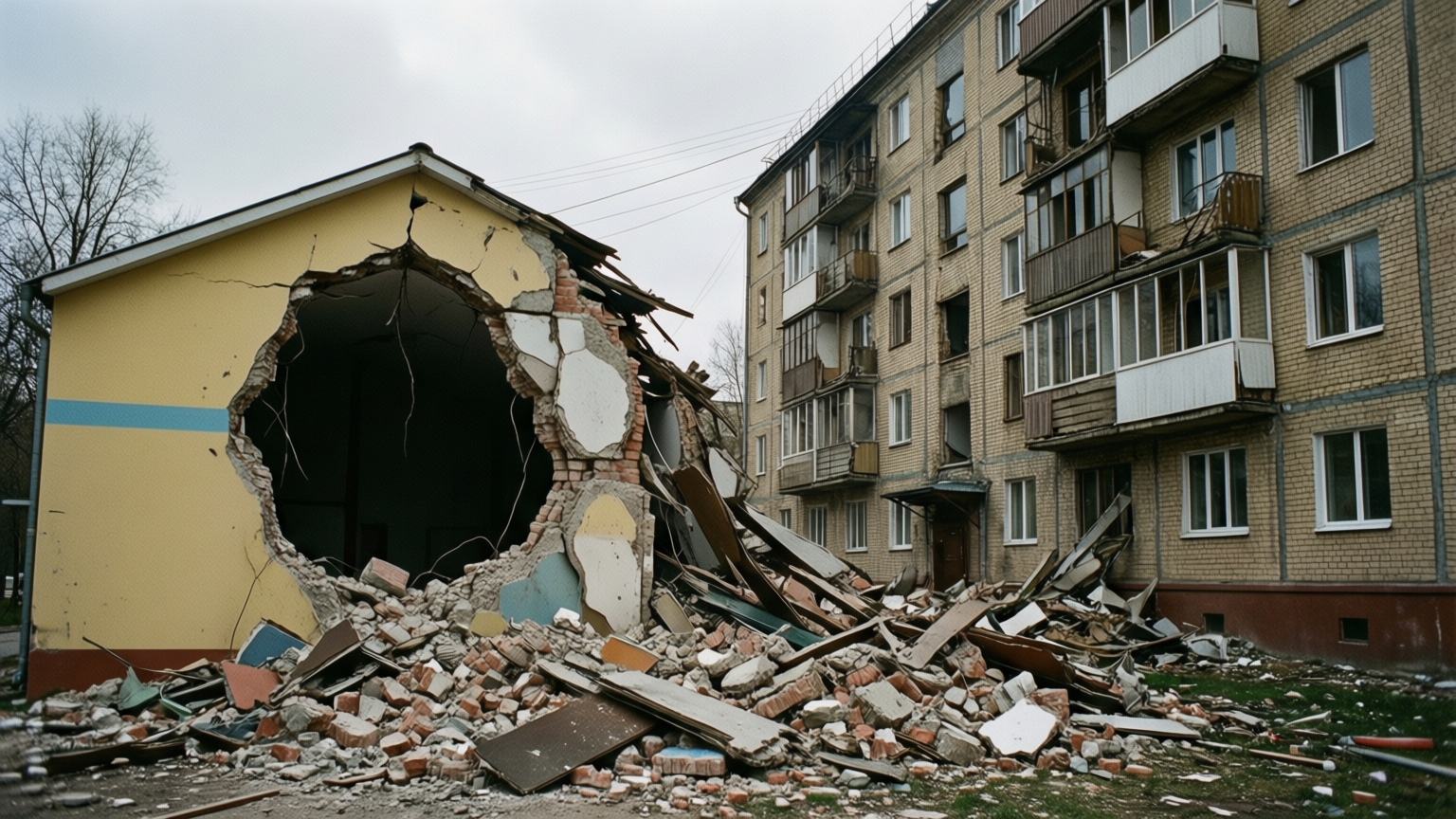
As officials travel to Abu Dhabi to talk peace, the war has raged on regardless. Zelenskyy said Russia fired 36 ballistic missiles at the Kyiv area overnight Saturday, with only four intercepted, accusing Moscow of treating diplomacy “as a form of aggression.” In southern Ukraine, the death toll from a guided-bomb strike Monday on an aid distribution site in Komyshuvakha rose to at least 55.
Source: NPR
