


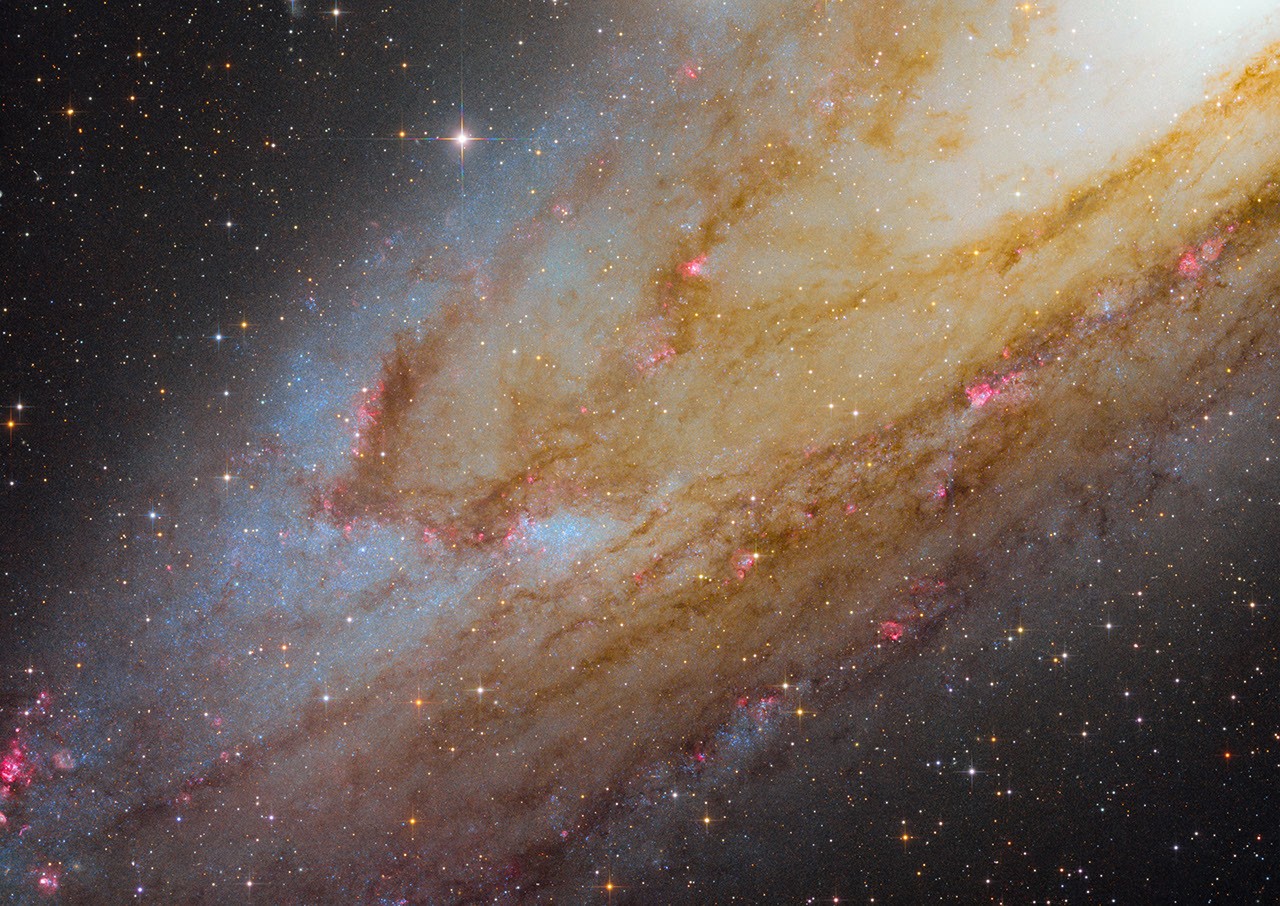
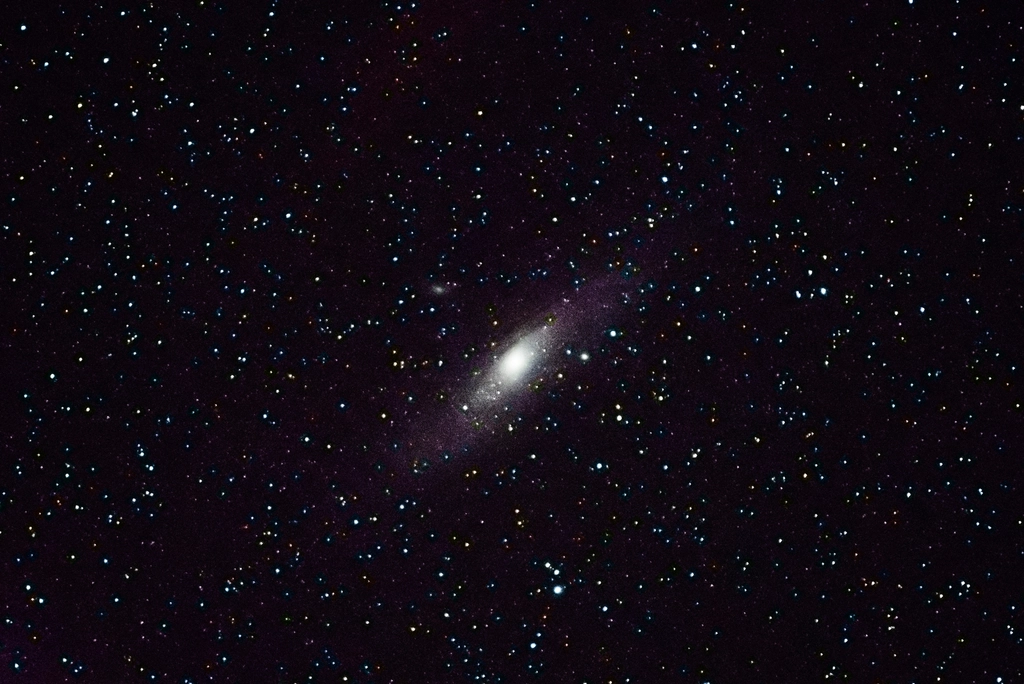
NASA has featured a detailed image of the Andromeda galaxy for its daily Astronomy Picture of the Day, focusing on a prominent stellar association known as NGC 206. The image captures the bright, blue stars that define this cluster, offering a clear view of the galaxy’s southwestern disk.
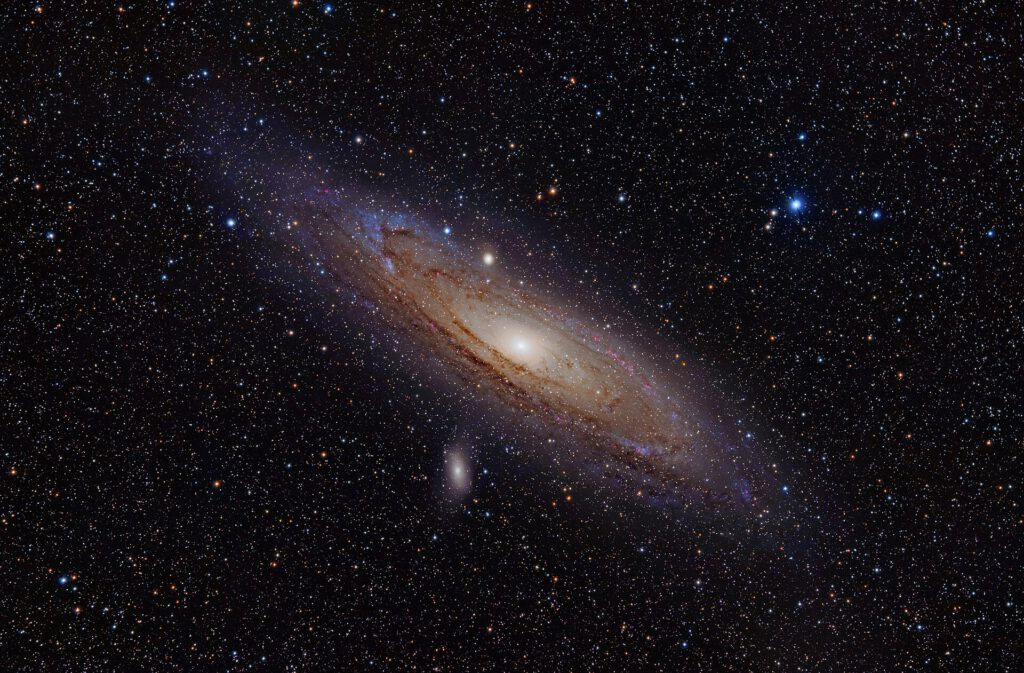
NGC 206 and the Andromeda Galaxy
The spiral galaxy, also cataloged as M31, sits approximately 2.5 million light-years from Earth. It is our nearest major galactic neighbor. The featured image provides a sharp, close-up look at the southwestern extent of the galaxy’s disk. Nestled within the dusty arms of Andromeda, NGC 206 stands out due to its intense brightness and youthful composition.
Astronomers note that the blue hue of the stars in this association indicates their relative youth. The most massive stars within NGC 206 are less than 10 million years old. This is a very short lifespan in astronomical terms, suggesting recent and active star formation in this region. The cluster is part of a larger system that includes pinkish star-forming regions scattered throughout the galaxy’s arms.
Scale and Comparison
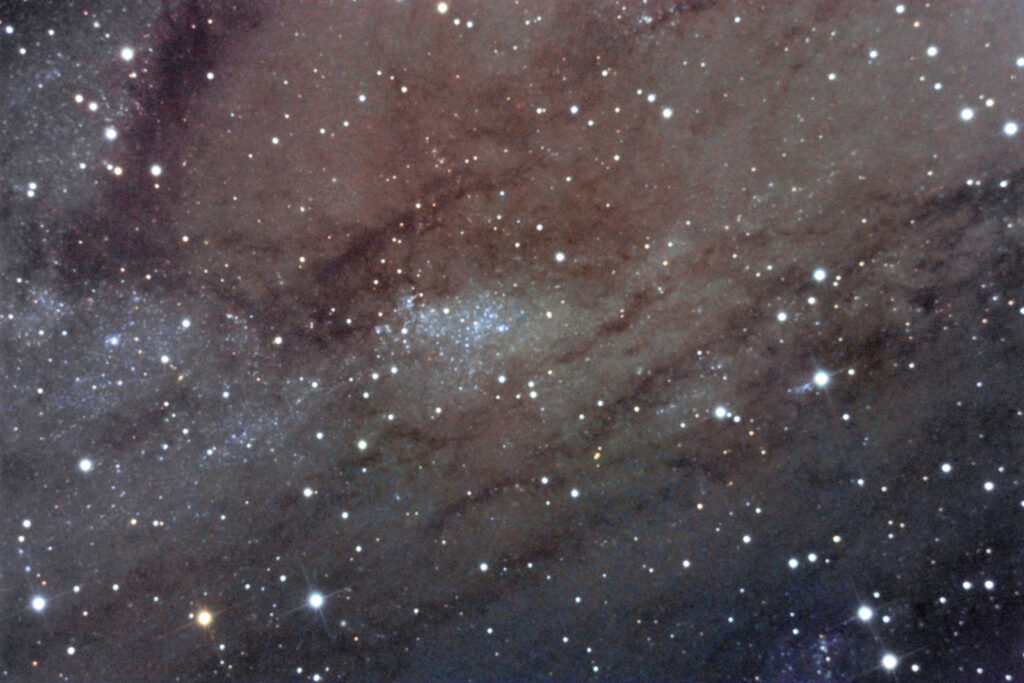
NGC 206 is significantly larger than typical open clusters found in the Milky Way. It spans roughly 4,000 light-years across. To put this size into perspective, it is comparable to other giant stellar nurseries in nearby galaxies. For instance, it matches the scale of NGC 604, a massive cluster in the Triangulum galaxy (M33), and the Tarantula Nebula located in the Large Magellanic Cloud.
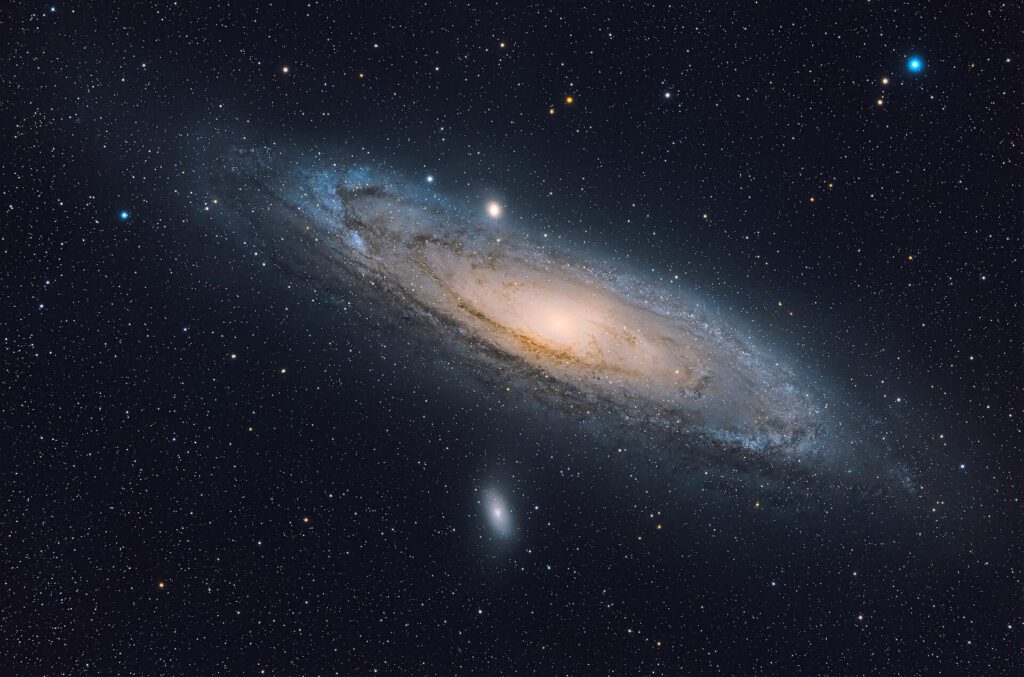
The sheer size of NGC 206 makes it a key subject for understanding how stars form in large groups outside our own galaxy. Its location at the center of the provided close-up allows astronomers to study the density and distribution of these young stars in detail. The image serves as a visual record of the dynamic processes shaping the Andromeda galaxy.
The daily feature continues to provide the public with high-quality astronomical imagery and expert explanations. Tomorrow’s selection will focus on a different aspect of space observation, described as pixels in space.
Source: NASA
