


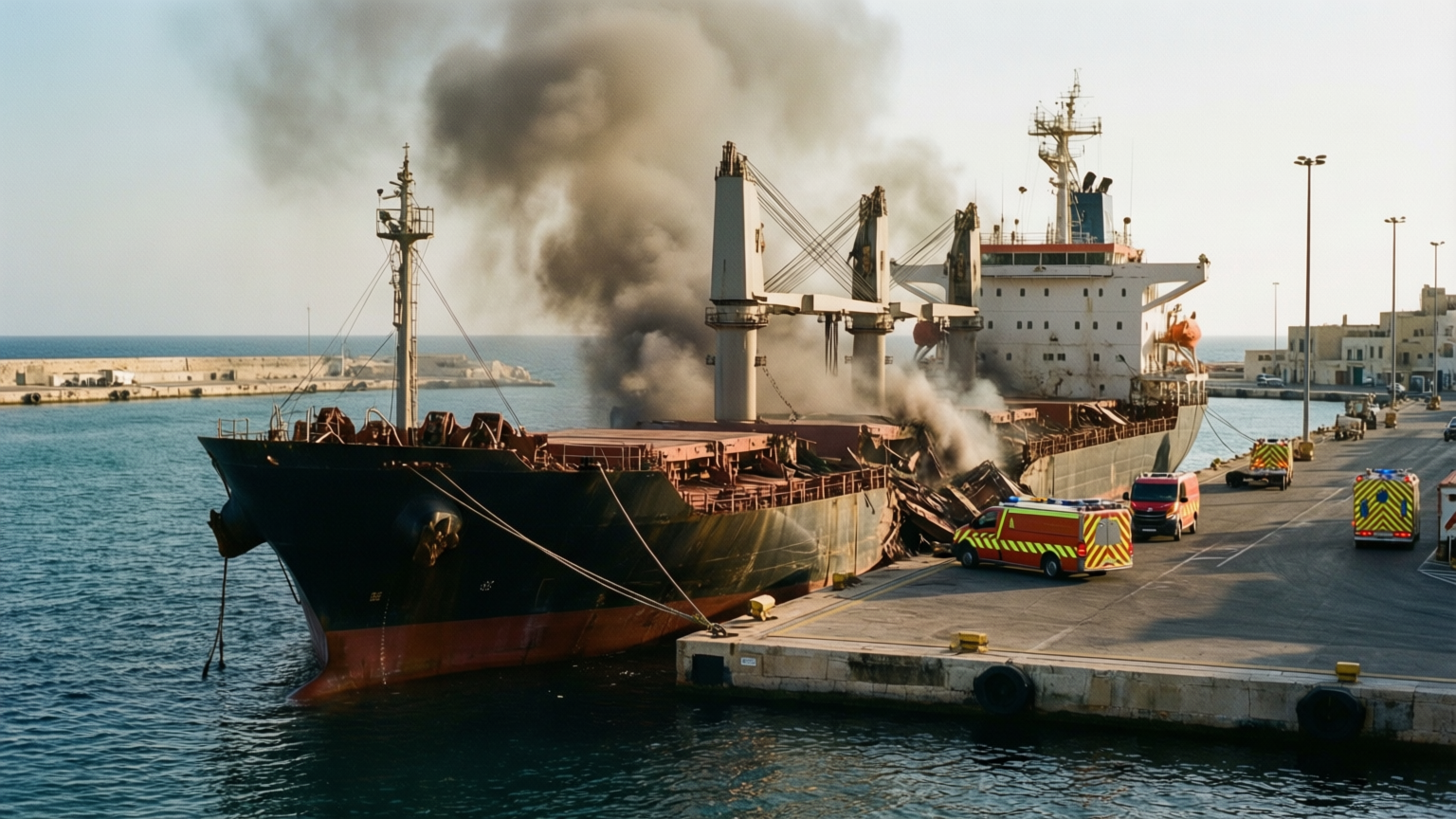
Moscow has issued a stern warning to Kyiv, stating that Ukraine will face painful consequences for its ongoing campaign targeting Russian naval and merchant shipping. The threat comes after Ukrainian forces conducted drone attacks on vessels in the Libyan port of Benghazi and in the Baltic Sea, marking a significant escalation in the conflict’s maritime dimension.
Kremlin Response to Benghazi Strikes
Kremlin spokesman Dmitry Peskov addressed the situation on Monday, confirming that Russia’s Ministry of Defence is handling the matter. The comments followed statements from Ukrainian President Volodymyr Zelenskyy, who claimed that Ukrainian forces sank the Russian corvette Merkury at a naval base in Benghazi on Sunday. Zelenskyy also reported striking a cargo ship that he said was used by Russia to transport weapons.
Peskov stated that the ministry would release further details if deemed appropriate. He emphasized that Russia would continue its large-scale strikes on Ukrainian military infrastructure in response. “Our military personnel continue to carry out large-scale, comprehensive strikes on military infrastructure in Ukraine on a daily basis. This practice has very painful consequences for the Kyiv regime,” Peskov told reporters.
The attacks in Libya have drawn diplomatic protests. Libya’s eastern-based government, which rivals the internationally recognized western government in Tripoli, lodged a complaint with the United Nations. The complaint asserted that the strikes violated Libyan sovereignty and called for an international investigation into reports that Ukrainian military personnel were present in western Libya.
Baltic Sea Tensions and Infrastructure Costs
Tensions have also risen in the Baltic region following a drone attack on Saturday that set the cargo ship Sparta II on fire in international waters. The vessel was bound for the Russian exclave of Kaliningrad. Finland’s military indicated that Ukraine likely carried out the attack. Peskov described this incident as a “very dangerous trend” that is escalating tensions in the region. He added that Moscow hopes the Baltic states will use their influence to pressure Kyiv to stop what he termed “terrorist practices”.
The incidents have highlighted Russia’s growing reliance on maritime transport to supply Kaliningrad, which is isolated from mainland Russia by Lithuania and Poland. Lithuania restricted the transit of goods to the exclave in 2022 in line with European Union sanctions. In response, Russian Prime Minister Mikhail Mishustin announced on Monday that Moscow would spend 47 billion roubles, approximately $576 million, on two rail ferries. These ferries are expected to begin operations between Ust-Luga and Baltiysk in 2030, with most costs covered by Russia’s rainy-day fund.
Nuclear Rhetoric and Shadow Fleet
Amid the military and diplomatic fallout, Russian Security Council Deputy Chairman Dmitry Medvedev renewed his nuclear rhetoric. In an article published on Monday, he wrote that Russia has the right and, in some circumstances, the obligation to use every means at its disposal to defend itself, potentially including nuclear weapons. However, he conceded that there has been no direct necessity to use nuclear weapons in the war in Ukraine so far.
The Ukrainian strikes are part of a broader effort to target assets linked to Moscow’s shadow fleet, a network of vessels used to help Russia evade Western sanctions. The attacks on the Merkury and the Sparta II demonstrate Kyiv’s increasing capability to disrupt Russian supply lines far from the front lines in Ukraine.
Source: Al Jazeera
