


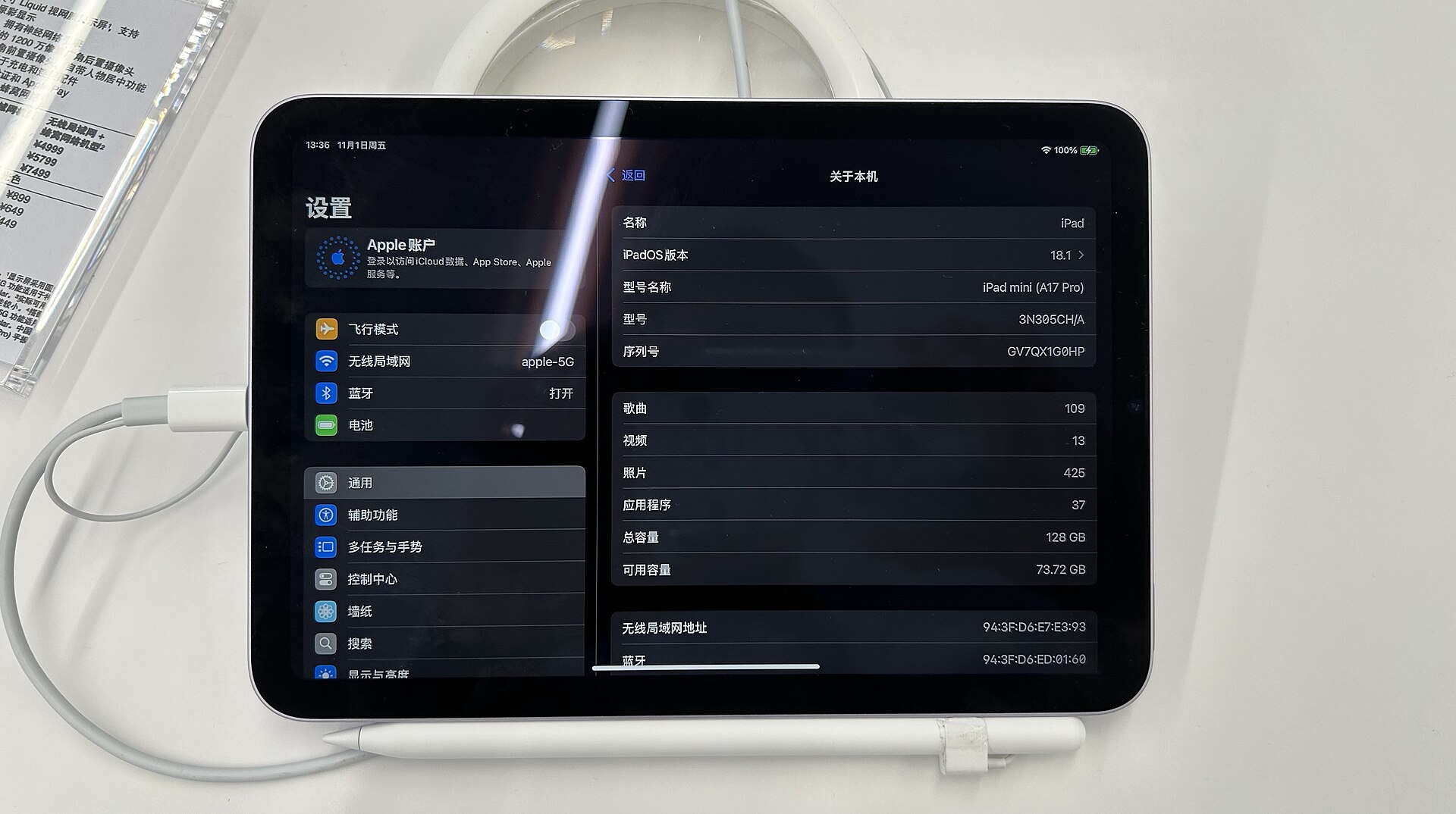
Apple has released its latest iPad mini, introducing significant hardware upgrades that come with a notable increase in cost. The new device features an OLED display and the A20 Pro chip, marking a substantial leap in performance and visual quality for the compact tablet line. However, the starting price has risen by $200, bringing the entry-level model to $699.
Display and Design Changes
The most visible upgrade is the switch to an OLED panel, making the iPad mini the second Apple tablet to feature this technology after the iPad Pro. The display measures 8.5 inches, a slight increase from the previous generation, achieved by reducing bezel thickness by 24 percent. The panel supports peak HDR brightness of 1,200 nits, a major improvement over the 500 nits SDR limit of the older A17 Pro model.
Despite the larger screen area, the new iPad mini is physically smaller in profile. It measures 5.4mm in thickness and weighs 255 grams, compared to the 6.3mm thickness and 293 grams of the outgoing model. Apple attributes these reductions to the thinner OLED panel construction. The device retains the same height and nearly the same width as its predecessor.
Apple has reduced the color options for this generation to Midnight and Starlight. The device also introduces an IP67 water resistance rating, a first for the iPad mini line. To achieve this seal, Apple replaced traditional speaker grilles with an Acoustic Display system. This setup places tweeters between the glass and aluminum body and uses the display itself for woofer output, resulting in what Apple claims is clearer treble and punchier bass.
Performance and Connectivity
Under the hood, the new iPad mini is powered by the 5-core A20 Pro system-on-chip. Apple states this 2nm processor delivers up to 2.7 times faster graphics performance and up to 4.5 times faster AI workloads compared to the A17 Pro. The 512GB storage variant includes an additional CPU core and a dual 16-core Neural Engine, though Apple has not officially confirmed the RAM increase, which is believed to be 12GB compared to the previous 8GB.
Connectivity has also seen updates. The tablet supports Wi-Fi 7, Bluetooth 6, and Apple’s new C2 cellular modem, which the company claims offers up to 50 percent faster cellular data speeds. The front-facing camera has been repositioned to the longer edge of the tablet, optimizing it for landscape video calls. Authentication remains handled by the Touch ID-enabled power button.
Software-wise, the device runs iPadOS 27 and supports Apple Intelligence. While both the new and old models support Siri AI, the A20 Pro is better suited for demanding on-device tasks. The device also supports the Apple Pencil Pro, maintaining its utility for creative professionals.
Pricing and Availability
The new iPad mini starts at $699 for the 128GB model, a $200 increase over the previous generation’s starting price. Configurations with cellular connectivity and nano-texture glass on the 512GB model can reach $1,249. Battery life claims remain similar to the previous model, but charging speeds have improved, allowing the device to reach 50 percent charge in 30 minutes with a compatible adapter.
The lack of ProMotion, or a 120Hz refresh rate, has drawn criticism from some users, with the display remaining at 60Hz. Apple’s vice president of Hardware Engineering, Dave Pakula, defended the decision, stating that the OLED panel’s faster pixel response time ensures a smooth experience without needing a higher refresh rate.
Source: Engadget
