


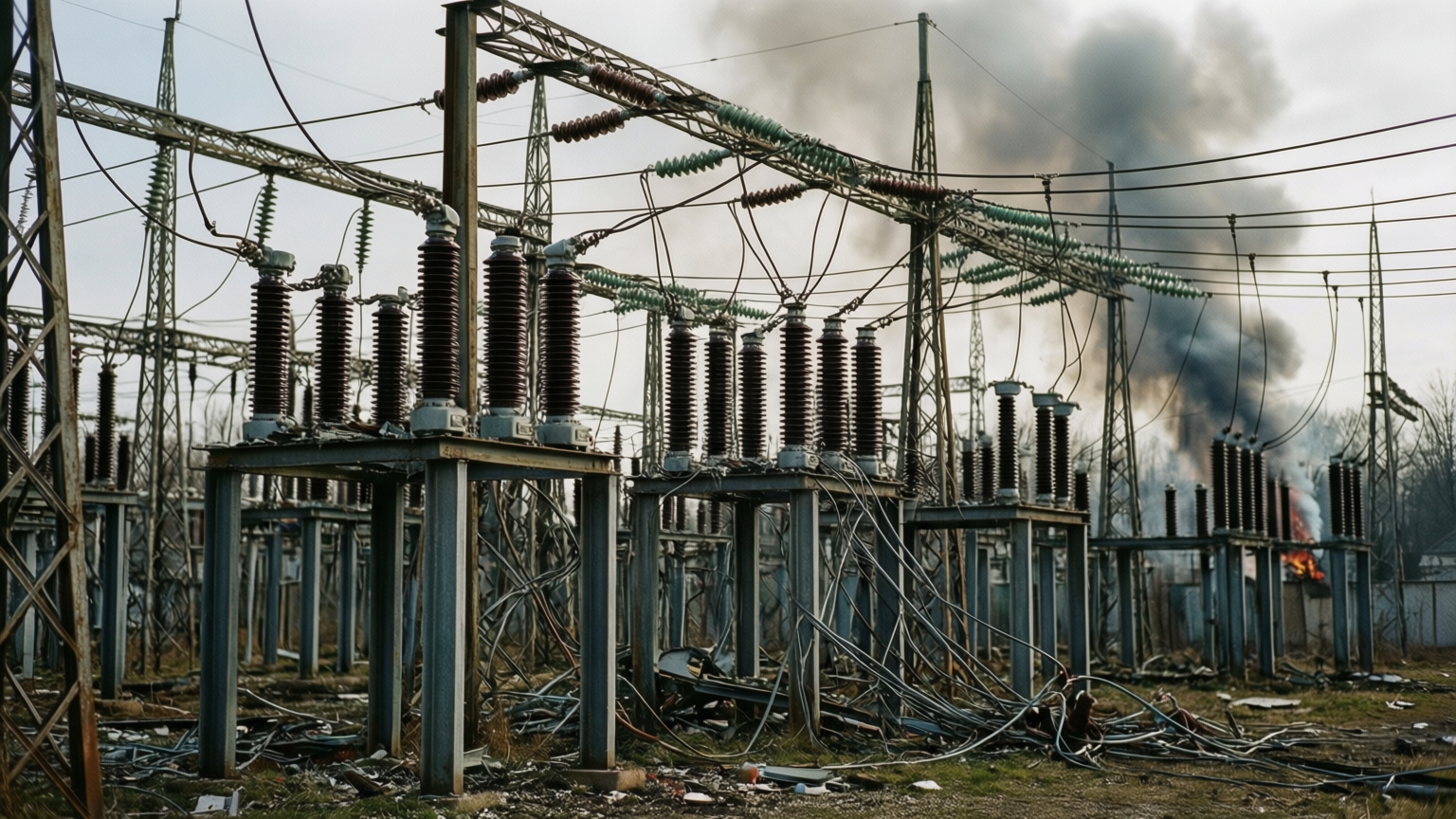
Russia launched a massive overnight attack on Ukraine’s energy infrastructure, using 172 drones and 36 ballistic missiles to target electricity substations and a key bridge over the Dnipro River. The strikes caused severe disruptions to power, water, and heat supplies in Kyiv, leaving millions without essential services as the capital prepares for the brutal winter.
Ukrainian President Volodymyr Zelenskyy accused Moscow of attempting to “plunge Kyiv and the entire country into a blackout” through the relentless bombardment. The attacks injured five people, including a 14-year-old girl, and damaged critical infrastructure connecting nuclear power plants to the capital.
Infrastructure Damage and Civilian Impact
The assault targeted substations across five regions, including facilities that link two nuclear power plants to Kyiv. The city’s Northern Bridge, a vital transport artery, was closed on Saturday while workers repaired damage to the road surface and power lines. Residents have endured day-long power cuts and intermittent water supplies throughout the week, which officials describe as an attempt to freeze civilians into submission.
Zelenskyy stated that Moscow’s preparations for upcoming peace talks involved pummelling a city of millions with ballistic missiles. He appealed to the US Congress to pay more attention to Ukraine’s situation, emphasizing that the nation must not be left alone in the face of relentless Russian bombardment.
Skepticism Ahead of Abu Dhabi Talks
Negotiators from Russia, Ukraine, and the United States are scheduled to meet in Abu Dhabi on Tuesday and Wednesday for talks aimed at ending the war. However, Ukrainian officials have expressed little confidence that the discussions will yield concrete results. Zelenskyy described a recent blueprint proposed by Jared Kushner, Donald Trump’s son-in-law, as “Yalta 2.0,” referencing the 1945 summit that divided postwar Europe.
Kushner indicated that the discussions would include a new security framework for Europe, alongside guarantees for Ukraine. This appears to reference the Kremlin’s longstanding demand that NATO’s expansion across Europe be reversed. Speaking on Friday, Trump suggested a “big beautiful agreement” involving all of Europe could be close, echoing Russian President Vladimir Putin’s pre-invasion demands for NATO to return to its pre-1997 posture.
Ukraine and its European partners remain deeply sceptical of these proposals. Zelenskyy told CNN that discussing European-Russian security infrastructure is not simple and can be dangerous, adding that Ukraine does not want to be divided by Russia. He insisted that Moscow must end its war first, with Ukraine given meaningful security guarantees, before wider security architecture could be considered.
Western diplomats note that agreeing to Russia’s demands would effectively end NATO. Meanwhile, Russia’s defence ministry claimed its strikes were against energy and transport targets. Since the summer, Moscow has dramatically increased air attacks on Ukrainian cities as its progress on the frontline has stalled. Kyiv reported that Russia lost 54,000 troops, killed or injured, last month, marking the highest monthly loss in the war.
Source: The Guardian
