


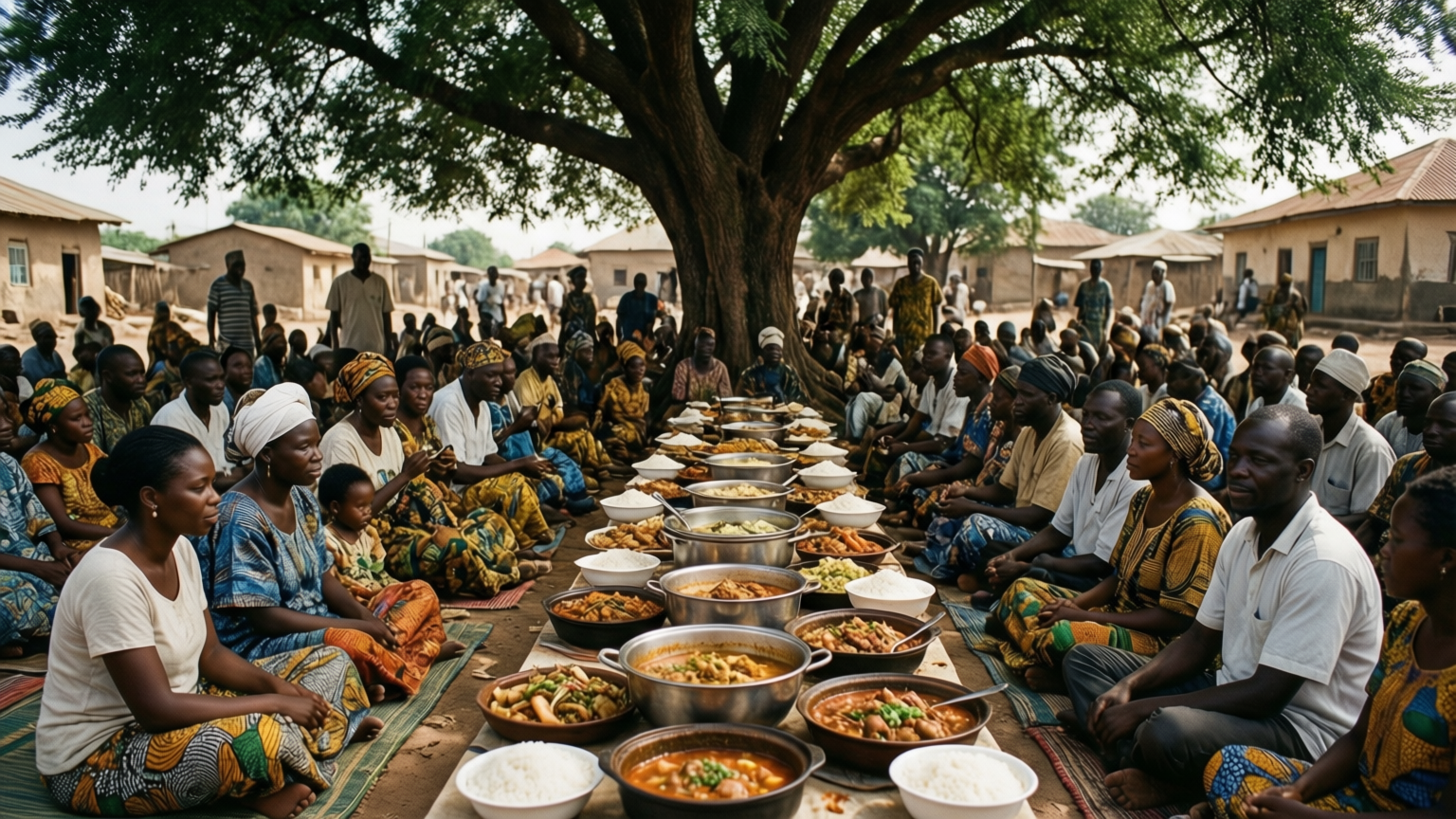
Every year on the first Thursday in November, families across Liberia gather to celebrate a holiday that shares its name with the American tradition but holds distinct local meaning. For Yvonne Capehart Weah, the celebration involves her large family of twelve siblings meeting in Caldwell, the township where she grew up. The gatherings are so large that they cannot fit around a single dining table. Instead, relatives sit outside under trees, turning the event into a community party.
The holiday dates back to the first half of the 19th century when the American Colonization Society established the community that would become Liberia. The settlement was founded by Black Americans, including both free-born individuals and formerly enslaved people. These settlers brought the Thanksgiving Day tradition with them, but the observance evolved significantly over time in response to national events.
Origins in 19th-Century Sovereignty
Liberia gained independence in 1847, but the new nation faced immediate threats. British forces continued to attempt to claim swathes of Liberian territory. In 1883, President Alfred Francis Russell, an Episcopalian priest, called upon God to help halt these incursions. This invocation served as a prayer for protection against intruders and to prevent further territorial loss.
The Liberian government successfully maintained its sovereignty. That same year, the legislature officially established Thanksgiving as a national holiday. The decision was steeped in the religious gratitude of the moment, marking a shift from a cultural import to a symbol of national survival.
Weah describes the core purpose of the day as giving thanks to God for freedom, divine protection, unity, and the harvest. The holiday remains a time for religious reflection, though it is observed by people of all faiths. Muslims attend mosques to pray, while Christians attend church services. Sekou Muhammad Sheriff, a YouTuber who documents Liberian cultural heritage, notes that everyone observes the day as a holiday regardless of religious affiliation.
Local Traditions and Modern Celebrations
Food and clothing are central to the modern celebration. For Sheriff, the holiday was historically the day he received new outfits from his father. He recalls receiving shirt-trouser suits and slippers, with white being his favorite color. Today, the mid-afternoon meal varies by household. Families serve fried, smoked, or roasted chicken rather than turkey. Common dishes include jollof rice, watermelon, pineapple, and various stews.
One staple is fufu and soup, a mixture of cassava, fish, chicken, okra, and chili pepper. Weah insists this soup must be present at every Thanksgiving gathering. Other stews feature ingredients like sweet potato leaves and snails collected from gardens. Sheriff refers to the snails as “king’s meat,” noting their delicious taste.
The holiday also serves as a moment for personal reflection on the country’s history. Liberia endured civil conflicts from 1989 to 1997 and again from 1999 to 2003. Sheriff expressed gratitude this year for the country’s peace and his own health. Weah uses the day to thank God for her past, present, and future, emphasizing the belief that God holds the future.
Weah works as a program manager at the We-Care Foundation, an education nonprofit that teaches children literacy. She believes that informed adults make better decisions for their social and economic lives. The foundation aims to create a generation of readers who will eventually become informed elders. This focus on education and long-term planning reflects the deeper values embedded in the Liberian Thanksgiving tradition.
Source: NPR
