


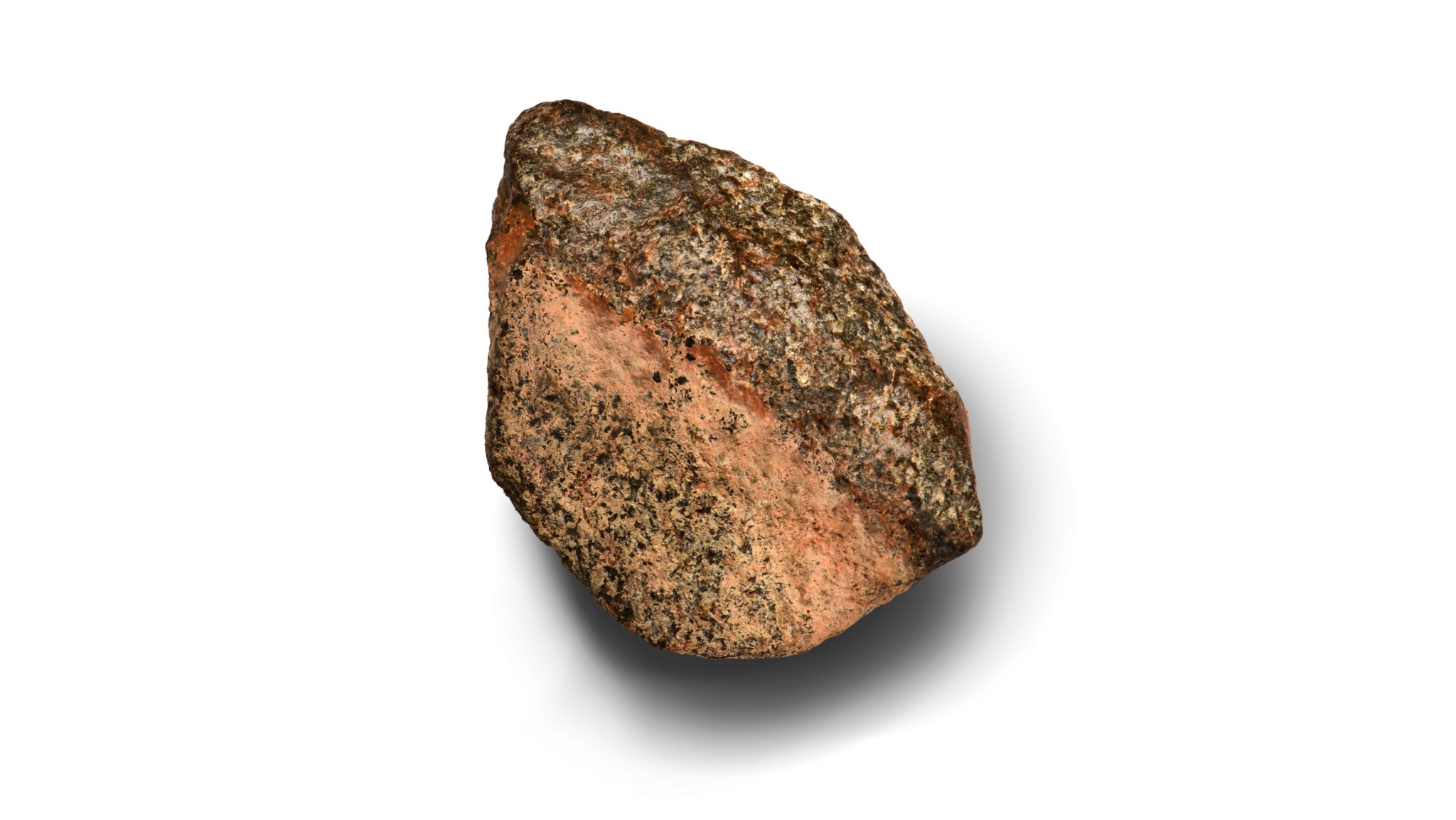
Scientists have identified a meteorite found in the Sahara Desert as one of the oldest pieces of Mars ever discovered on Earth. The rock, named Teghaza 001, dates back more than 4.1 billion years, providing a rare glimpse into the planet’s earliest geological history. The findings were published in the journal Science on Thursday.
The nearly 2-pound (800-gram) stone was discovered in 2022 near a salt plain in Mali. At the time of its discovery, its age and origin were unknown. It was only after NASA-funded researchers performed detailed mineral dating that they realized the rose-colored rock was a fragment of the Red Planet. The analysis reveals that Teghaza 001 is one of only three known Martian meteorites old enough to represent the planet’s initial crust formation.
Ancient Crust and Water Interactions
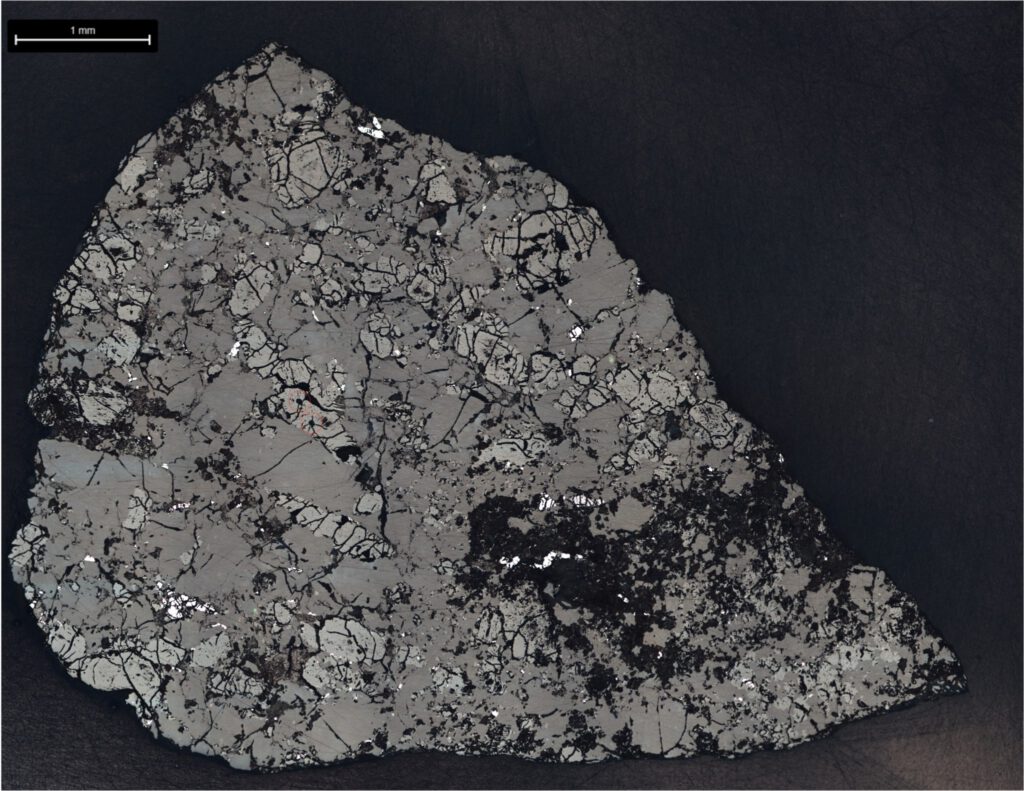
Teghaza 001 stands out from other Martian meteorites due to its unique texture and mineral composition. While other ancient samples like ALH84001 are composed almost entirely of a single mineral, Teghaza 001 contains a mix of igneous minerals. These minerals record the cooling of magma that formed the planet’s crust. The rock also shows signs of alteration by subsurface water, offering clues about how water and rock interacted on early Mars.
Lee Saper, a scientist at NASA’s Ames Research Center and co-author of the study, described the meteorite as the first piece of Martian crust from a region of the planet that had not been sampled before. He noted that the rock likely records interactions between water and rock, and possibly an imprint of the Martian atmosphere as it lost water over time.
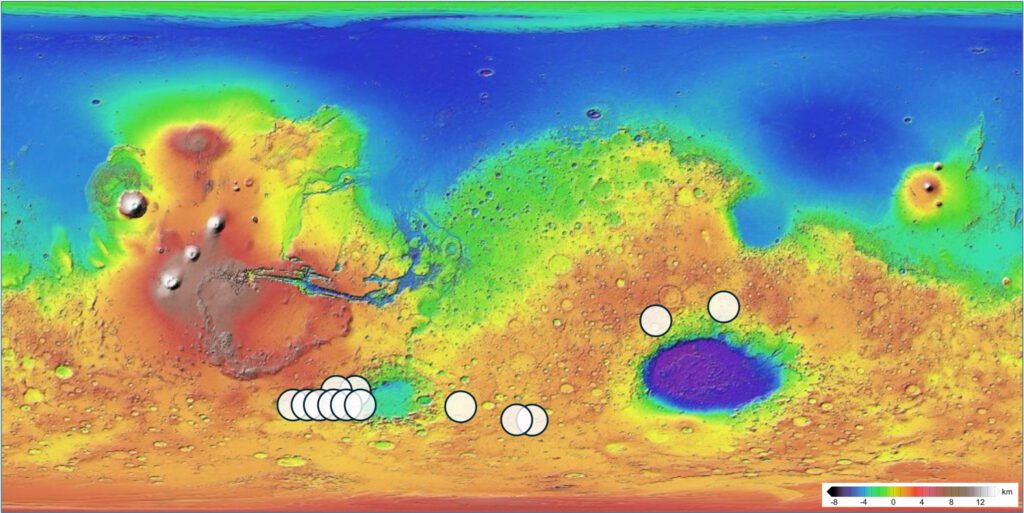
The mineralogy of Teghaza 001 matches data collected by NASA’s Mars Reconnaissance Orbiter from the cratered southern highlands. While the exact landing site on Mars remains unknown, the paper identifies several potential locations that match the rock’s chemical and mineral profile.
Precise Dating Techniques
The age of the meteorite was determined using a novel in-situ rubidium-strontium age-dating method. This technique, pioneered by Caltech co-author Francois Tissot, analyzes single mineral grains on the surface of the rock. Unlike bulk-analysis methods that dissolve the entire sample, this approach uses a piece smaller than a fingernail. The method is both precise and fast, preserving the rare sample for future studies.
“Right now, we are one of very few labs in the world able to perform this kind of age-dating, and the first to date such an ancient Martian meteorite,” Tissot said. “Our hope is to pave the way for dating even more Martian meteorites, or samples returned from other planets, their moons, and asteroids.”
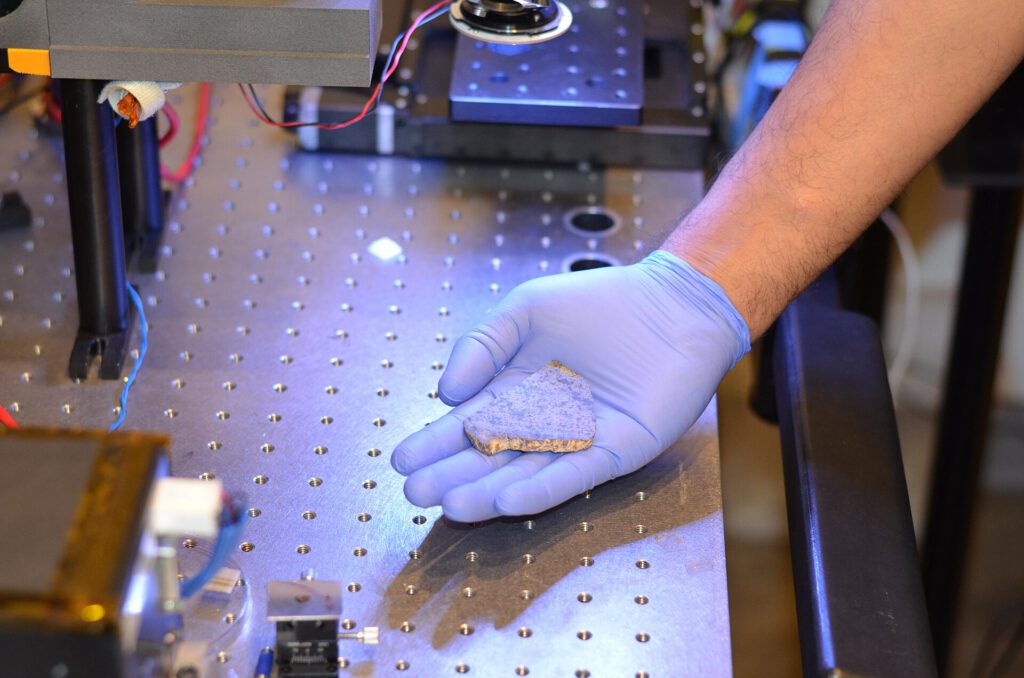
Lead author Yang Liu of NASA’s Jet Propulsion Laboratory initially considered passing on the analysis. The rock had already been identified as Martian based on oxygen isotopes. However, Liu noticed odd textures and unusual minerals, including zircon crystals. These crystals record clues to a rock’s formation and allowed the team to precisely date when the rock formed and when it was altered by water around 4.1 billion years ago.
Martian meteorites reach Earth after being blasted off the planet’s surface by asteroid impacts. They are often found in deserts or snowy plains where they stand out against the barren landscape. Scientists verify their origin by matching their mineral and chemical components to data from NASA missions, including the Viking landers and the Curiosity and Perseverance rovers.
The discovery of Teghaza 001 adds to a collection of roughly 435 known Martian meteorites. A separate paper published in Science Advances in June detailed the meteorite’s water content, further supporting the idea of a dynamic water cycle on early Mars. Researchers say the current papers are just the start of what the scientific community can learn from this unique sample.
Source: NASA
