


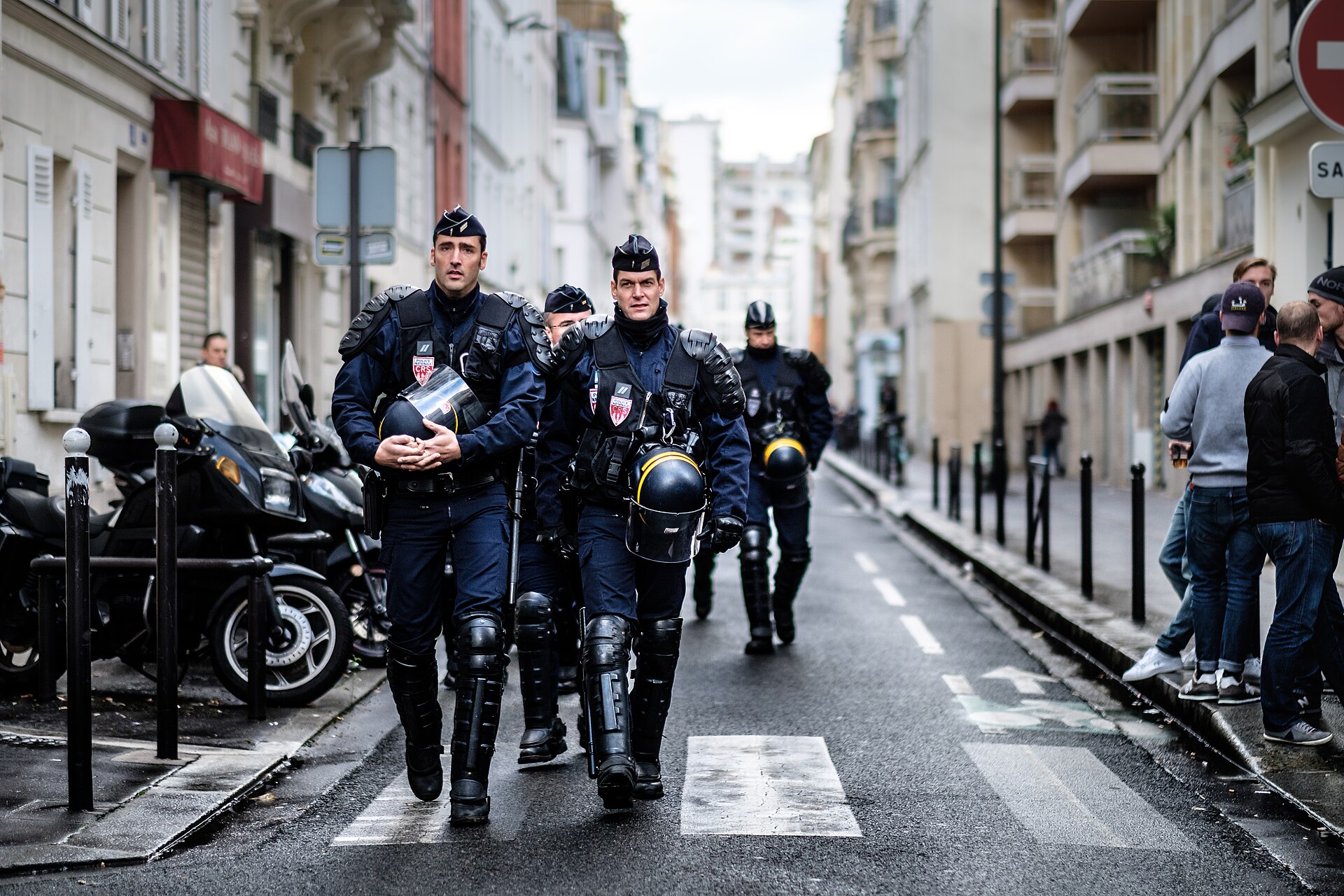
Violent disorder erupted across France on Saturday as demonstrations against the cost of living and school conditions escalated into widespread unrest. The French government reported that at least 1,200 people were arrested during the day, which officials described as a significant escalation in violence. An estimated 550,000 individuals participated in the protests, which began largely peacefully but deteriorated as evening approached.
Clashes in Paris and Limoges
In the capital, riot police deployed tear gas and water cannons to disperse crowds in central areas, including the Place de la République. While the main afternoon march remained largely peaceful, later reports indicated that some groups ignited street fires and torched vehicles. Shops were ransacked, and at least one restaurant was destroyed by fire. Footage verified by the BBC showed masked individuals driving a tourist train toward police officers in Grenoble.
Damage extended well beyond Paris. In Limoges, a large fire at the town hall caused part of the roof to collapse. The local prefecture stated that the historic building was largely lost. In Lyon, the city’s tourist office was burned, a loss Mayor Grégory Doucet called a tragedy for the city. He noted that hostile individuals prevented firefighters from safely accessing the blaze.
Injuries and Political Fallout
Prime Minister Sébastien Lecornu confirmed that 150 police officers were injured during the unrest. He accused some groups of using the protests as a political warm-up for the upcoming presidential election. Lecornu stated that no one would impose their agenda through violence and promised that those who attacked prefectures and looted businesses would be prosecuted.
The violence has drawn sharp reactions from political figures. President Emmanuel Macron condemned the attacks on town halls and businesses. Meanwhile, Marine Le Pen of the National Rally accused the far left of holding legitimate demands hostage. Jean-Luc Mélenchon of La France Insoumise condemned the looting but accused police of unleashing excessive force on protesters.
The unrest has also resulted in severe injuries to civilians. In Saint-Étienne, Mayor Régis Juanico reported that a young man lost his hand after being struck by a grenade. The interior ministry attributed much of the targeted violence to hooded individuals in cities including Marseille, Rennes, and Toulouse.
The protests were initially organized by students protesting staff shortages and dilapidated facilities in secondary schools. Their numbers were bolstered by trade union members and the yellow vest movement, which has demonstrated against economic hardship since 2018. Education Minister Édouard Geffray had recently promised 3,000 extra supply teachers in an attempt to address student grievances.
As France approaches a period of deep political uncertainty, with President Macron set to leave office next year, the government faces pressure to restore order. The interior ministry emphasized that the violence was not representative of the broader protest movement but rather the actions of specific hostile groups.
Source: BBC
