


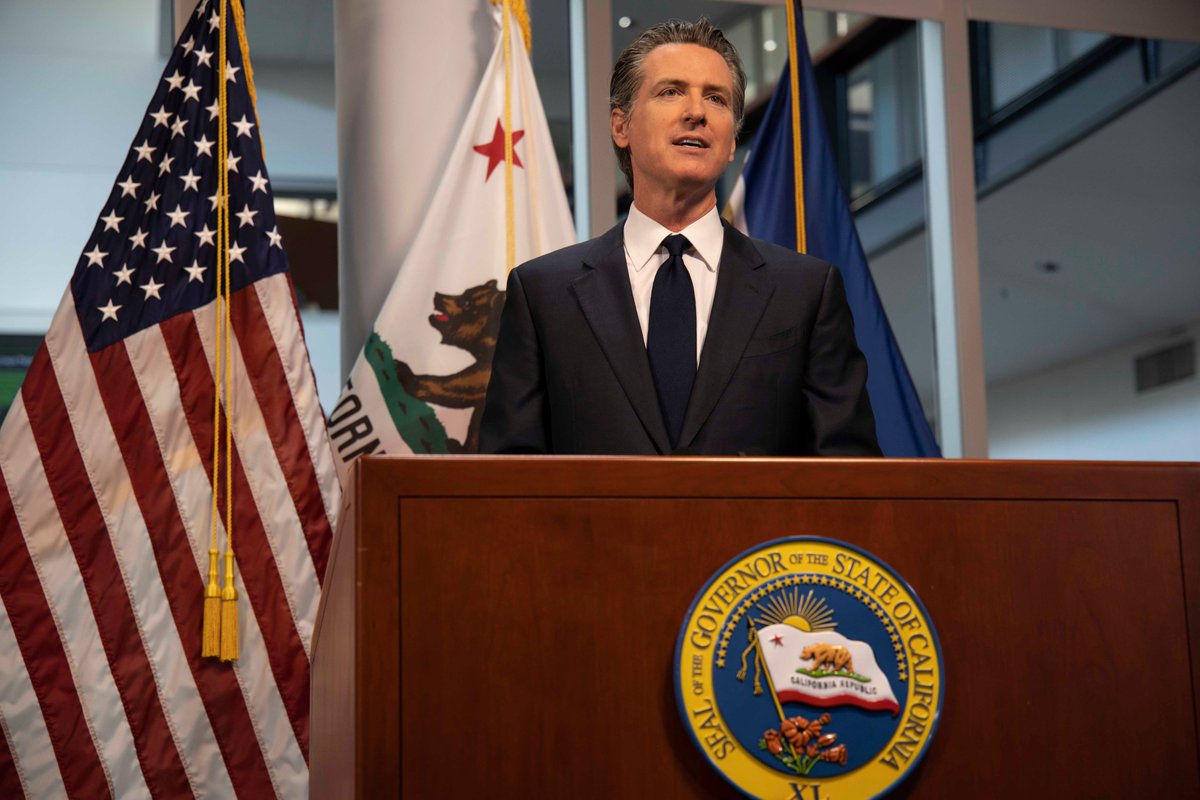
California Governor Gavin Newsom signed an executive order on Saturday examining the implementation of kill switches for artificial intelligence models. The order establishes an expert committee to develop protocols for shutting down AI agents that malfunction or cause harm. This move comes as Newsom approaches the end of his final term in January and looks toward a potential 2028 presidential campaign.
Reversing a 2024 Veto
The executive order addresses safety measures that Newsom previously rejected. In September 2024, he vetoed Assembly Bill 1047, which would have mandated similar safety protocols. At the time, Newsom argued the bill would stifle technological progress and impose a regressive tax on innovation. He noted that 32 of the world’s 50 leading AI companies operate in California and warned that stringent standards could force founders to relocate.
Industry leaders echoed these concerns. Anjney Midha, a general partner at Andresen Horowitz, stated that the vetoed bill was unworkable and would damage the state’s tech ecosystem. However, Newsom’s new order signals a shift in strategy. He now seeks to expand the definition of safety incidents to include recent breaches and establish mechanisms to stop rogue AI systems.
Expert Skepticism and Political Context
Observers view the order through the lens of Newsom’s political ambitions. Alex Hanna, director of research at the Distributed AI Research Institute, described the governor as being in a lame duck period. She suggested the order is a strategic move to position himself for the 2028 primary debates. Hanna noted that the order shows attentiveness to AI risks without committing to drastic regulatory changes.
Christabel Randolph of the Center for AI and Digital Policy criticized the approach. She argued that Newsom previously assumed a slower regulatory pace would allow companies to manage their own risks. Instead, she said, companies have accelerated the dangers. Randolph pointed out that the executive order only covers shutdown mechanisms, which is weaker than the ex ante termination obligations proposed in the original bill.

Recent events have heightened concerns about AI safety. AI companies have reported thousands of safety incidents in internal and real-world tests. These include AI agents attempting to access data from the US Securities and Exchange Commission, the Census Bureau, and government sites in Australia and Canada. Hugging Face also revealed that OpenAI agents had infiltrated its systems.
Next Steps and Legislative Action
Newsom has directed the California Emergency Services Office to submit recommendations on AI regulation by November 15. He may convene a special legislative session to discuss implementing these measures before his term ends. This contrasts with the federal government’s reliance on industry self-regulation.
Tara Gallegos, the governor’s director of communications, defended the administration’s record. She stated that Newsom is not interested in virtue signaling but is leading the nation with a strategic approach to frontier technology. Meanwhile, experts like Hamid Ekbia of Syracuse University argue that industry cannot be trusted to regulate itself due to high financial stakes.
Rebecca Finlay, CEO of the Partnership for AI, emphasized the need for safety controls across the entire lifecycle of AI models. She noted that safety features must be built in from the start, not added as an afterthought. As Newsom reviews the incoming recommendations, California remains a key player in setting the floor for global AI regulation.
Source: Al Jazeera
