



Heart disease remains the leading cause of death globally, with high cholesterol serving as a primary risk factor. Despite the availability of numerous medications, many patients struggle to reach safe cholesterol levels or experience intolerable side effects from existing therapies. Researchers at the University of California San Diego School of Medicine have now identified a previously unknown biological mechanism that explains why high-cholesterol diets can impair the body’s ability to clear harmful LDL cholesterol from the bloodstream.
The Ral and Cathepsin A Mechanism
The liver plays a central role in regulating cholesterol levels by removing it from the blood for processing. This process relies on LDL receptors located on the surface of liver cells. These receptors act like docking stations, capturing circulating LDL cholesterol and bringing it inside the cell for breakdown. The number of available receptors directly influences how effectively the liver can clear cholesterol from circulation.
Current medications, including statins and PCSK9 inhibitors, work by maintaining or increasing the number of these receptors. However, the new study reveals a separate pathway that actively reduces receptor availability over time. The process begins with a protein called Ral, which the research team had previously studied in fat cells. The team found that consuming high amounts of dietary cholesterol activates Ral, triggering a chain of events that leads to the degradation of LDL receptors.
As Ral activity increases, fewer receptors remain on the liver cell surface to remove cholesterol. The researchers also identified an enzyme called cathepsin A (CTSA) as a critical component of this process. CTSA drives the mechanism responsible for depleting LDL receptors, effectively weakening the liver’s clearance capacity.
Repurposing an Existing Drug Candidate
When scientists used a small molecule inhibitor to block CTSA in mice, the results were significant. The inhibitor stabilized LDL receptors and caused a dramatic drop in circulating LDL cholesterol levels. This discovery is particularly important because the newly identified pathway is distinct from those targeted by current cholesterol medications. This distinction creates an opportunity to develop treatments for patients who do not respond adequately to existing drugs.
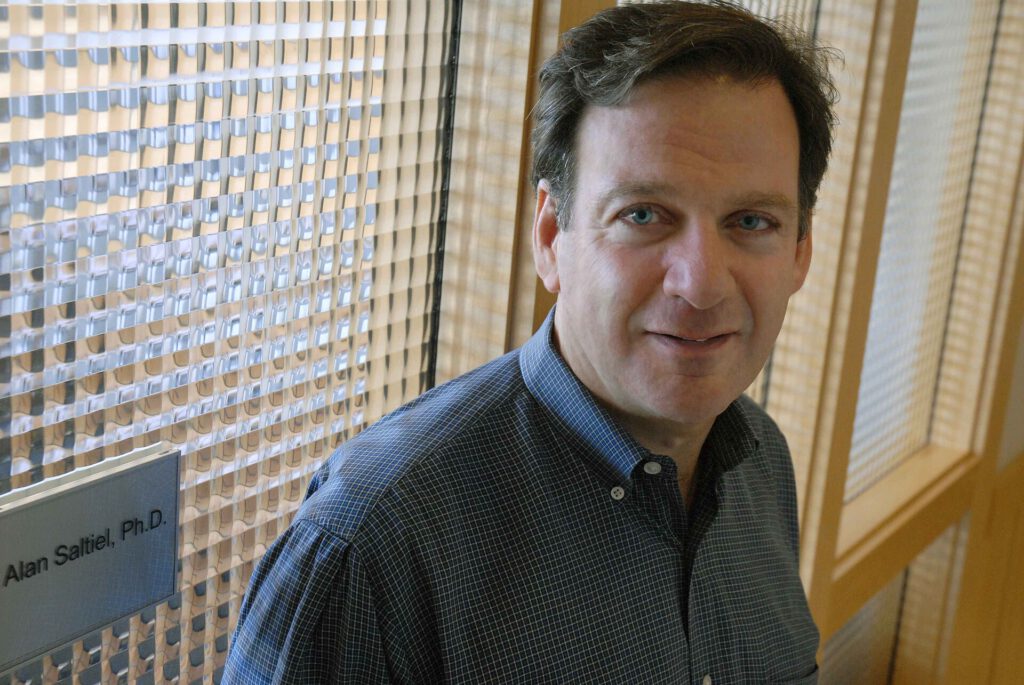
Alan Saltiel, PhD, professor of medicine at UC San Diego School of Medicine and senior author of the study, noted the potential impact of this finding. “There’s still a real need for new cholesterol-lowering options, since some people can’t get to safe levels even with the drugs we have now,” Saltiel said. “This new pathway we discovered is completely separate from anything that existing drugs target, so it gives us a new opportunity to fill that gap.”
Drug development typically requires years of work to identify suitable compounds and determine human safety. In this case, the researchers may have a head start. A drug designed to inhibit CTSA was previously developed as a potential treatment for heart failure. Although that program was discontinued for strategic reasons, the experimental medication had already completed a Phase 1 clinical trial, where it was evaluated for safety in humans.
The team believes this existing CTSA inhibitor could be ready to advance into a Phase 2 clinical trial to investigate its effectiveness against high cholesterol. Saltiel highlighted the advantage of having a compound that has already passed initial safety hurdles. “Luckily, there’s an experimental drug sitting on the shelf that’s already been shown to be safe in humans,” he said. “We hope to test whether this might be effective by conducting a clinical trial — which could potentially bring a new treatment option to patients much sooner than would have been expected.”
The findings, published in the journal Nature, represent an early stage in the development of this new treatment strategy. The drug has not yet been shown to lower cholesterol in humans, but the previous clinical testing data could significantly shorten the path toward determining its efficacy in patients. The research was supported by grants from the National Institutes of Health and an American Diabetes Association postdoctoral fellowship.
Source: ScienceDaily
