


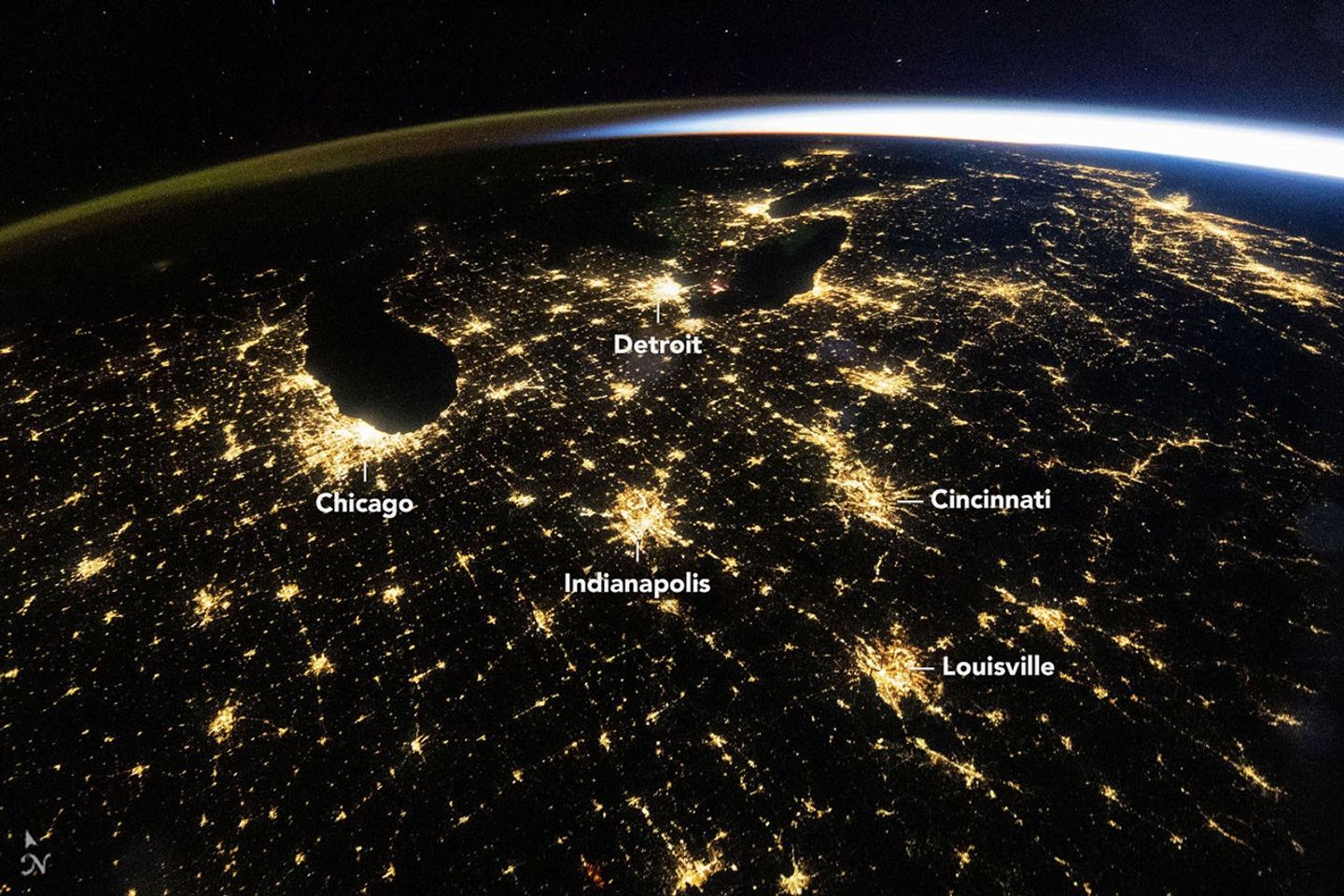
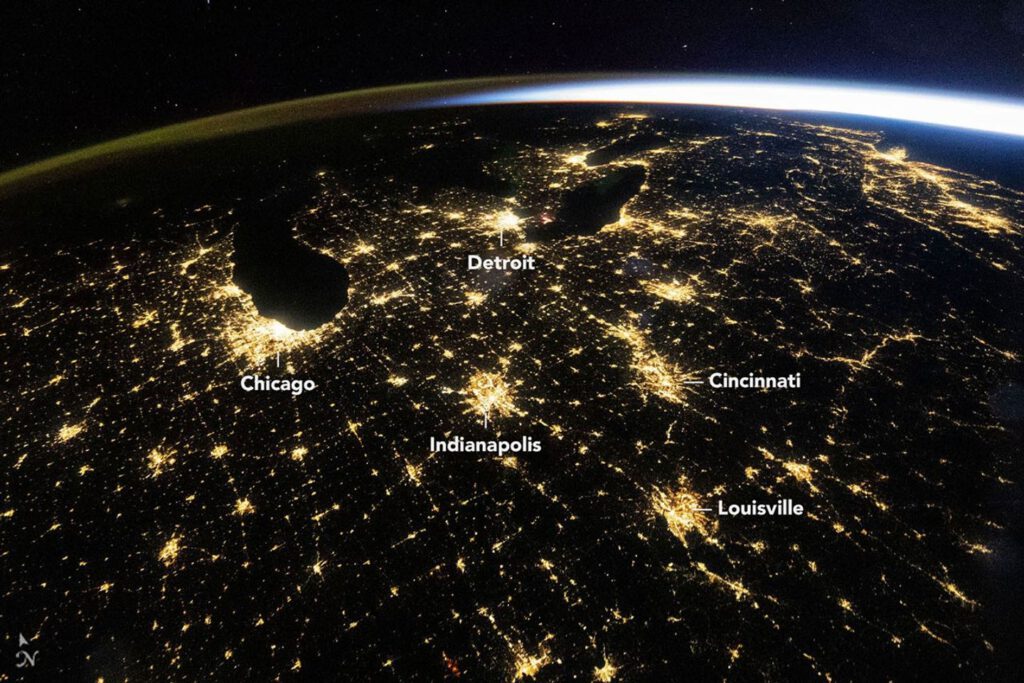
Clear skies over the eastern United States provided a rare opportunity for astronauts aboard the International Space Station to document the region’s nighttime landscape. On October 18, 2026, at 4:54 a.m. Central Daylight Time, crew members captured a wide-angle view of the U.S. Midwest, revealing a dense network of illuminated cities against the darkened terrain.
Urban Illumination Patterns
The photograph highlights the brightest metropolitan areas in the region, including Chicago, Illinois, and Detroit, Michigan. These major hubs stand out prominently, while mid-sized cities such as Indianapolis, Indiana; Cincinnati, Ohio; and Louisville, Kentucky, form a connected web of light along state and interstate highways.

Researchers use these astronaut photographs to track changes in the built environment. While wide-angle views often show a homogeneous pale yellow glow, detailed analysis reveals a range of colors stemming from different types of lighting. NASA’s Gateway to Astronaut Photography of Earth archive allows scientists to distinguish between lighting types within individual pixels, providing data on how cities grow and evolve.
Atmospheric Phenomena and Scientific Value
Above the urban sprawl and Earth’s lower atmosphere, a diffuse band of green and orange light is visible along the horizon. This phenomenon, known as airglow, occurs when sunlight strikes atoms and molecules in the upper atmosphere, causing them to eject photons. To the right of the frame, the arc of sunlight indicates that sunrise was approximately one hour away on the East Coast and two hours away in Chicago.
These visual records complement data from satellite sensors. NASA’s Black Marble nighttime lights product suite uses satellite observations to create science-quality records of global nighttime lights at daily, monthly, and yearly intervals. Scientists have utilized this data to monitor power outages, infrastructure development, and the transition from older lighting technologies to LED systems.
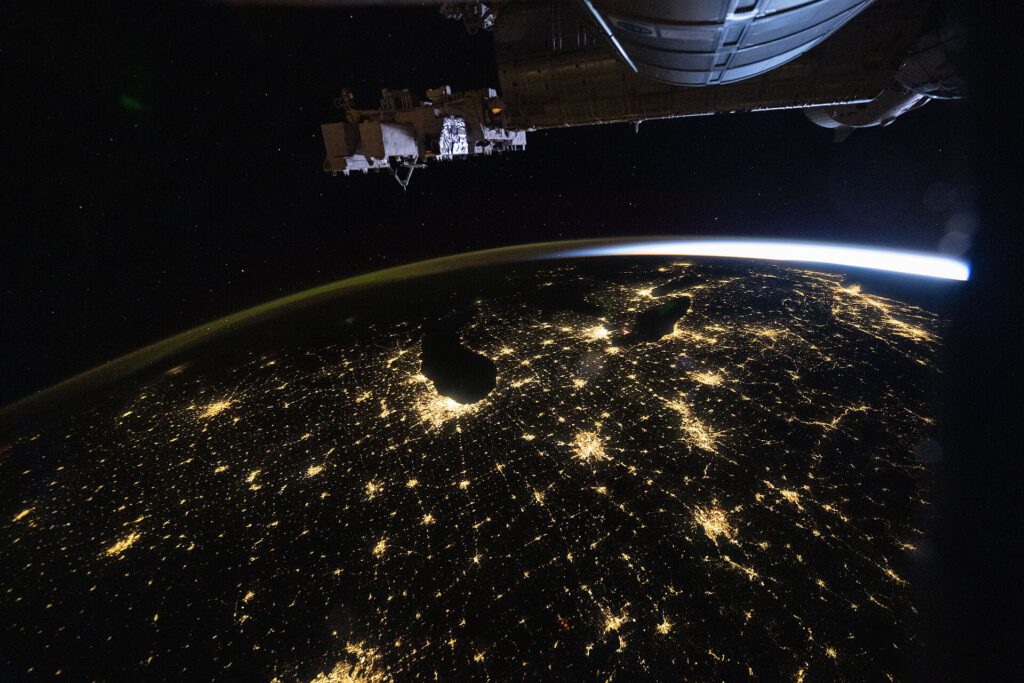
The primary image, designated ISS075-E-226709, was taken with a Nikon Z9 digital camera using a 14-millimeter focal length. It is part of a broader collection that includes detailed close-ups, such as ISS070-E-105097, which was captured in March 2024 with a Nikon D5 camera at a 400-millimeter focal length. These images are provided by the ISS Crew Earth Observations Facility and the Earth Science and Remote Sensing Unit at NASA Johnson Space Center.
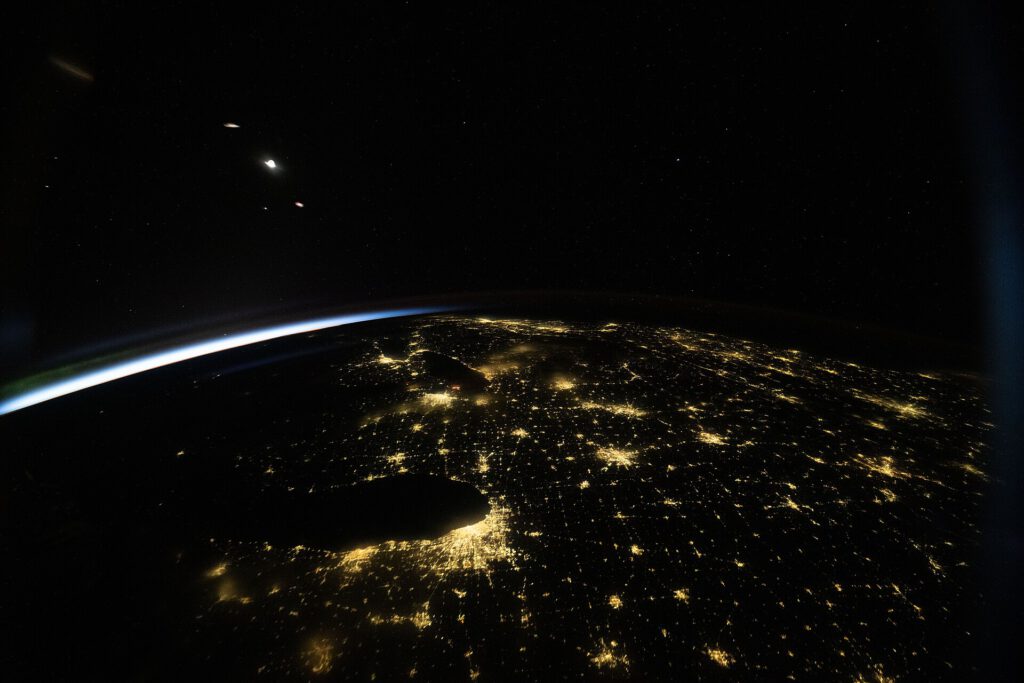
The International Space Station Program supports the laboratory as part of the ISS National Lab to help astronauts take pictures of Earth that will be of the greatest value to scientists and the public. Additional images taken by astronauts and cosmonauts can be viewed at the NASA/JSC Gateway to Astronaut Photography of Earth.
Source: NASA
