


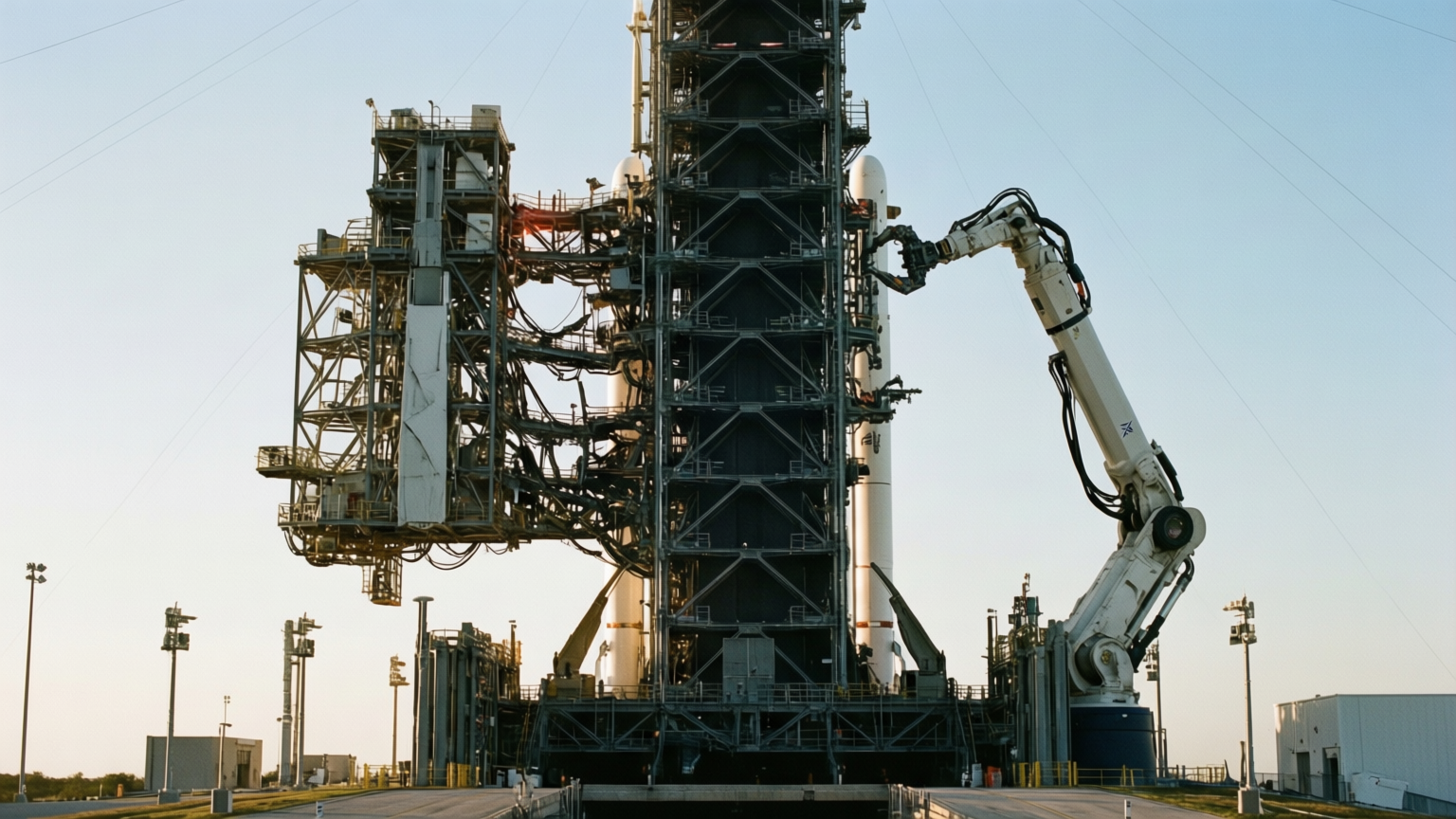
SpaceX has successfully captured a Starship vehicle using the arms of its Mechazilla launch and catch tower for the first time. The maneuver, often referred to as a chopstick catch, represents a major milestone for the company’s reusable rocket program, even though the event did not result in the recovery of the entire launch vehicle.
The successful capture of the Starship upper stage occurred after the company aborted a planned catch of the booster for Starship Flight 15. While the booster failed to land and detonated over the Gulf of Mexico, the upper stage executed the complex docking procedure with precision. This marks the first time the chopstick catch maneuver has been successfully executed on the Starship vehicle itself, distinguishing it from previous successful catches of Super Heavy boosters.
Flight 15 Execution and Booster Abort
Video footage from the launch shows the Starship upper stage plunging through clouds before flipping vertically. The vehicle then eased itself between the waiting arms of Mechazilla at approximately 4:20 PM ET. The maneuver required precise timing and control to ensure the vehicle settled securely into the tower structure.
Despite the success of the upper stage capture, the mission was not a complete recovery. The booster, which separates from the upper stage during ascent, aborted its landing attempt. SpaceX is currently investigating the cause of the booster abort, which led to the vehicle exploding over the Gulf of Mexico. The company has not yet released a definitive explanation for why the booster failed to complete its landing sequence.
Context from Leadership and Past Performance
Elon Musk, CEO of SpaceX, addressed the challenges of these early flights during the company’s third-quarter earnings call. He stated that success is not guaranteed on these initial flights but expressed confidence in the outcome of upcoming attempts. Musk noted that it is more likely than not that the next flight would succeed in its recovery objectives.
The ability to catch the Starship upper stage is a critical step toward full reusability. SpaceX has previously demonstrated the ability to catch boosters using the same Mechazilla arms on earlier launches. The successful capture of the Starship vehicle itself suggests that the technical hurdles associated with the maneuver are surmountable. The failure of the booster does not appear to be an insurmountable obstacle, given the company’s prior experience with booster recovery.
This achievement underscores the rapid iteration pace of the Starship program. Each flight provides data that helps refine the design and operational procedures for future launches. The successful chopstick catch of the Starship vehicle brings the company closer to its goal of fully reusable heavy-lift launch systems.
Source: The Verge
