


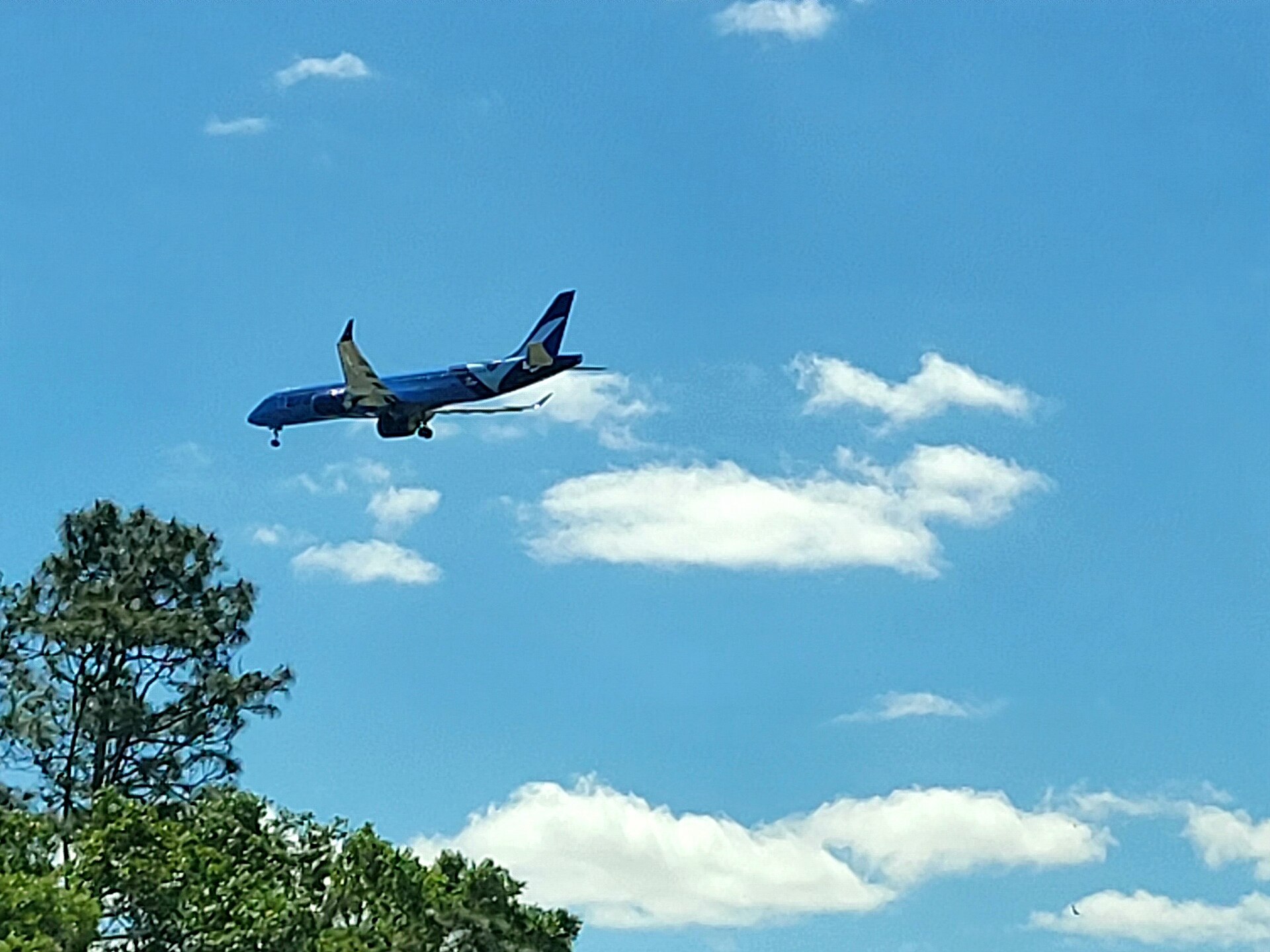
Breeze Airways has discontinued at least 11 nonstop routes since the beginning of this year, marking a significant contraction in its network. The US low-cost carrier has been adjusting its schedule frequently, with most of the removed services connecting domestic destinations in states such as Florida, Colorado, and New York. The airline has also ended its international service between Providence and Cancun, which was the only international connection for the Rhode Island airport.
Providence to Cancun Service Ends
Breeze had initially planned to resume the Providence to Cancun service on December 19, 2026, ahead of the Christmas holiday period, with operations scheduled to continue until March 20, 2027. However, the airline has since removed all flights from its schedule, and the route is no longer available for booking. This cancellation follows a disappointing trial period for the weekly Saturday service that began in February.
At the time of its launch, the airport described the Providence to Cancun route as an eight-week trial scheduled to run through April. The goal was to test demand before committing to a longer-term service. Data from the US Department of Transportation (DOT) shows that Breeze carried just 1,364 round-trip passengers on the route, recording an average load factor of 49.8%. This means fewer than half of the available seats were occupied. The carrier also captured less than 11% of passengers traveling from Providence to Cancun.
Many travelers continued to use connecting services or traveled to Boston Logan International Airport (BOS) for nonstop flights. Frontier Airlines previously operated nonstop flights between Providence and Cancun in 2022 and recorded a similarly low load factor of 50.2%.
Underperforming Domestic Routes Cut
While Breeze has expanded into international markets, domestic flights still account for the majority of its operations. The airline serves more than 90 destinations across the United States, focusing largely on underserved markets. However, not every route has attracted sufficient demand. One example is the service between Washington Dulles International Airport (IAD) and Ogdensburg International Airport (OGS) in Upstate New York. Breeze launched the route in September 2024, but it recorded an average load factor of just 28.2% through July 2026, according to DOT data.
Further ahead, the budget airline is preparing to end its nonstop service between Washington Dulles and Tri-Cities Airport (TRI) on November 30, 2026, less than a year after launching the route in December 2025. The service was introduced following a regional economic development initiative led by BRIDGE, which raised more than $2 million in local funding to help attract Breeze to the Tri-Cities market. Despite this investment, passenger numbers have remained relatively low. According to DOT data, Breeze carried 4,453 passengers on the route through July and recorded an average load factor of just 49.3%, equivalent to approximately 68 passengers per flight on its 137-seat Airbus A220-300.
New Routes and International Expansion
While Breeze is withdrawing from underperforming markets, it is also preparing to launch several new routes. The airline has been particularly active in filling gaps left by Spirit Airlines. One such airport is Myrtle Beach International Airport (MYR) in South Carolina, where Breeze has become one of the largest carriers in terms of destinations served. In February next year, the low-cost carrier plans to introduce nonstop flights connecting Myrtle Beach with BOS and Arnold Palmer Regional Airport (LBE) in Latrobe, Pennsylvania. It will also launch a service between Latrobe and Orlando International Airport (MCO). Notably, Latrobe lost its scheduled passenger services following Spirit’s withdrawal.
Elsewhere, Breeze is expanding its international network from Tampa International Airport (TPA). The airline plans to introduce flights to Montego Bay, Jamaica, in December, followed by Santo Domingo, Dominican Republic, in June 2027. These will complement its new Tampa-Cancun service, scheduled to begin on December 18, 2026.
Source: Simple Flying
