


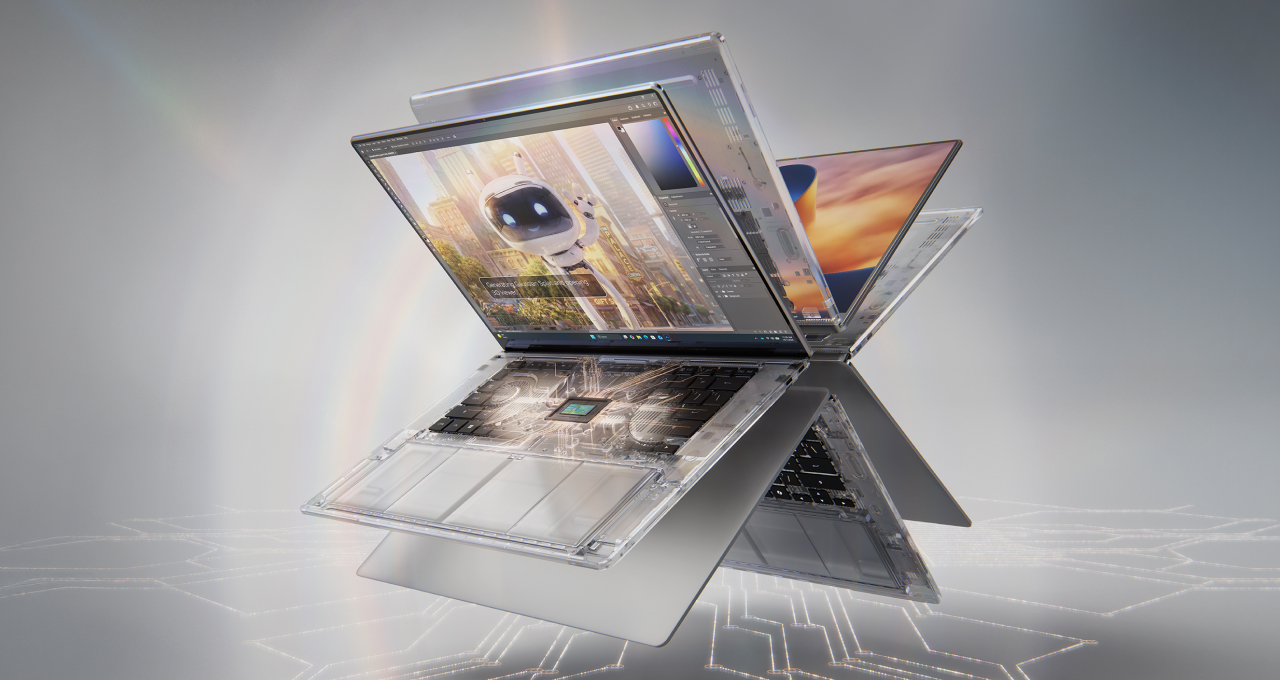
NVIDIA and Microsoft announced a new hardware and software initiative to bring artificial intelligence directly to Windows personal computers. The companies revealed RTX Spark, a new system designed to run AI agents locally, and DGX Station for Windows, a deskside supercomputer for enterprise developers.
The announcements came during a joint event in San Francisco featuring NVIDIA CEO Jensen Huang and Microsoft CEO Satya Nadella. The two leaders discussed the convergence of their long-standing partnership and the shift toward agentic computing on the desktop.
RTX Spark Brings Local AI to Windows PCs
RTX Spark integrates the full NVIDIA AI stack into Windows laptops and compact desktops. The system combines an NVIDIA Blackwell RTX GPU with up to 6,144 cores and an NVIDIA Grace CPU with up to 20 cores. These components are connected via a 600 GB/s interface to provide high-speed data transfer for intensive workloads.
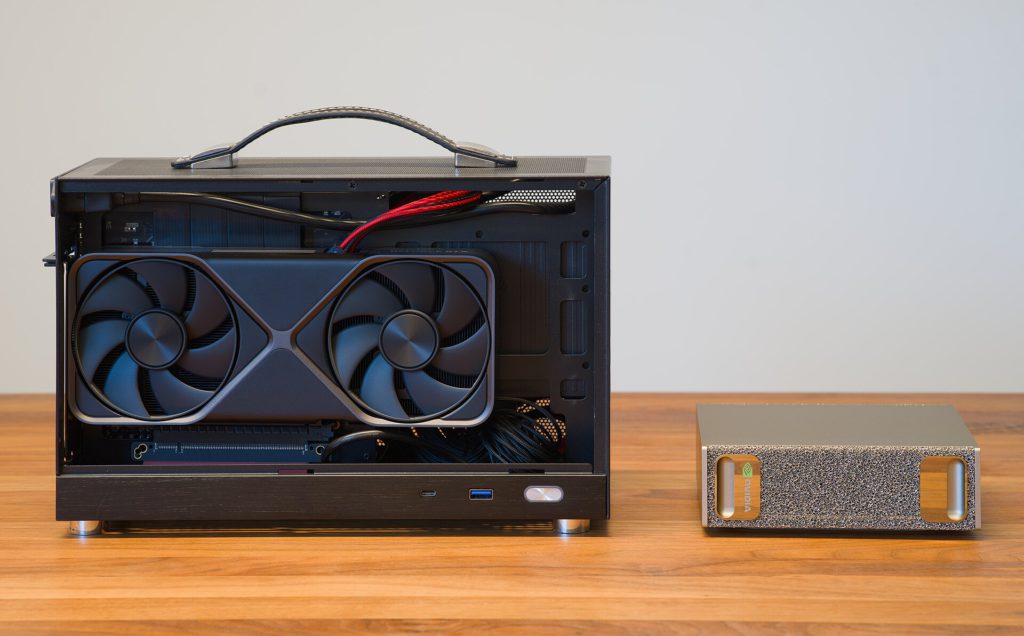
The hardware supports up to 128 gigabytes of unified memory and delivers one petaflop of FP4 AI performance. This configuration allows devices to run large language models, such as the 125-billion parameter Qwen 3.8 Flash Next, without sending data to the cloud. The system runs the NVIDIA CUDA platform, ensuring compatibility with existing software ecosystems.
Microsoft introduced the Surface Laptop Ultra as the first device built around RTX Spark. The laptop features up to 128 gigabytes of unified memory and up to a petaflop of AI compute. Microsoft Executive Vice President Pavan Davuluri stated that the device was designed to handle models that do not fit on traditional machines.

RTX Spark is available in two configurations. The laptop version allows for mobile use, while the compact desktop version is designed for 24/7 operation. This desktop form factor serves as a dedicated local AI system that keeps agents running continuously in the background.
Preorders for RTX Spark systems are open today. Laptops will be available on October 16, and compact desktops will arrive in November. Systems will be sold by Acer, ASUS, Dell, HP, Lenovo, Microsoft, MSI, and Gigabyte.
DGX Station for Windows Enters the Ecosystem
NVIDIA also previewed the DGX Station for Windows, marking the first time the company brings GB300 Grace Blackwell-class infrastructure to the Windows operating system. Previously, DGX Station ran exclusively on Linux, forcing developers to maintain separate environments for AI workloads and productivity tools.

The new Windows version runs on the GB300 Grace Blackwell Ultra Desktop Superchip. It provides 748 gigabytes of coherent memory and up to 20 petaFLOPS of FP4 AI compute. This power enables local inference and fine-tuning of models with up to a trillion parameters.
Microsoft introduced Microsoft Execution Containers (MXC) to support these workloads. MXC is an OS-level infrastructure that allows AI agents to run safely and persistently under operating system control. This tool helps secure, observe, and govern agents as they operate in the background.

By bringing this capability to Windows, NVIDIA and Microsoft aim to reduce the friction for enterprise developers. Most Fortune 500 companies standardize on Windows, and the new integration allows teams to build always-on AI agents that connect directly to existing Windows applications. Linux toolchains remain accessible through the Windows Subsystem for Linux (WSL) when needed.
NVIDIA DGX Station for Windows is available for preview, with availability details to be announced. The companies stated that this integration unlocks the ability to run frontier-class models locally, eliminating the need to rent cloud clusters for certain development tasks.
Source: NVIDIA
