


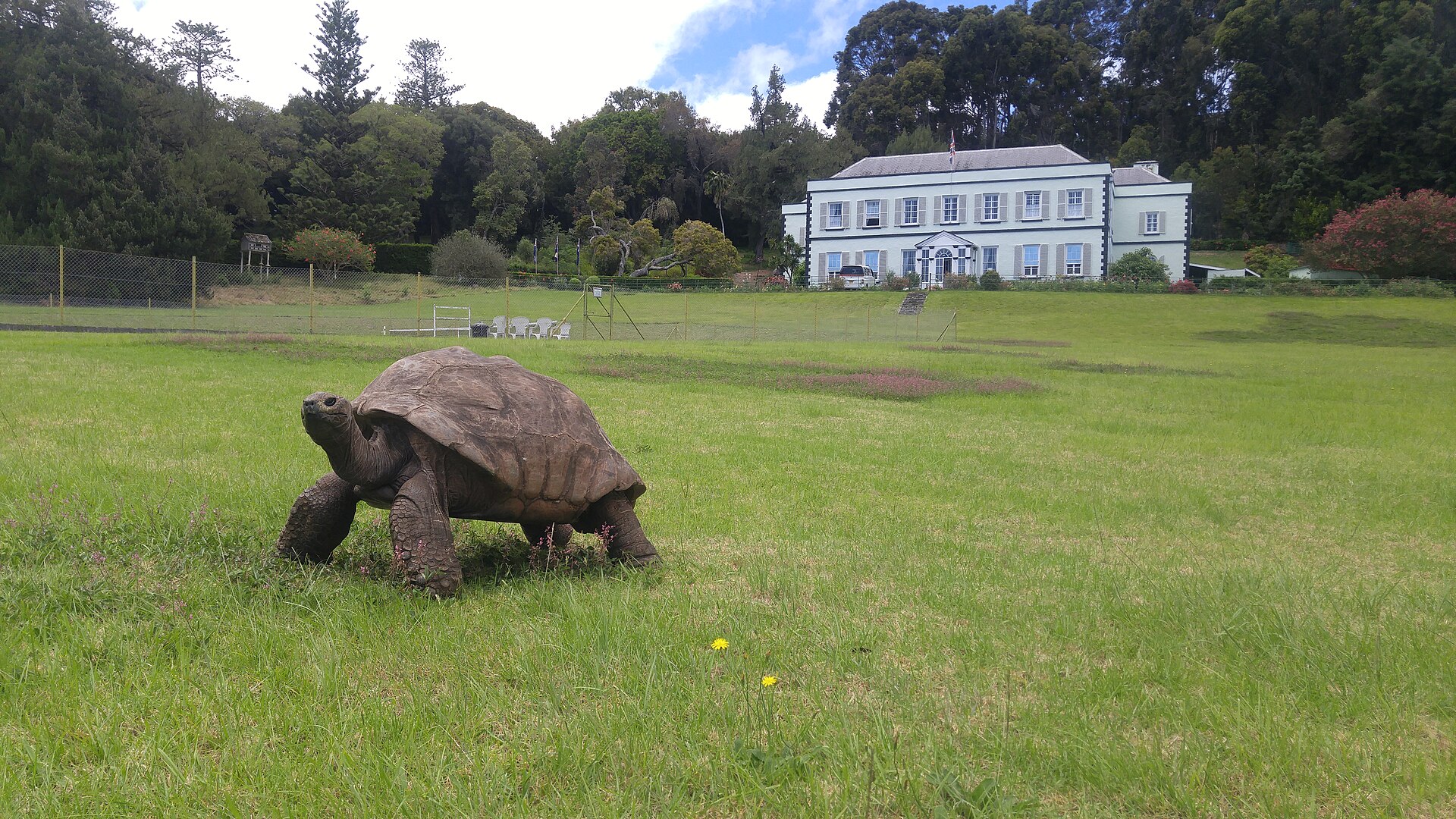
Scientists have analyzed the genetic code of Jonathan, a giant tortoise believed to be 194 years old, uncovering specific biological patterns that may explain his remarkable lifespan. The research, published in Science Advances, highlights how the animal’s DNA protects the function of mitochondria, the cellular structures responsible for energy production.
Jonathan resides at Plantation House, the official residence of the governor of Saint Helena in the South Atlantic. Born around 1832, he is a contemporary of Queen Victoria and Charles Darwin. The international research team, led by Benjamin Vaisvil, examined chemical tags known as methyl groups that attach to DNA and influence gene activity.

Jonathan the Tortoise Genetic Analysis
The study compared methylation patterns on Jonathan’s genes with those of other giant tortoises. While many aging-related genetic markers were similar to those of other old tortoises, the patterns on genes linked to mitochondrial function matched those of much younger animals. This suggests that Jonathan’s mitochondria remain exceptionally stable and pristine, a factor strongly linked to healthy aging in many species.
Stephen Clark, a senior researcher at the Kallel Foundation, noted that the findings provide a window into long-term biological stability. “His mitochondria must be especially stable and that’s an insight into longevity in general,” Clark said. The team identified genetic variants that help repair damaged DNA, regulate metabolism, and fend off cancer, all of which contribute to the tortoise’s survival.
Researchers are now investigating how these chemical patterns contribute to longevity. Clark stated that the next step is to validate these findings through further testing. The team is exploring whether methods exist to make mitochondria function more like those of younger organisms or if replacing them could extend lifespan in other models.

Care and Recent Events
Jonathan’s health has required significant human intervention in recent years. Joe Hollis, the former senior veterinary officer of Saint Helena, took over his care in 2009. At that time, Jonathan was suffering from cataracts that left him blind, had lost his sense of smell, and had a soft, crumbly beak that made foraging difficult. Hollis began hand-feeding the tortoise, and within six to twelve months, Jonathan regained weight and developed a hard, serrated beak.
The tortoise recently gained global attention due to a viral misinformation campaign. In April, a fake X account posing as Hollis claimed Jonathan had died. The false news spread rapidly before the Guardian contacted Nigel Phillips, the governor of Saint Helena, to verify the report. Phillips interrupted his bedtime routine to check on the animal and confirmed that Jonathan was alive and sleeping under a tree.

Despite his age, Jonathan continues to exhibit natural behaviors. A few months ago, he was observed mating with a female tortoise named Emma, who shares his paddock. Hollis noted that Emma has a semicircular shell that can cause her to flip over if she moves too quickly sideways. He remarked that accidents are inevitable for a 194-year-old animal, describing the event as phenomenal given his advanced age.
Source: The Guardian
