


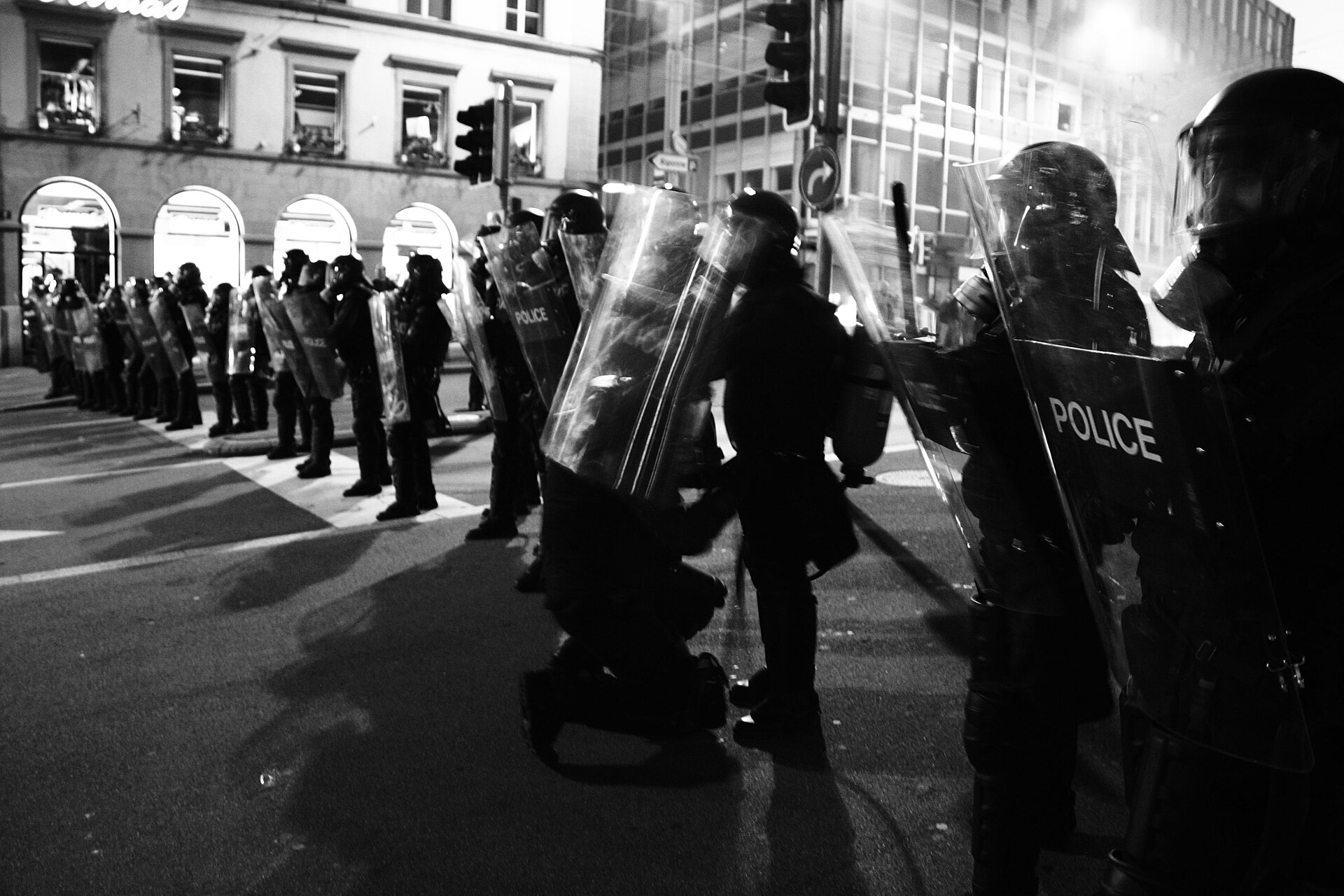
French authorities have suspended the use of stun grenades for policing student protests after a 15-year-old boy lost his hand in the northern city of Lens. Interior Minister Laurent Nuñez confirmed the pause on Wednesday, stating that the decision was made to allow investigators to clarify the facts surrounding the incident.
The disruption to education continued across the country on Wednesday, with more than 500 schools fully or partially shut. Prime Minister Sébastien Lecornu defended the police response to the demonstrations, which have drawn hundreds of thousands of participants. He denied that security forces had received orders to confront young people directly.
Investigation into Lens incident
The suspension follows conflicting accounts of how the teenager sustained his injury near the Auguste Béhal high school. Authorities stated that the boy picked up an anti-encirclement grenade, which then exploded. Students and witnesses, however, alleged that an officer fired the weapon directly at him.
Local prefects reported that police had been confronted by more than 200 students throwing stones and fireworks at the time. Nuñez told French radio that the internal police watchdog, IGPN, had opened 18 investigations to determine whether officers had acted proportionately during the demonstrations.
Stun grenades are considered non-lethal weapons that release small rubber pellets upon detonation. The national secretary of the UNSA policing union expressed skepticism about the suspension, arguing it was based on emotion rather than operational necessity. Jean-Paul Nascimento warned that without these tools, police might face more close-quarters clashes, potentially leading to higher injury rates.
Escalating violence and arrests
Tensions remain high as protests spread from high school pupils to university students and their parents. On Tuesday, hundreds of thousands of people took to the streets in Paris and other cities to demand better school conditions. The interior ministry reported 488 arrests and 43 injuries among security forces.
Education Minister Édouard Geffray stated that 24 schools had been set alight or vandalized to such an extent that they would remain closed for several weeks. This affects approximately 30,000 pupils. Geffray and Nuñez both described the speed at which the protests turned violent as unprecedented, alleging that the movement had been infiltrated by ultra-violent groups.
Other serious incidents have drawn attention alongside the Lens case. A 14-year-old boy in Saint-Ouen-l’Aumône lost several teeth and suffered a fractured jaw after being hit by a tear gas grenade. A police officer has been charged in connection with that incident. In Strasbourg, a 16-year-old suffered a serious hand injury while handling a mortar firework. Prosecutors in Belfort opened an investigation for attempted murder after a 17-year-old alleged an officer held his head underwater during an arrest.
Government response and future protests
Prime Minister Lecornu announced that schools should set aside half a day for students to voice their concerns. He noted that an online consultation had already received 30,000 responses within a day. The government promised to present a set of proposals by the end of October, ranging from building renovations to increasing teacher availability.
Student unions rejected these measures as insufficient. They maintained that a fourth round of demonstrations was planned for Thursday in Paris and other cities. Union leaders requested a meeting with Lecornu, citing a lack of concrete measures to address their demands. The head of the USL high school union urged Nuñez to calm police officers and call for restraint.
President Emmanuel Macron held an emergency meeting with key ministers to address the crisis. The protests have disrupted nearly a quarter of all lycées, with government figures placing the number of participants at more than 250,000. Union estimates place the number higher at 450,000. Political rivals have accused the government of mishandling the situation, with the leader of France Unbowed criticizing the delayed response to student injuries.
Source: BBC
