


Researchers at Virginia Tech have identified a specific characteristic of cancer cells that correlates with more dangerous tumor behavior. The study found that smaller tetraploid cells, which contain abnormal numbers of chromosomes, are more invasive and resistant to common treatments than their larger counterparts. This discovery provides a potential new method for predicting how aggressively a cancer might grow and spread.
Tetraploid Cells and Tumor Growth
Tetraploid cells are a type of abnormal cell that contains four complete sets of chromosomes instead of the usual two. These cells often arise when cancer cells duplicate their genetic material without completing cell division. While scientists have long known that tetraploidy is associated with cancer progression, the specific mechanisms driving this aggression were not fully understood.
To investigate, the research team compared tumors developed from standard diploid cells with those formed from tetraploid cells in mice. They observed that as tumors grew, the proportion of tetraploid cells actually decreased. Despite this decline, the tumors continued to expand rapidly. The team discovered that even a small fraction of tetraploid cells could encourage the recruitment of stromal cells, which are non-cancerous connective tissue cells. These recruited cells create an environment that supports further tumor development.
“The presence of even a small fraction of these tetraploid cells can promote the recruitment of extra non-cancerous cells that support further tumor progression,” said Megan Sweet, a graduate student in biological sciences at Virginia Tech. This finding highlights a previously unrecognized way that abnormal cells can drive tumor growth.
Cell Size Predicts Aggressiveness
A separate part of the investigation focused on the physical size of these tetraploid cells. The researchers expected the cells to be approximately twice as large as normal diploid cells due to their doubled chromosome count. Instead, they found that some cells were 25 to 30 percent smaller than anticipated. More surprisingly, these smaller cells proved to be more capable of forming aggressive tumors.
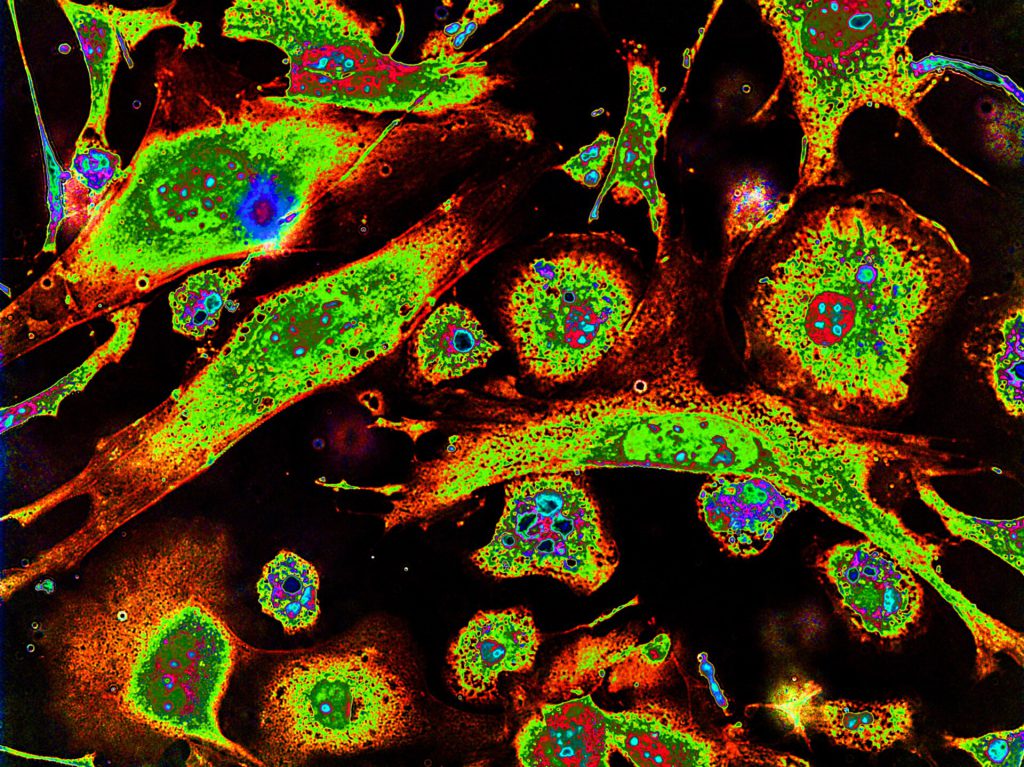
“The smaller clones are more aggressive,” said Mat Bloomfield, another graduate student on the team. “They grow faster, are more invasive, and more tolerant of common anti-cancer and stress-inducing drugs.” Experiments in mice confirmed that tumors containing smaller tetraploid cells grew more quickly than those with larger ones.
This pattern was consistent across different types of cancer, including colorectal and breast cancer cells. The researchers then analyzed data from the Cancer Genome Atlas, a large database of patient samples. The results showed that smaller tetraploid cells were associated with worse prognoses and lower survival rates across several cancer types. This suggests that measuring the size of these abnormal cells could provide valuable information about a tumor’s potential to spread.
“We already knew that tetraploidy can make cells more tumorigenic, but now we know that if you incorporate the size of the cells, it can be more predictive of tumorigenic potential,” said Daniela Cimini, a cell biologist at Virginia Tech. The findings add an important dimension to the understanding of cancer biology, indicating that cell size may offer additional clues about a cancer’s behavior.
The team plans to continue investigating the biological mechanisms behind these effects. They will also examine more human cancer data to further validate the link between cell size and patient outcomes. For researchers like Sweet, this means more detailed analysis of tumor tissue sections to uncover the underlying causes of this aggressive behavior.
Source: ScienceDaily
