


NASA confirmed on November 18 that the Voyager 1 spacecraft has reached a distance of one light-day from Earth. The milestone was reached at 10:16:07 UTC, marking a significant point in the mission’s journey through interstellar space. This event occurred nearly 50 years after the probe was launched in 1977.
Emirates Astronomical Observatory Signal
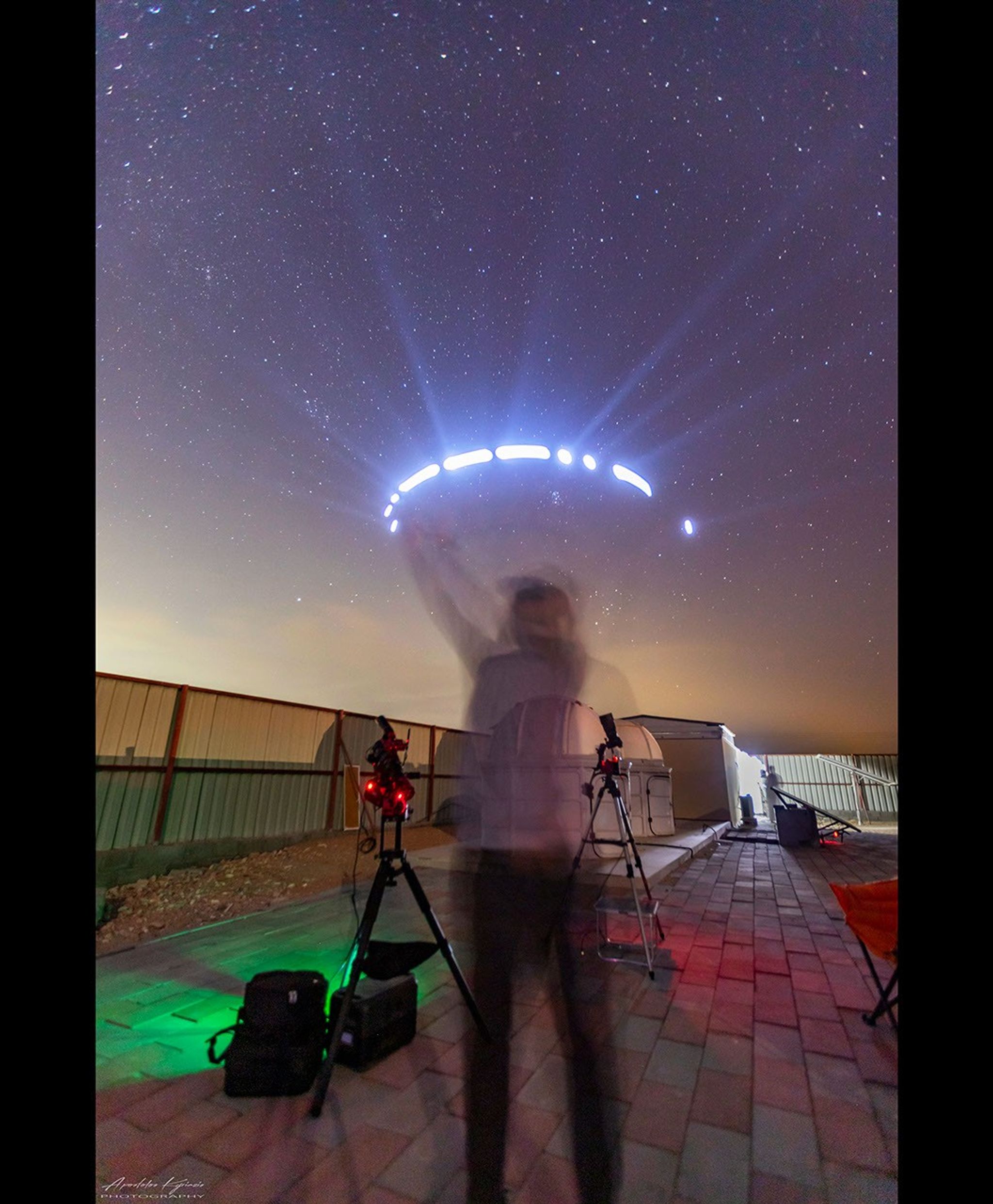
Three days prior to the official confirmation, observers at the Emirates Astronomical Observatory participated in a symbolic gesture to mark the occasion. On November 17, fans of spaceflight were invited to shine a flashlight into the night sky. By switching the light on and off in a Morse code pattern, they transmitted the call sign V-G-R. This sequence corresponds to the identification code for the Voyager 1 spacecraft.
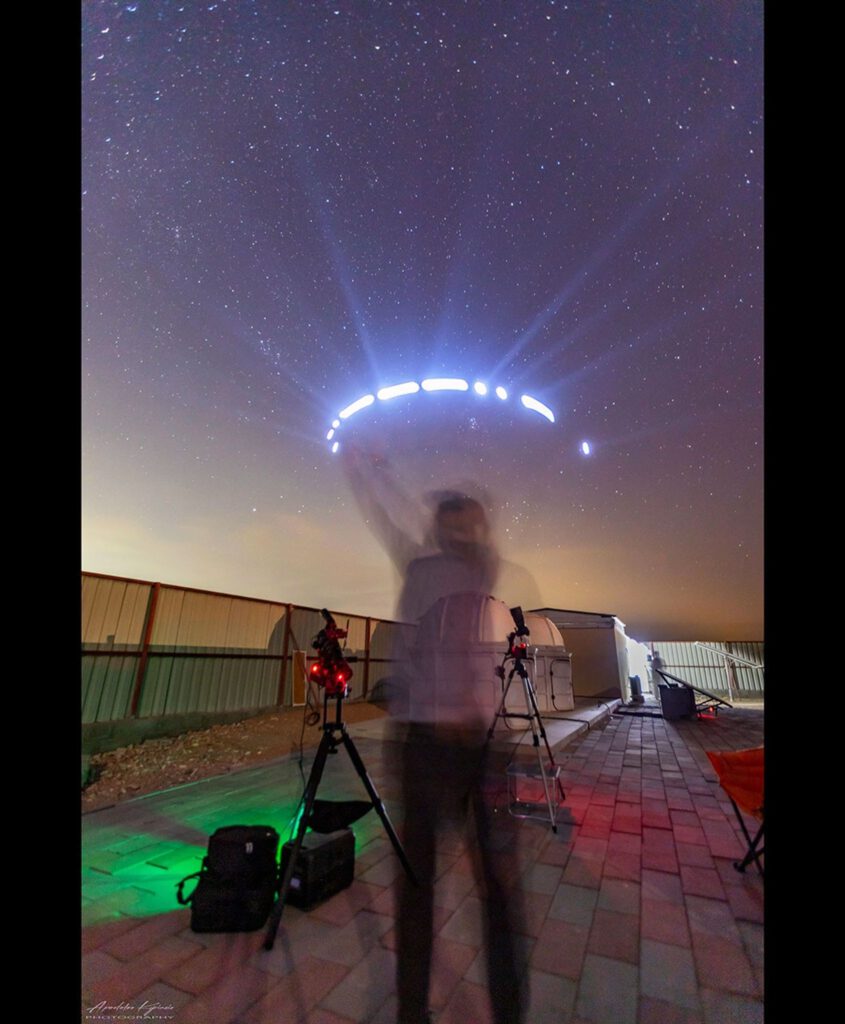
The time-exposure photograph of this event captures the dashes and dots of the message against the night sky. The signal serves as a human connection to humanity’s most distant interstellar spacecraft. The message traveled at the speed of light, taking exactly one day to reach the probe.
Future Distance Projections
Voyager 1 continues to move away from the solar system at a steady pace. At its current speed, the spacecraft travels approximately one light-day every 50 years. Astronomers have calculated that it will take roughly 18,250 years for Voyager 1 to reach a distance of one light-year from Earth. One light-year is equivalent to 365 light-days.
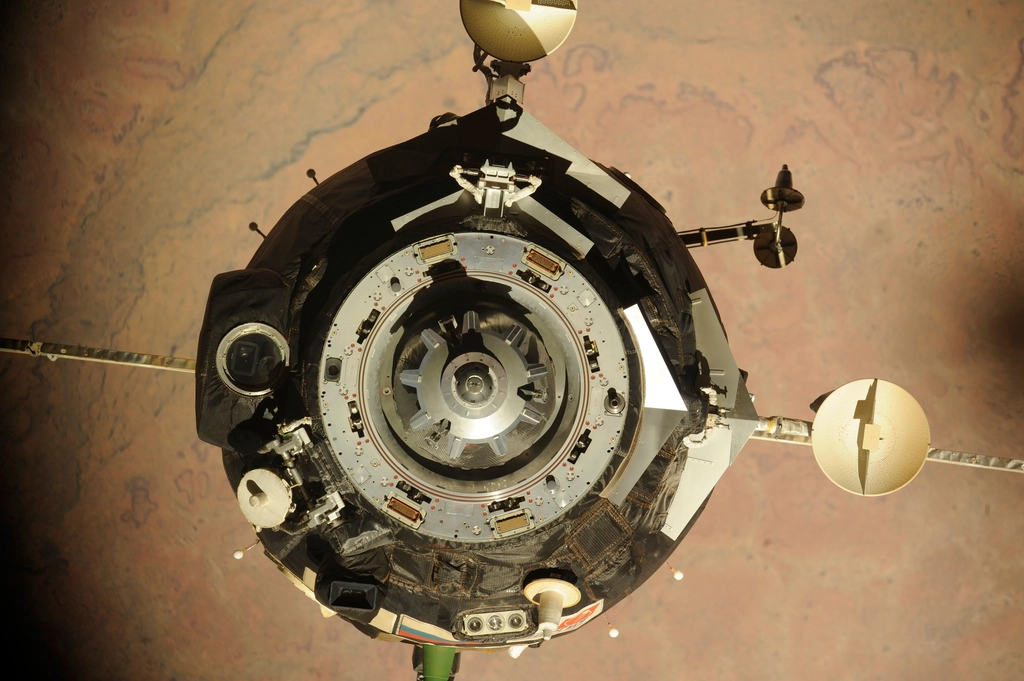
The probe remains in interstellar space, far beyond the heliosphere. It continues to send data back to Earth, providing valuable information about the environment outside our solar system. The one light-day milestone highlights the vast scale of space and the enduring nature of the Voyager mission.
Source: NASA
