



Researchers at UCLA Health have identified a significant link between long-term residential exposure to the chlorpyrifos pesticide and an increased risk of Parkinson’s disease. The study, published in Molecular Neurodegeneration, found that individuals with prolonged exposure to the chemical faced more than 2.5 times the risk of developing the progressive neurological condition compared to those with no such exposure.
Tracing Exposure Through Residential History
The human component of the research involved 829 participants diagnosed with Parkinson’s disease and 824 individuals without the condition. All participants were enrolled in the university’s long-running Parkinson’s Environment and Genes study, which tracks how environmental factors and genetics influence disease development.
To determine exposure levels, scientists combined California’s detailed pesticide application records with the residential and workplace address histories of the participants. This method allowed researchers to estimate the amount of chlorpyrifos individuals may have encountered over time based on where they lived and worked. The analysis revealed a striking association between prolonged residential exposure and the onset of the disease.
While this population analysis established a strong correlation, it could not definitively prove that the pesticide directly caused the disease. To investigate the biological impact, the research team moved to laboratory models to see if the chemical could reproduce the brain damage seen in Parkinson’s patients.
Cellular Mechanisms of Neurotoxicity
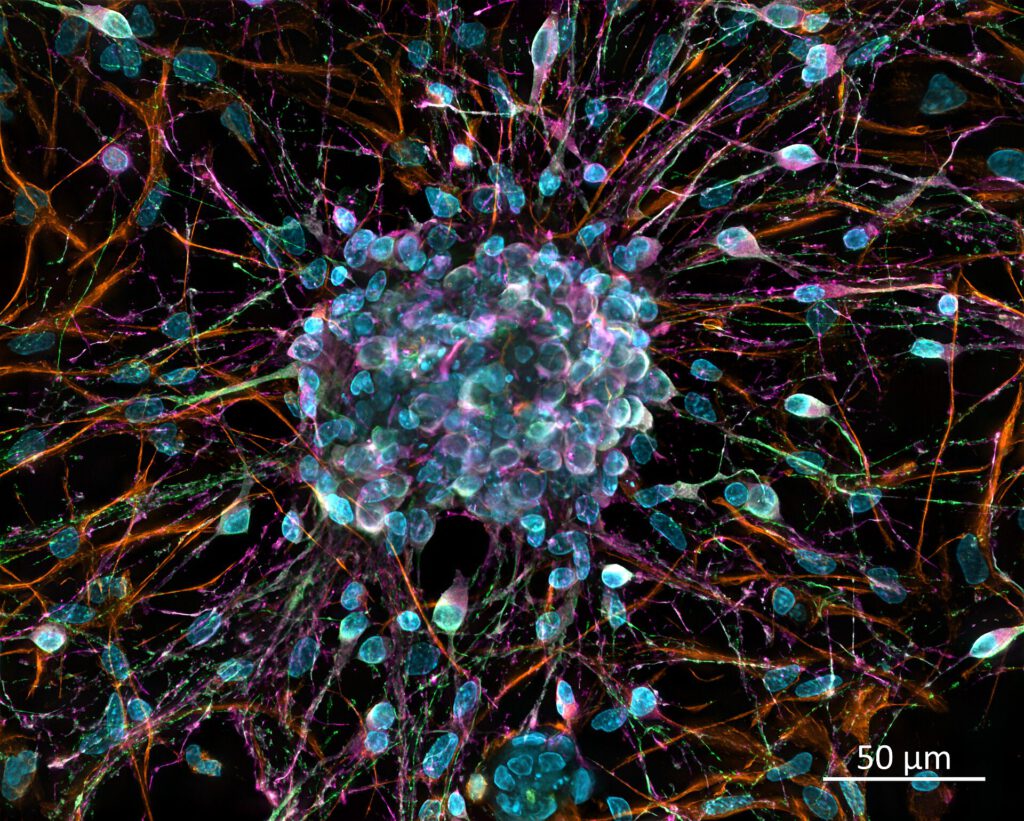
In animal experiments, mice were exposed to chlorpyrifos in aerosol form for 11 weeks. This inhalation method was chosen to mimic a common way people encounter pesticides in the environment. The exposed mice developed movement difficulties and experienced the loss of neurons responsible for producing dopamine. This degeneration of dopamine-producing nerve cells is a central feature of Parkinson’s disease.
The researchers also detected inflammation in the animals’ brains and abnormal accumulations of a protein called alpha-synuclein. Under normal conditions, this protein plays a role in nerve cell functioning, but it can accumulate in clumps that are closely associated with the deterioration of brain cells.
To understand exactly how the chemical harms neurons, the team turned to zebrafish. Their experiments pointed to a disruption in autophagy, a natural cellular maintenance process that helps remove damaged proteins and other unwanted material. Autophagy functions like an internal recycling system, breaking down worn-out components so potentially harmful material does not accumulate. This process is especially important for neurons, many of which must remain functional throughout a person’s lifetime.

When chlorpyrifos interfered with this cleanup system, damaged material accumulated inside neurons, contributing to their deterioration. However, the researchers made an encouraging discovery. When they restored the cellular cleanup process or removed the synuclein protein in their experiments, the neurons were protected from damage.
Dr. Jeff Bronstein, professor of Neurology at UCLA Health and the study’s senior author, emphasized the importance of identifying specific chemicals rather than treating all pesticides as a single category.
“This study establishes chlorpyrifos as a specific environmental risk factor for Parkinson’s disease, not just pesticides as a general class,” said Dr. Jeff Bronstein. “By showing the biological mechanism in animal models, we’ve demonstrated that this association is likely causal. The discovery that autophagy dysfunction drives the neurotoxicity also points us toward potential therapeutic strategies to protect vulnerable brain cells.”
Chlorpyrifos has been used extensively in agriculture for decades. Its residential use was banned in the United States in 2001, and agricultural applications faced additional restrictions in 2021. However, the pesticide remains in use on many crops in the United States and continues to be widely applied in other countries.

The findings suggest that therapies strengthening the brain’s cellular cleanup mechanisms might eventually help protect vulnerable neurons in people exposed to chlorpyrifos or other pesticides that disrupt similar processes. Such treatments might prove useful for those with a history of substantial exposure, though additional research is needed to determine if enhancing autophagy can prevent brain damage in humans.
Scientists also want to investigate whether other commonly used pesticides interfere with the same cellular mechanisms. Earlier recognition of possible changes in brain function could become increasingly important as researchers work toward treatments that slow or prevent Parkinson’s progression.
Source: ScienceDaily
