


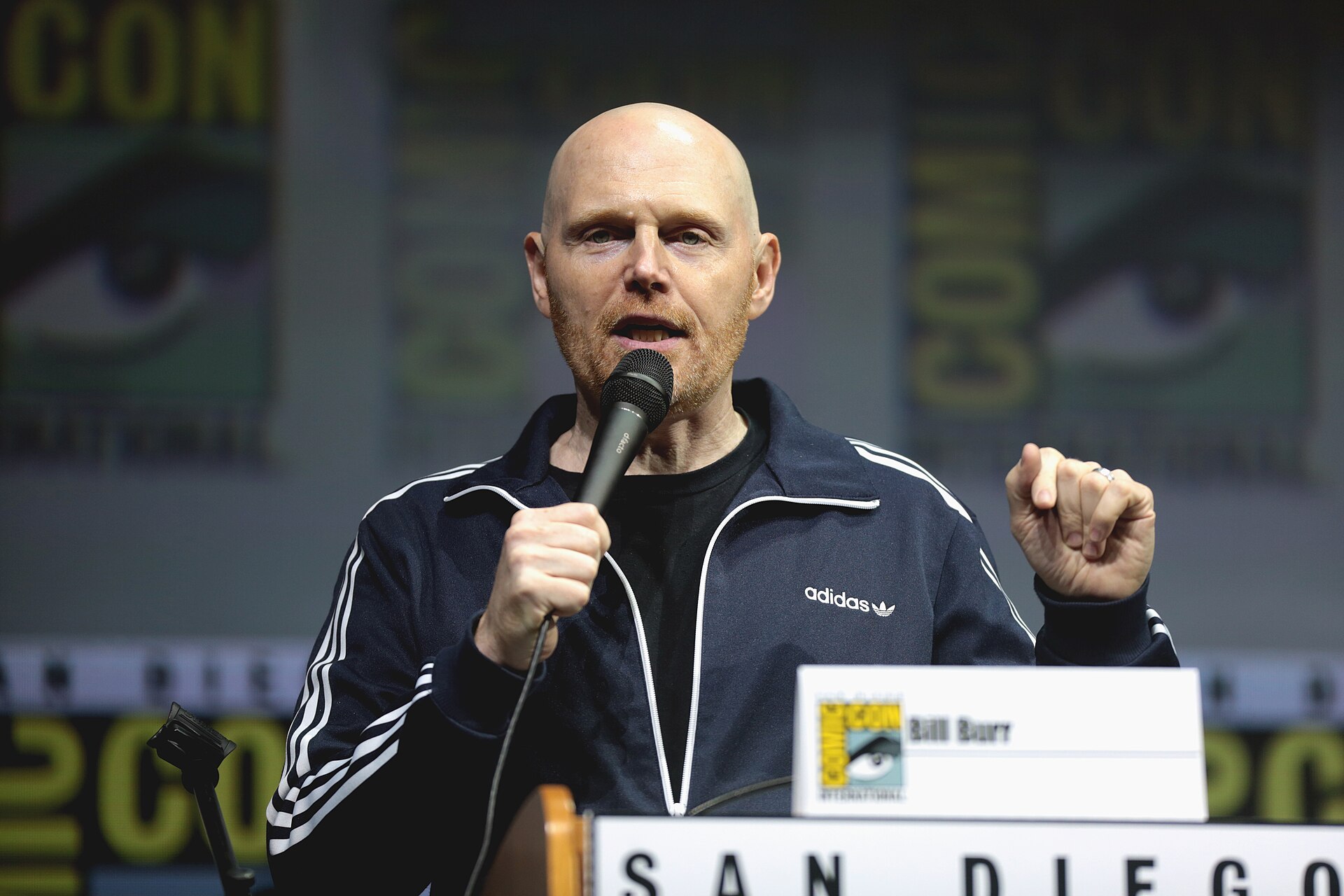
Bill Burr has spent over thirty years in stand-up comedy building a reputation for voicing the frustrations that many people feel but rarely express. In Aaron Sorkin’s new film, The Social Reckoning, Burr channels that same direct approach into a dramatic role. He plays Charlie Garrigan, a fictionalized former Facebook investor who turns critic to help Mark Zuckerberg prepare for a high-stakes congressional hearing.
The film serves as a follow-up to Sorkin’s 2010 hit The Social Network. While the earlier movie focused on the creation of Facebook, this new story jumps forward to the pandemic era. The plot centers on an investigative journalist threatening to expose the company’s misdeeds. Meanwhile, Zuckerberg, played by Jeremy Strong, deals with the fallout of his platform’s role in fueling the January 6 Capitol insurrection.
Sorkin’s Direct Pitch to Burr
Burr landed the role after Sorkin saw him perform in David Mamet’s Broadway production of Glengarry Glen Ross. In that play, Burr portrayed the angry salesman Dave Moss. Shortly after that performance, his agent received a call from the screenwriter. Sorkin wanted to offer him the part directly.
Burr found the direct outreach surprising. He noted that Sorkin was humble and took the time to pitch the role as if Burr were a major star. This approach made the comedian feel valued and eager to join the project. He described the experience as a chance to say things that are often left unsaid in polite conversation.
The role of Charlie Garrigan allowed Burr to explore the complex relationship between a tech investor and a founder. The character shares a business history and a friendship with Zuckerberg that eventually sours. Garrigan finds himself in the crosshairs of a crisis, teaching the tech titan how to speak to Congress without causing further damage.
On Set Dynamics and Corporate Critique
Production on The Social Reckoning moved quickly. The cast worked six days in a row, which Burr said mirrored the intense, non-stop atmosphere of a corporate crisis management team. He noted that working across from Strong, who uses a different acting process, required adaptation. Burr described his own approach as adversarial, often interrupting the smooth PR speak being fed to his character.

Burr also drew parallels between the film’s corporate dialogue and real-world business practices. He compared the way executives talk about harm to the detached language used in the film Zone of Interest. He finds it fascinating how corporations use nameless, faceless structures to distance themselves from the consequences of their actions. He pointed out that the public can easily name a controversial celebrity but struggles to identify the top CEOs in their respective industries.
His views on the industry extend beyond the script. Burr stated that unregulated capitalism is frightening. He believes that tech leaders are closing doors and putting people out of work, leading society toward ruin. He argued that when a few individuals hoard wealth, the broader economy suffers because there is no one left to buy the products being made.
Personal Emotional Release
Acting has also triggered unexpected emotional responses for Burr. He revealed that he has walled off vulnerable feelings since childhood due to traditional expectations of masculinity. When he plays characters who feel disappointment or sadness, he must open those emotional vaults. This process sometimes results in intense crying that has nothing to do with the scene being filmed.
Burr described one instance where he had to cry in a hotel room to release years of suppressed emotion before he could perform the next day. He called it misdirected crying rather than misdirected anger. To manage this, he has turned to breathwork and massage therapy. He says these practices have helped him reduce his baseline anger significantly.
He now compares his previous constant anger to a person bringing Game 7 energy to a casual pickup sports game. He is dedicated to keeping that intensity in check. Burr stated that he is no longer an angry person by default. He can still get angry, but it is just one emotion among many, rather than his entire life experience.
Source: Variety
