


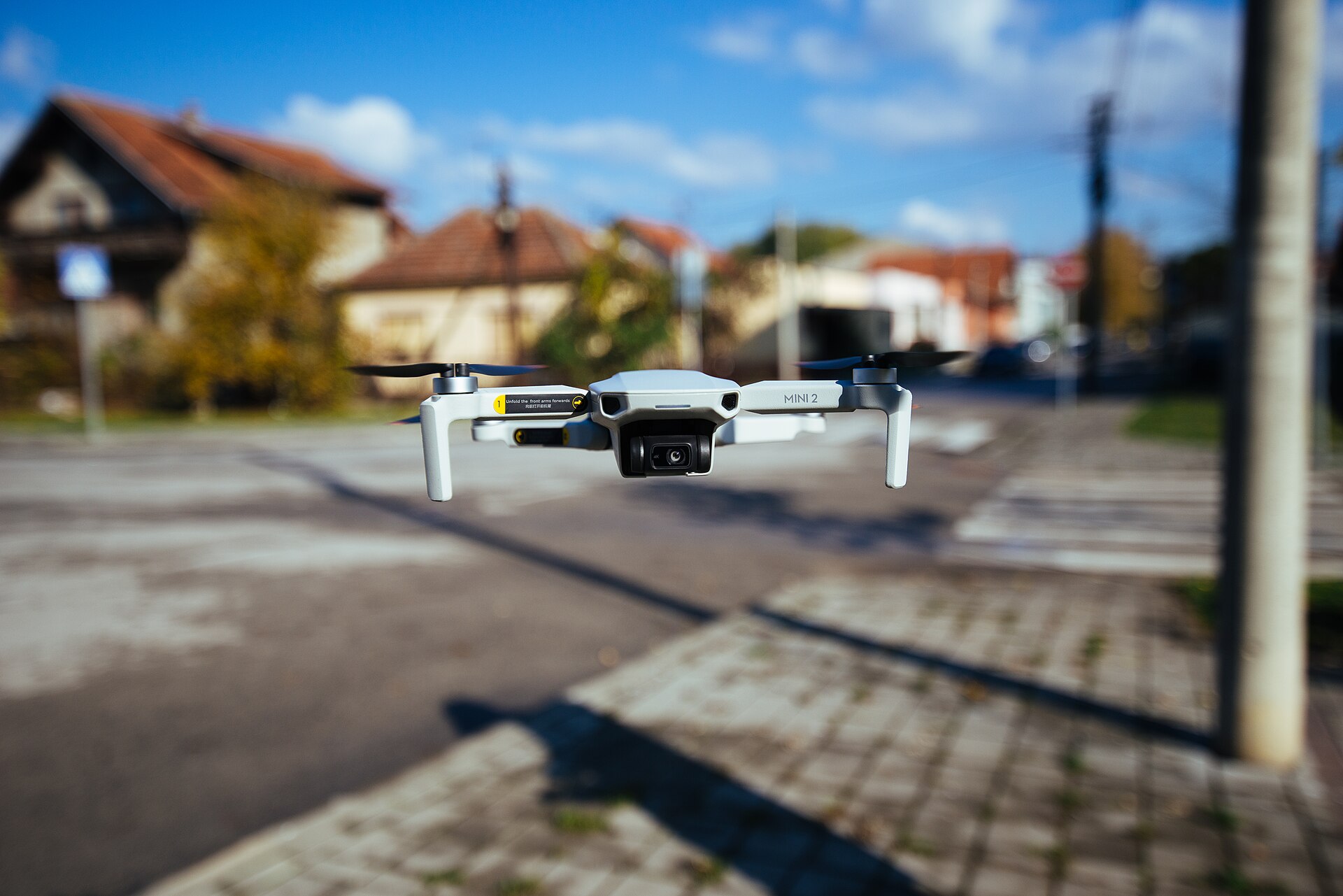
Residents in suburban areas across the United States and the United Kingdom are increasingly voicing complaints about the sound of delivery drones flying overhead. As companies like Amazon and Walmart expand their aerial logistics networks, the high-pitched whine of rotors has become a source of friction for homeowners who previously enjoyed quiet neighborhoods.
Ashley Schmidt, a resident of North Garland, Texas, has stopped spending time in her garden or cycling to local parks. She cites the constant sound of drones delivering packages to her neighbors as the primary reason. “They emit this very annoying buzz,” Schmidt said. “You can hear the drones on approach and you can hear them inside your home when they pass directly overhead.”
Acoustic Impact on Communities
The issue is not limited to the United States. Amazon Prime Air, which is expanding its delivery network to nearly 500 cities in the US, has also launched services in and around Darlington in northern England. Smaller local services are also emerging, with customers in some US cities able to order pizza or ice cream via drone.
Antonio Torija Martinez, a professor of acoustic engineering and psychoacoustics at the University of Salford, notes that drone noise is particularly intrusive because it differs from the steady hum of traffic. Unlike commercial aircraft that fly at high altitudes, drones operate at low levels, often directly over residential streets. This exposes communities that have not previously experienced significant aircraft noise to a new soundscape.
Research indicates that people react strongly to noises they perceive as novel or intrusive. While those who benefit from the service may be less bothered, Torija Martinez warns that complaints will likely increase as the sector expands. The Federal Aviation Administration (FAA) in the US regulates commercial drones but states that operators and local leaders are primarily responsible for addressing community concerns.
Engineering Quieter Rotors
In response to the backlash, several companies are investing in technology to reduce the acoustic footprint of their fleets. Greenjets, a London-based startup, has developed a propulsion system that encloses spinning blades inside a pod. This design aims to muffle sound and direct noise away from the ground. The company claims its system can reduce drone noise by at least two-thirds through slower rotor speeds and vibration-dampening materials.
Greg Sharrow, founder of Detroit-based Sharrow Engineering, took a different approach. His interest in quiet drone design began in 2012 when he needed to film a violinist from a difficult angle without the drone’s noise interfering. He realized that the tips of standard propeller blades created the most noise. His solution was a twisted, loop-shaped blade with no points, which he initially tested in water before applying the technology to drones. Sharrow states that his company has validated that the technology is dramatically quieter.
Major delivery services are also making adjustments. An Amazon spokesperson said the company has made measurable sound improvements to its drones. The latest designs use custom propellers that produce almost half the perceived sound of previous generations, with a milder tone. Wing, a drone maker that provides vehicles for Walmart deliveries, designs its propellers to minimize noise and varies flight paths to avoid repeated overflights of the same homes.
While the primary driver for these innovations is residential comfort, the technology has other applications. Greenjets’ low-noise systems are used by police and harbor security teams in Germany, and by conservationists in Africa to track poachers without detection. Military operators also seek quieter drones, though Robert Tollast of the Royal United Services Institute notes that speed often takes precedence over stealth in modern conflicts.
For residents like Schmidt, however, the technological fixes have not yet been enough. She stated that the only satisfactory solution would be to halt drone deliveries in her area until the companies can eliminate the nuisance entirely.
Source: BBC
