


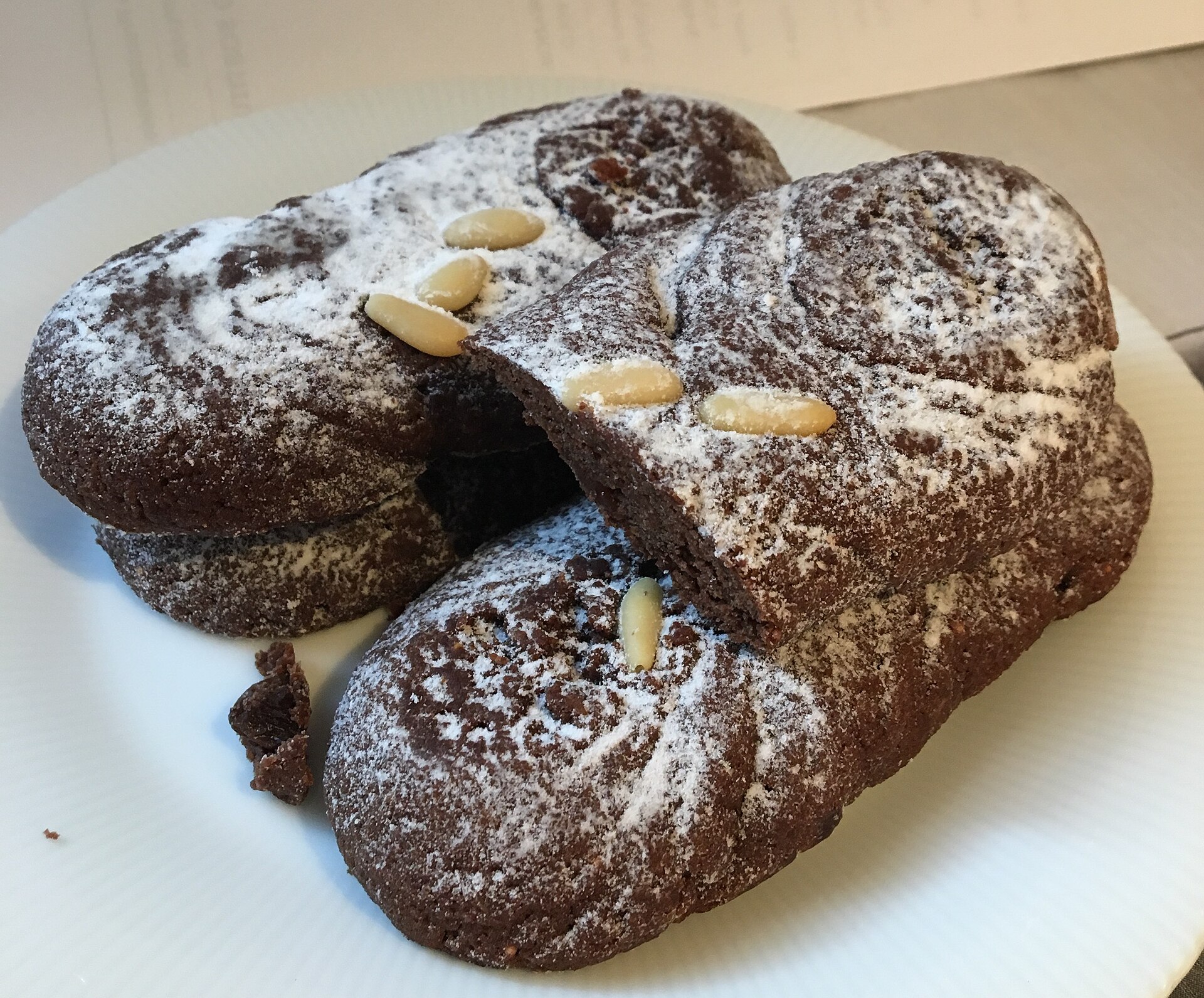
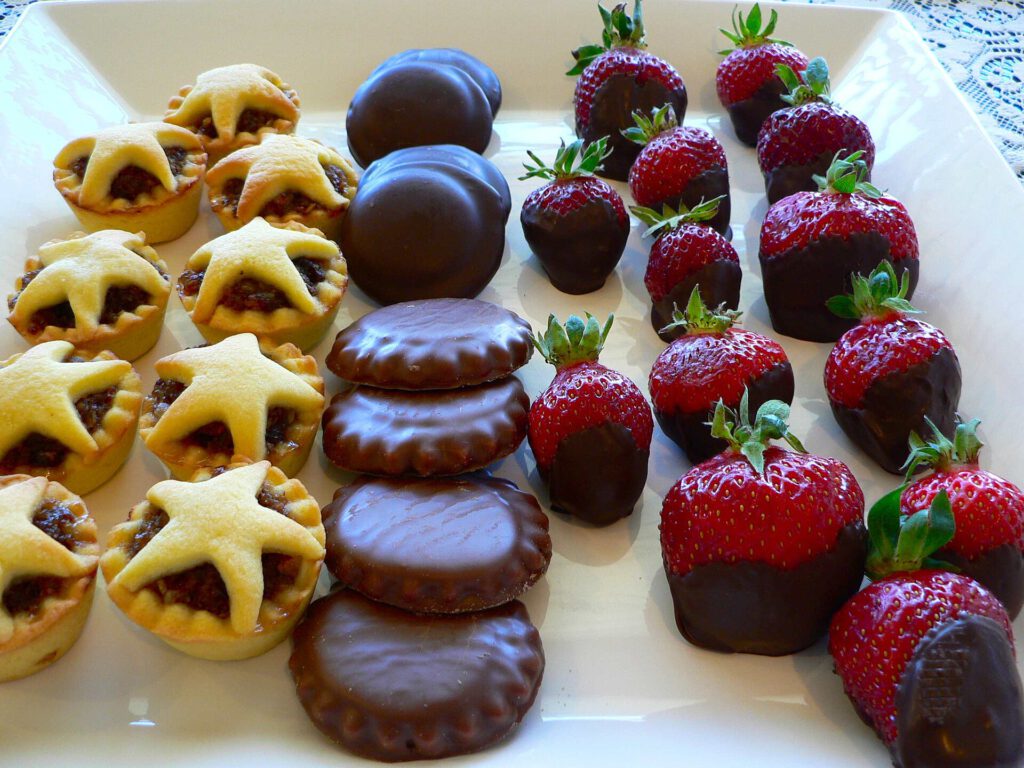
Halfway between a cake and a biscuit, these Italian treats have been around since medieval times, and only get better with age. The diamond-shaped mostaccioli are spiced in a way that warms the throat and are completely covered in dark chocolate.
Pasticceria Savarese in Rome
Established in 1982 by sisters Piera, Pina and Grazia Saverese, Pasticceria Savarese is a Neapolitan pastry shop in south-east Rome. It is a densely decorated place, a composite of mirrors, tiles, frames, panels, shelves, and cabinets. Every cubbyhole and loop serves a function. Two counters support two aluminium-framed, glass cabinets, each with three glass shelves holding pastries, tarts, cakes and biscuits.
The house speciality is la pastiera Napoletana, a latticed tart with a deep filling of ricotta, wheat berries, sugar, milk, candied fruit and spices. While traditional at Easter, it is available here all year round. La pastiera was the reason we first visited the shop a few years ago, on the recommendation of a Neapolitan friend who dislikes cooking as much as she likes eating. She also recommended the diamond- or rombo-shaped mostaccioli.
Medieval Origins and Ingredients
There is plenty of folk etymology around the name mostaccioli, but there is no doubt as to their ancestry in the various sweet and heavily spiced morsels served as part of medieval banquets. The Renaissance chef Bartolomeo Scappi mentions mostaccioli from both Naples and Milan, and gives a recipe for the latter that involves whipping eggs, sugar, flour, coriander seeds and anise into a batter, then baking it twice.
Three hundred or so years later, the gallant cook Vincenzo Corrado provides several recipes, including one for mostaccioletti that calls for flour, sugar, cinnamon, cloves, nutmeg and water to be kneaded into a dough. This is then left to ferment for two days, rolled into whatever shape you please, then baked until done.
Neither Scappi or Corrado mention grape must, or mustum, the dense, fruity syrup produced by boiling down grape juice to a third of its original volume. Some suggest this is the origin of the names mostaccioli and mostaccioletti. But maybe that is because both chefs, with their enormous budgets, could afford to cook with sugar and honey, while grape must was a less expensive alternative. These days, mostocotto, or saba, is hardly cheap, but it does make a full-flavoured alternative to honey, as do treacle or golden syrup.
How to Make Neapolitan Mostaccioli
Depending on the temperature of your kitchen, the chocolate will take anything from 20-50 minutes to harden all the way through. If your kitchen is too warm and it is taking too long, 10-15 minutes in the fridge should speed things up. Delicious the same day, mostaccioli, like gingerbread, parkin and lebkuchen, improve with age. Store in a tight tin in a cool place, and the moisture from the honey will keep them supple while the spices will deepen the flavour.
Ingredients:
- 500g plain flour
- 150g ground almonds
- 50g cocoa powder
- Finely grated zest of 1 unwaxed orange
- ½ tsp ground cinnamon
- ½ tsp ground cloves
- 1 tsp baking powder
- 1 pinch salt
- 180g caster sugar
- 3 tbsp honey, or golden syrup or mostocotto
- 80ml orange juice
- 300g dark chocolate
In a large bowl, mix the flour, ground almonds, cocoa powder, orange zest, spices, baking powder and salt. In a small pan, heat 100ml water with the sugar, honey and orange juice, stirring until the sugar dissolves completely.
Add the wet ingredients to the dry, then mix to a soft, pliable dough. Bring the dough into a ball, cover and set aside to rest for 30 minutes.
Working on a lightly floured surface, roll out the dough until it is 6-8mm thick, then, using a knife or suitable cutter, cut it into roughly 8cm-long diamonds. Transfer these to an oven tray lined with greaseproof paper, then bake in a 180C (160CF)/350F/gas 4 oven for 12-14 minutes, until the biscuits are still a bit soft and light in colour. They must not darken. Transfer the mostaccioli to a rack and leave to cool completely.
Melt the chocolate in a bain-marie bowl balanced over a pan of simmering water, or in the microwave. Using two forks, dip and roll the biscuits one by one in the melted chocolate until they are completely covered, then return to the rack, set over a sheet of baking paper to catch any drips, and leave to cool and set.
Source: The Guardian
