


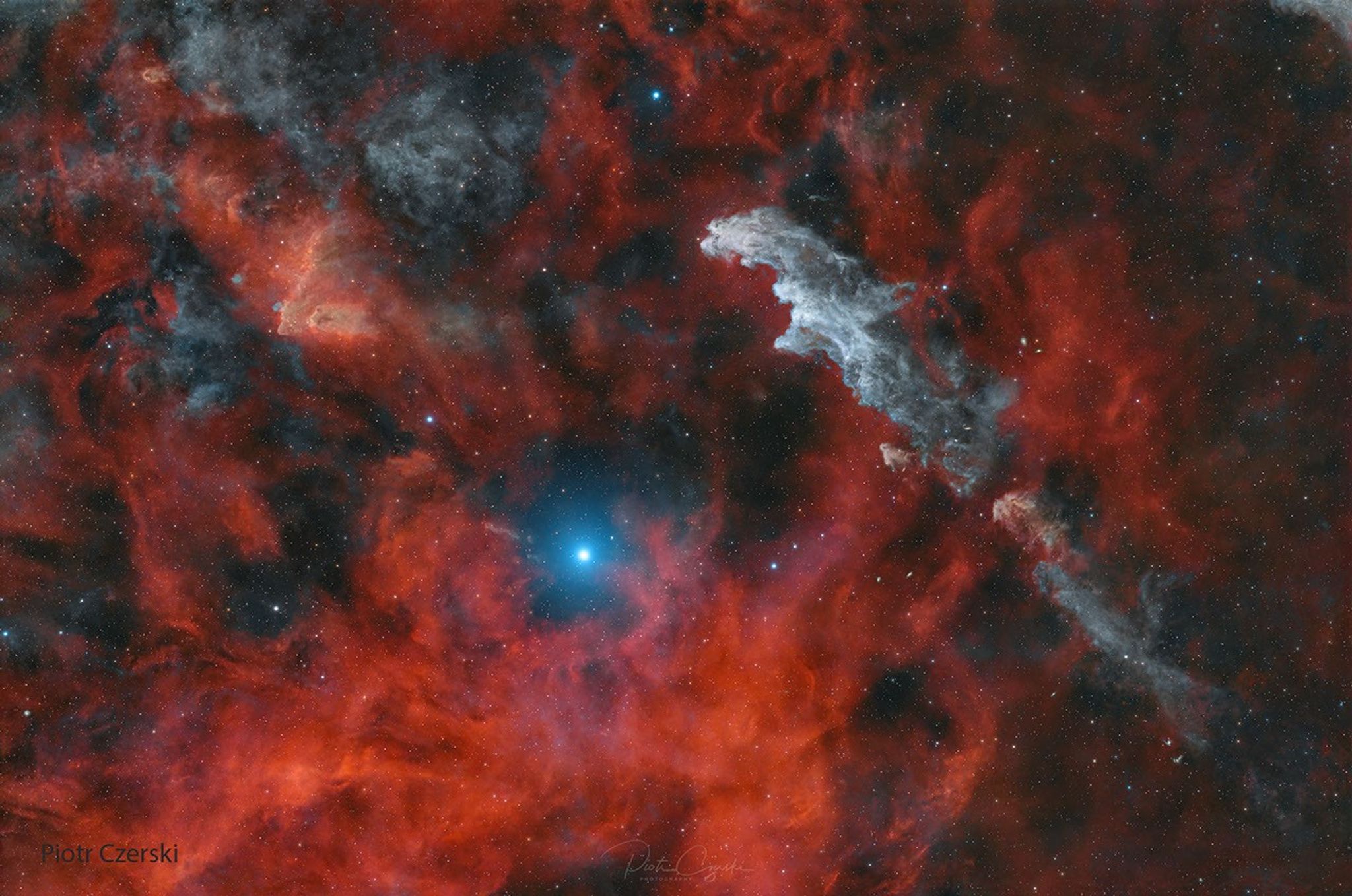
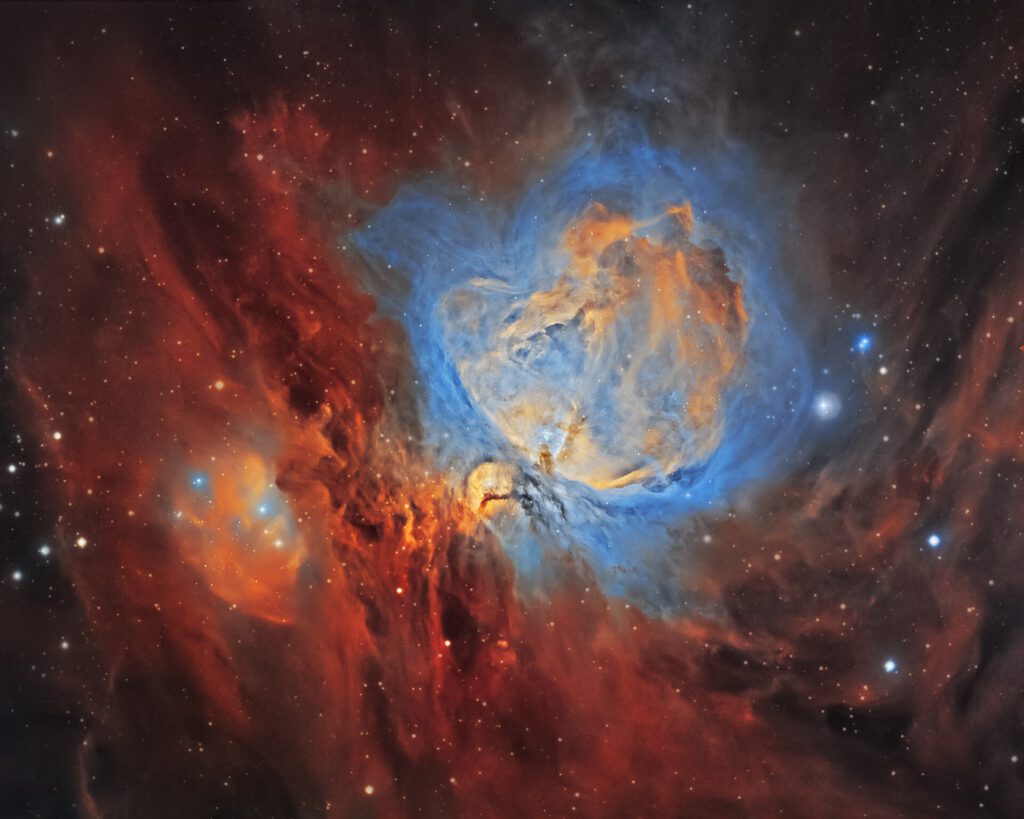
NASA has featured the Witch Head Nebula as the subject of its daily Astronomy Picture of the Day for November 9, 2026. The image captures the interplay between a massive cloud of interstellar dust and one of the brightest stars in the night sky, Rigel.
The nebula, officially cataloged as IC 2118, derives its popular name from its resemblance to a stylized profile of a witch’s head. While the specific contours that suggest a Halloween caricature may invite imaginative interpretation, the physical structure of the cloud is defined by harsh stellar forces. The nebula spans approximately 50 light-years and consists of gas and dust that has been partially eroded by the intense radiation from nearby stars.
Scattering Blue Light
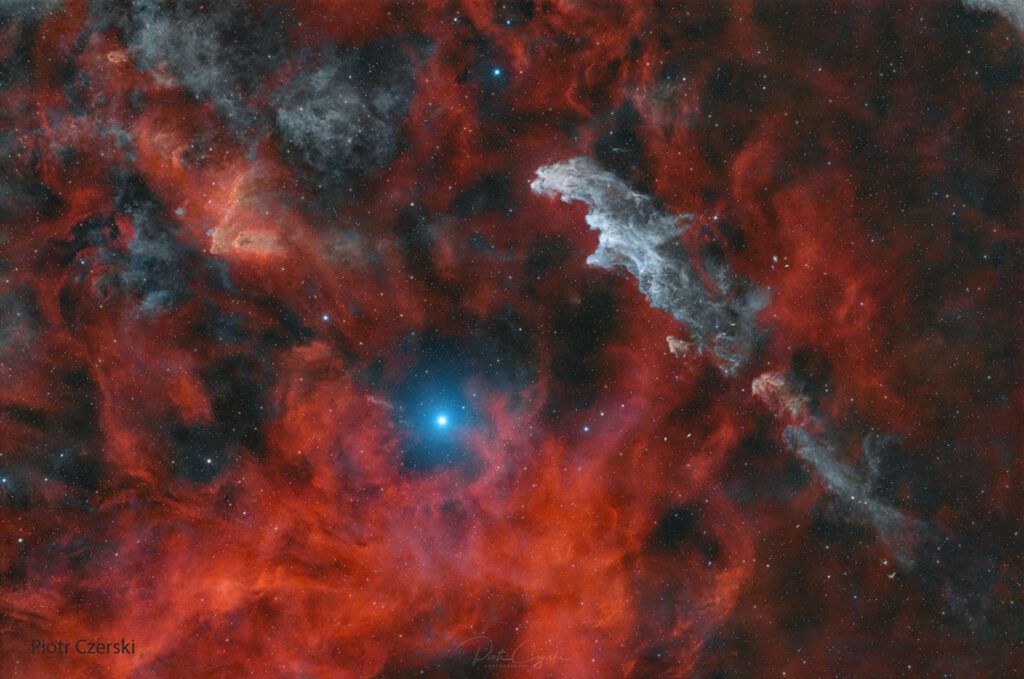
The striking blue hue of the Witch Head Nebula is not an intrinsic property of the dust itself but rather the result of how that dust interacts with starlight. Rigel, a blue supergiant located just below the center of the featured image, emits intense blue light. When this light strikes the dust grains within IC 2118, the particles scatter blue wavelengths more efficiently than red ones.
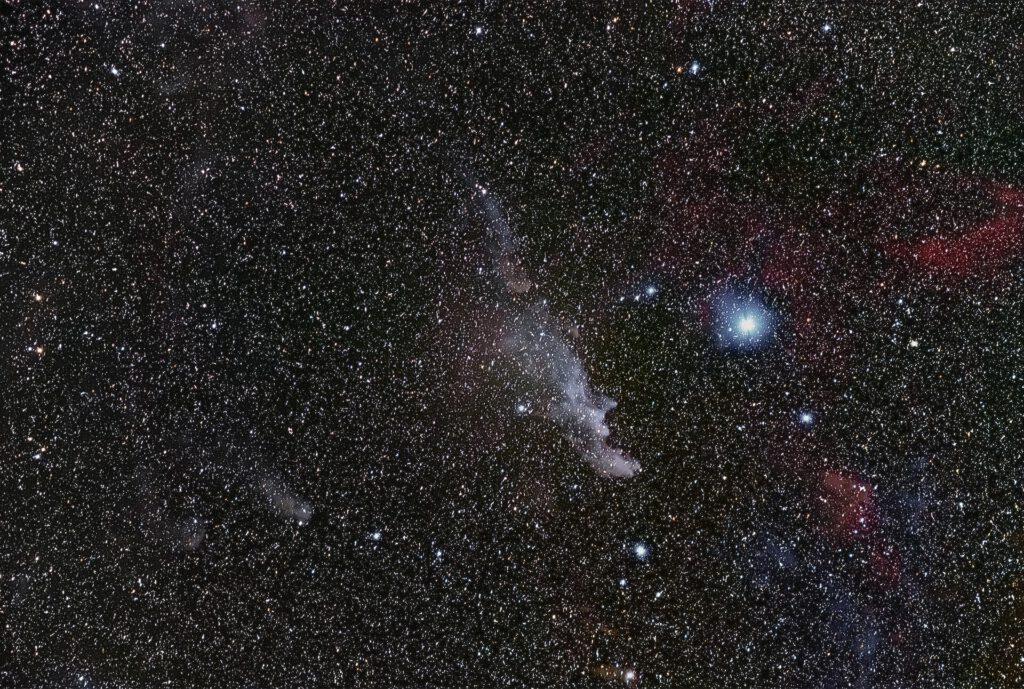
This phenomenon is identical to the physical process that makes Earth’s daytime sky appear blue. On our planet, molecules of nitrogen and oxygen in the atmosphere scatter sunlight in the same manner. In the vacuum of space, however, solid dust grains serve as the scatterers, creating a visible glow around the star.
Rigel in Orion
Rigel serves as the primary light source for this celestial scene. As one of the most luminous stars in the constellation Orion, it dominates the visual field in the new photograph. The star’s position relative to the nebula highlights the dynamic nature of star-forming regions, where stellar winds and radiation sculpt the surrounding material over millions of years.
The image provides a clear view of how bright stars can alter their immediate environment. The erosion of the nebula’s structure by Rigel’s radiation offers astronomers insight into the lifecycle of interstellar clouds and the conditions that lead to the formation of new stars.
Tomorrow’s featured image will shift focus to the planet Saturn.
Source: NASA
