


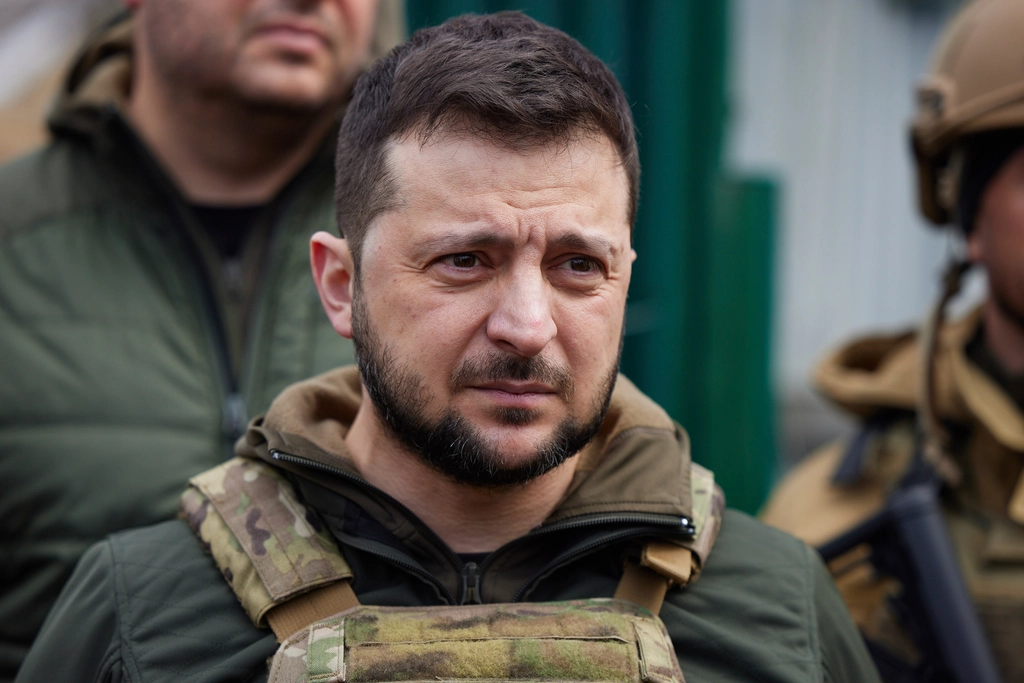
Ukrainian President Volodymyr Zelenskyy has sharply criticized the Trump diesel deal, describing the US decision to lift sanctions on Russian fuel as a betrayal of Kyiv and a weakness among American partners. The comment comes as peace negotiations between the US, Ukraine, and European allies continue in Miami, creating a stark contrast between diplomatic efforts and the sudden policy shift announced by President Donald Trump.
Zelenskyy stated that his negotiation team was being used as a “smokescreen” for the administration’s new approach to Russian energy. He expressed frustration that the decision undermined the trust built during his recent visits to Washington, where he had pleaded for stricter economic measures against Moscow. “I believe our team is simply being used as a smokescreen. And that is certainly not fair,” Zelenskyy said in a statement on Friday.
Political Fallout Over Sanctions Lift
The announcement, made by Trump on his Truth Social platform, cited the need to lower soaring fuel prices in the United States, which he attributed to the ongoing conflict with Iran. The move has drawn immediate condemnation from across the US political spectrum. Senate Democratic Leader Chuck Schumer, along with Senators Jeanne Shaheen and Elizabeth Warren, labeled the decision a betrayal of Ukraine, European allies, and US national security.
“Enough is enough,” the senators wrote in a joint statement. “The President must end his war with Iran instead of funding Russia’s war machine.” The criticism extended to some Republicans, including Congressman Don Bacon, who argued that the majority of Americans support Ukraine and called for “moral clarity not moral ambiguity” in foreign policy.
Meanwhile, diplomatic talks in Miami proceeded with US envoy Steve Witkoff and Trump son-in-law Jared Kushner meeting with Ukrainian officials. Sources briefed on the six-hour session indicated that discussions focused on a postwar economic package for Ukraine and potential new security architectures between Europe and Russia. The timing of the diesel deal announcement, coinciding with these high-level meetings, has intensified concerns in Kyiv that the US is prioritizing domestic energy concerns over Ukrainian security interests.
Escalating Strikes on Russian Infrastructure
Amid the diplomatic turmoil, Ukraine escalated its military campaign against Russian infrastructure. On Friday, Ukrainian forces struck a major datacentre operated by Yandex in the Kaluga region, south-west of Moscow. The facility, which is heavily involved in Russia’s artificial intelligence development, was partially disabled by FP-1 one-way attack drones manufactured by Ukrainian arms maker Firepoint. This marks the second such strike on a Yandex facility in two days, signaling a continued focus on disrupting Russia’s technological and military capabilities.
On the ground, the human cost of the war continues to rise. Russian strikes killed three people and wounded at least eight across Ukraine on Friday. These attacks are part of a broader escalation, with more than 50 people killed in Russian bombardments over the past three days. Ukraine’s air defense forces are struggling to counter the increasing volume of Russian strikes.
Additionally, Russia’s defence ministry claimed that its forces struck three cargo vessels in and around Ukraine’s Black Sea ports on Friday. The ministry stated that the vessels, located in Mykolaiv, Chornomorsk, and the Black Sea near Odesa, were being used to supply the Ukrainian military. Reuters could not independently verify these claims.
In a separate development, Austrian authorities arrested four Ukrainians in Vienna on suspicion of spying. Interior Minister Gerhard Karner confirmed the arrests, noting that two of the detainees were reportedly staff members of the Ukrainska Pravda newspaper. The Ukrainian embassy in Vienna has requested an explanation from Austrian authorities regarding the legal grounds for the detentions, while three of the suspects remain in custody.
Source: The Guardian
