


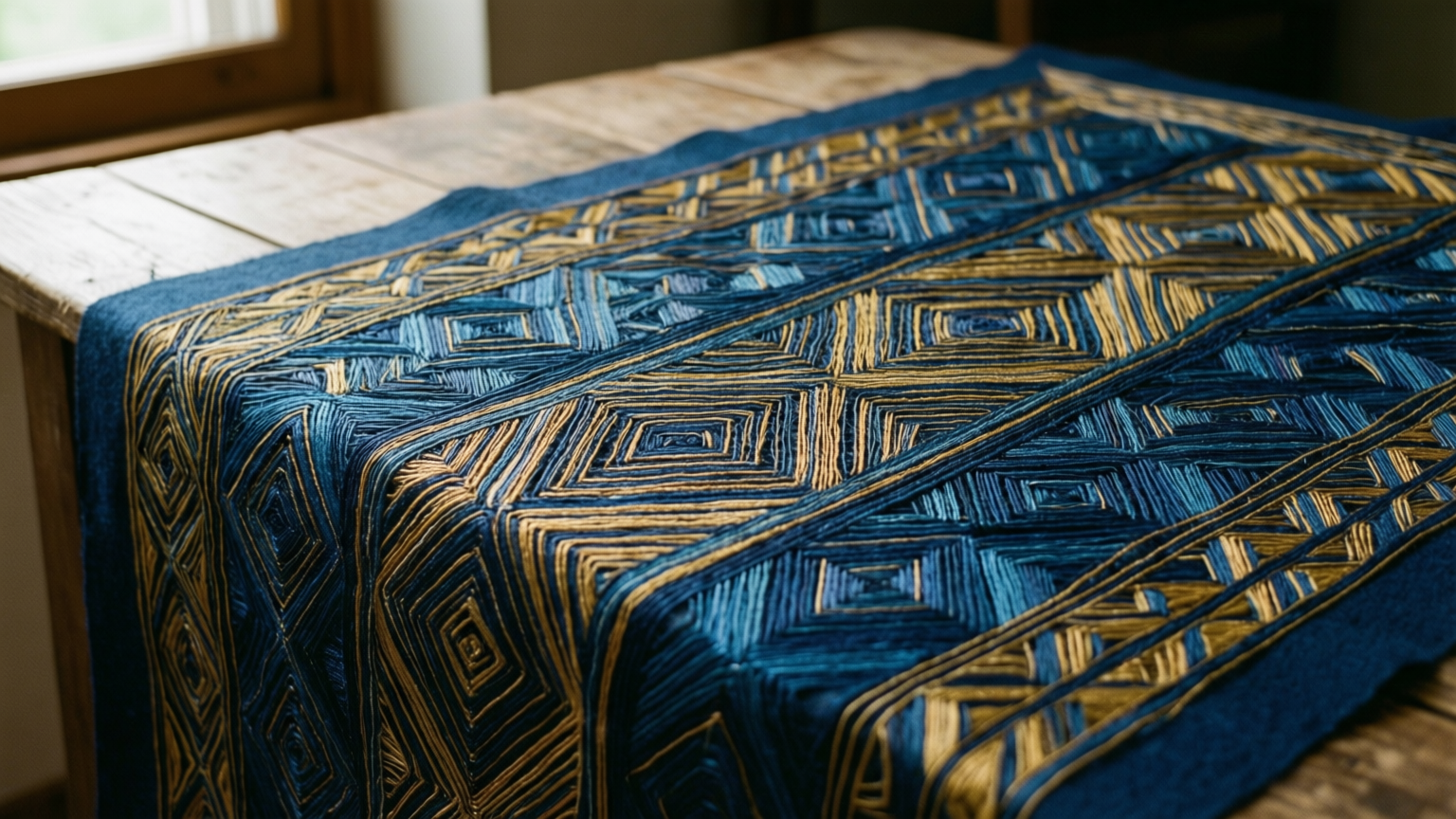
Rising Detroit artist Taylor Childs describes her hometown as a place defined by deep community ties and layered narratives. Born into a family that has lived in the city since the Great Migration, Childs draws inspiration from the historic neighborhoods that shaped her upbringing. Her work serves as a visual and tactile record of Detroit’s black history, connecting past generations to the present through fiber arts and painting.
Roots in Paradise Valley and the North End
Childs lives near the Avenue of Fashion district on Livernois Avenue, an area steeped in local heritage. Her family history is intertwined with the North End, specifically the Apex Bar, which operated as a vital cultural hub during the mid-20th century. The venue hosted early performances by blues legend John Lee Hooker in 1943 and helped establish the adjacent Paradise Valley district as a center for Black entertainment and business.
Although the Apex Bar has closed, its legacy remains a focal point for Childs. She notes that the stories of the community are embedded in the streets themselves. Her artistic practice, which began with poetry in the early 2010s and evolved into painting and fiber arts, aims to preserve these narratives. In 2025, she received the Gilda Award from Kresge Arts in Detroit, recognizing her contribution to the local cultural landscape.
Childs emphasizes that her work stands on the foundation laid by previous generations of artists. She credits mentors like Sabrina Nelson and Hubert Massey for supporting her development as a young creator. Massey, in particular, taught her mural techniques, instilling a sense of stewardship that prioritizes community growth over personal acclaim.
Modern Cultural Hubs and Design Month
While honoring the past, Childs actively participates in Detroit’s current cultural calendar. She highlights the Detroit Month of Design, an annual event held in September that transforms venues across the city. As the community arts director for the W.I.S.E. Partnership, she leads a mosaics project and hosts an annual fashion show during this period. The event provides a platform for residents and visitors to engage with the city’s status as a UNESCO City of Design.
Childs also points to the revival of Detroit’s show bars, historic venues that combine cocktail lounges with live entertainment. She frequently visits Aretha’s Jazz Café, where she performed poetry in her youth, as well as Griot Music Lounge and Cliff Bell’s. These spaces continue to serve as gathering points for the community, blending music, food, and social interaction.
For those interested in the culinary side of the culture, Childs recommends spots near the former Paradise Valley area. She notes the popularity of Fixins Soul Kitchen and the Southern-inspired menu at SavannahBlue. The Elephant Room offers a different atmosphere with its retro pub fare and tin ceilings, reflecting the eclectic nature of the neighborhood.
Contemporary Art and Local Design
Childs directs attention to several contemporary art spaces that complement the historic sites. The N’Namdi Center for Contemporary Art houses a significant collection of works by artists of African descent. Nearby, the Hope for Flowers boutique showcases designs by Tracy Reese, a Detroit native whose work has been worn by high-profile figures including Michelle Obama and Taylor Swift.
In the same building as Hope for Flowers, Cure Nailhouse offers an experimental space where manicures are treated as an art form. Visitors can view gallery pieces while enjoying coffee or cocktails. For fashion enthusiasts, Childs suggests visiting Vintage Eastern Market for curated vintage pieces or purchasing original works directly from Taylor Childs Studios.
Despite the rapid development of new construction projects like the Hudson’s, Childs maintains that the community remains the core of the city’s identity. She believes that the resilience and creativity of Detroit residents are what sustain the city. “We are who we are,” she says. “We’re not going to shrink.”
Source: Afar
