


Meta has officially released Muse Wonder and Muse Wonder Full, marking the company’s first entry into the frontier AI model market. The models were announced on Monday by Meta’s Superintelligence Lab, ending a period where the tech giant focused on lighter, lower-latency options rather than competing directly with state-of-the-art systems from rivals like OpenAI and Anthropic.
Where the earlier Muse Spark model was designed for speed and low latency, the new Wonder models are larger and built for higher capability. According to Meta’s testing, Muse Wonder and Muse Wonder Full achieve benchmark scores comparable to Fable 5.1 and GPT-6 Astra. The models also show improved performance on complex tasks, including coding.
Pricing and Access Models
The models are accessible through the Meta Model API with specific pricing structures. Muse Wonder will cost $4 per million input tokens and $20 per million output tokens. This pricing places it roughly equivalent to competitors like GPT-6 Sol or Opus 5.5.
A distinct difference exists between the two new releases regarding availability. While Muse Wonder is available via the API, Muse Wonder Full will only be available to subscribers of Muse Code. It will not be served through the public API. Both models will also be used to power the Muse agent, Meta’s personal assistant tool.
Meta’s blog post described the release as “the next step on our scaling ladder and a major leap toward personal superintelligence.” This follows a restructuring of Meta’s AI efforts in August of last year, led by Scale AI founder Alexandr Wang. Since that time, the company has released Muse Spark and the Muse agent but avoided releasing state-of-the-art models until now.
Active Memory and Training Infrastructure
A key feature of the new models is “active memory,” a capability designed to help the AI retain and synthesize information provided by users over long periods. Meta emphasized this feature in its interest in developing personal assistants that can perform tasks over days, weeks, or months.
To measure this capability, Meta highlighted the MemoryBench benchmark, which tests continual learning and memory construction. According to the company’s testing, Muse Wonder scores higher on MemoryBench than Fable, Opus, or Astra.
“We put a tremendous amount of effort into making sure your model can remember what’s important to you over days, weeks, months, and beyond,” said research scientist Kavya Kopparapu in a video accompanying the launch.
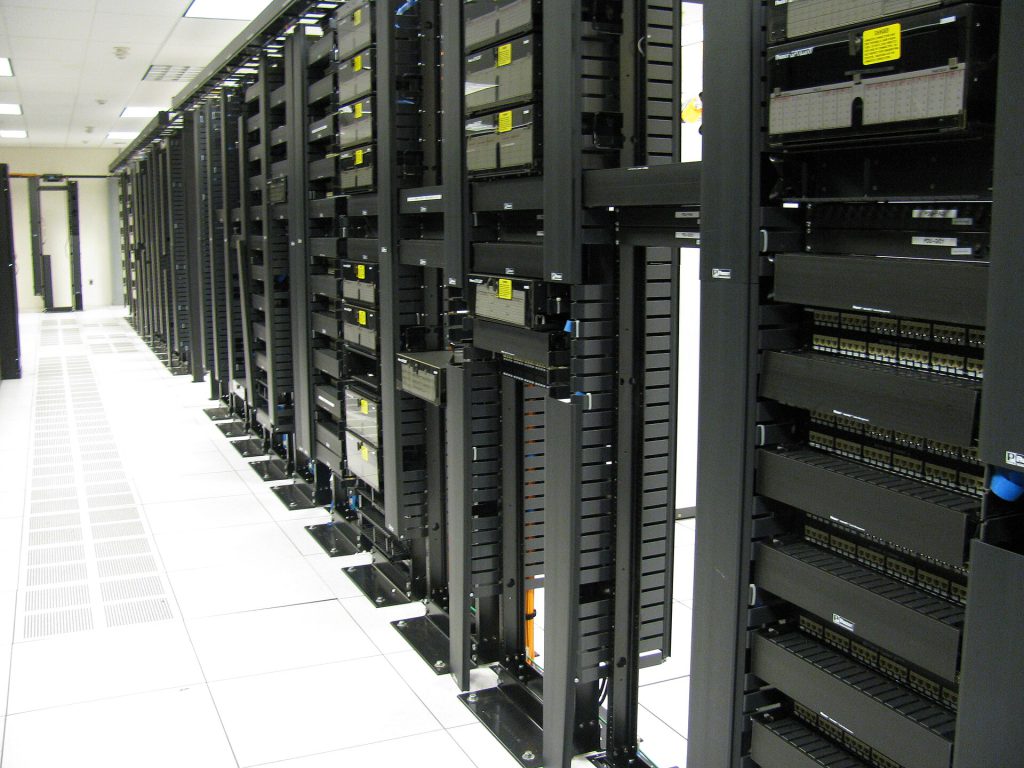
The models were trained at Meta’s Prometheus data center in central Ohio. This facility came online earlier this year and represents the infrastructure behind Meta’s latest push into high-performance AI. The release of Muse Wonder signals a shift in Meta’s strategy, moving from lightweight models to competing directly in the frontier AI space with robust benchmarking and memory capabilities.
Source: TechCrunch
