


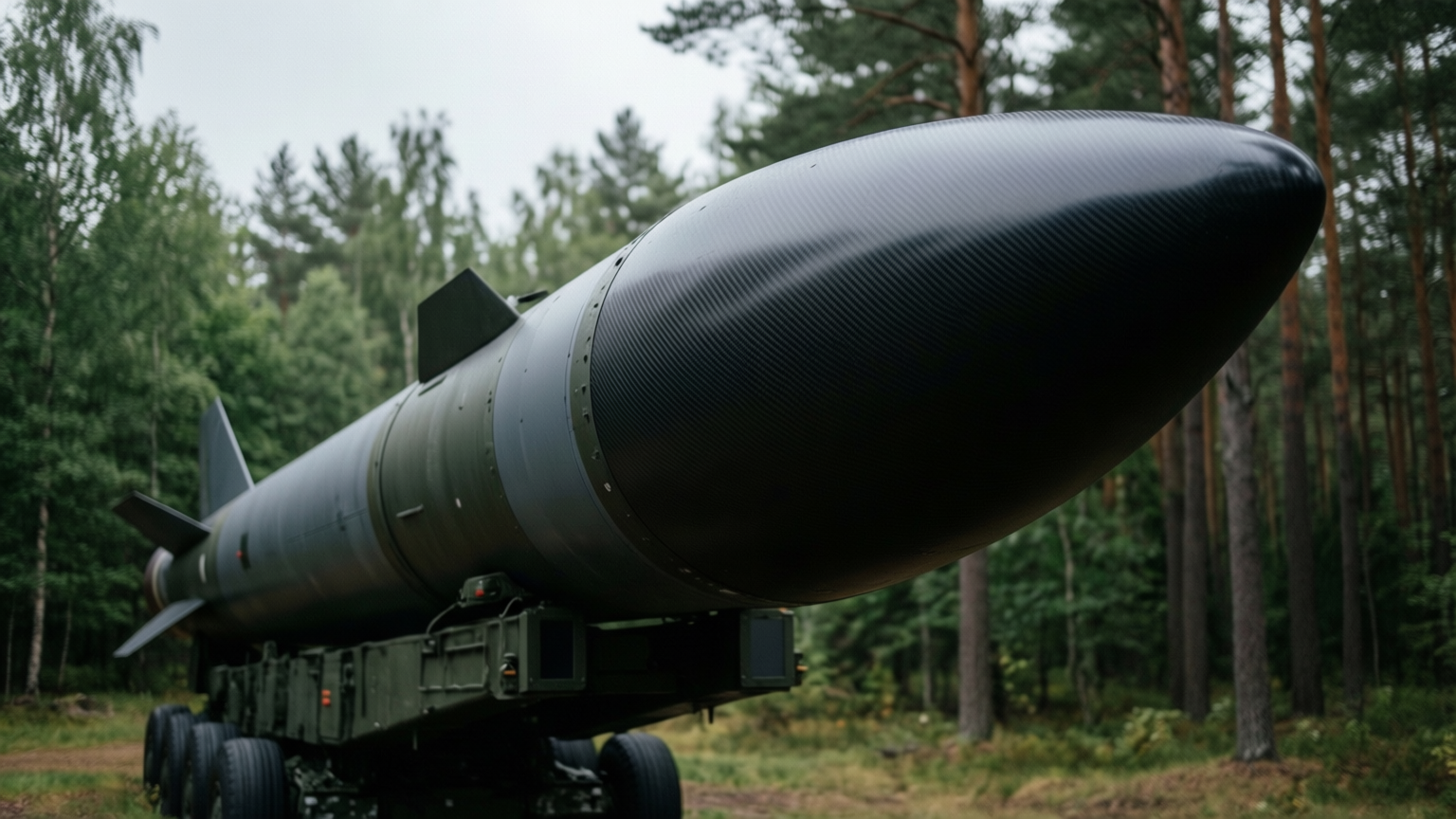
Ukraine’s military intelligence agency, the GUR, has released details regarding a new class of Russian cruise missiles that were first deployed in September and October of this year. The weapon, known as the Filin, represents a shift in Moscow’s approach to the conflict, utilizing 3D-printing technology to reduce production costs while maintaining high performance metrics.
Filin Missile Performance and Range
According to the GUR, the Filin missile is significantly faster than many existing Russian unmanned systems. The agency reported that the cruise missile can reach speeds of 500 mph, a substantial increase over the Geran-5 drone, which tops out at 270 mph and has been noted for structural failures during flight. The Filin also boasts a range of 745 miles, allowing it to strike targets deep within Ukrainian territory.
While these speeds do not match those of modern fighter jets like the F-16 Fighting Falcon, the increased velocity presents a new challenge for Ukrainian air defense systems. The combination of speed and range makes the Filin more difficult to intercept compared to slower, less robust aerial threats.
Western Electronics and Cost Efficiency
The GUR investigation revealed that the Filin missile relies heavily on commercially available components from both domestic and foreign sources. The fuselage is constructed from carbon and fiberglass, with additional parts manufactured using 3D printing. This manufacturing method allows for the creation of unique geometries that are difficult to produce with traditional methods, such as specific jet-engine turbine blades.
Crucially, the missile incorporates electronic components from Western nations. The GUR identified the origins of 70 specific parts, noting that 35 components originate from the United States. Other parts come from China, Japan, Switzerland, Taiwan, and the Netherlands. These components include flight controllers, inertial navigation systems, equipment controllers, and counter-jamming hardware. The missile uses Russian-made engines rather than the Chinese turbojets found in many Shahed drones.
Cost is a primary driver for this design. The Filin is far more affordable than the traditional Kh-101 cruise missile, which costs over $2,000,000 per launch. While the exact price of the Filin is not disclosed, the significant reduction in cost has raised fears among Ukrainian officials that Russia may employ “missile spam” tactics. This strategy involves launching large volumes of cheaper weapons to overwhelm air defense systems, a tactic that has proven effective in previous phases of the war.
The shift toward 3D-printed weapons reflects the attritional nature of the conflict, which has lasted for several years. Both sides are seeking more cost-efficient ways to conduct warfare, as traditional weapons and personnel have become increasingly expensive and scarce. The Filin allows Russia to maintain pressure on Ukrainian defenses without the prohibitive costs associated with older cruise missile models.
Source: Tom’s Hardware
