


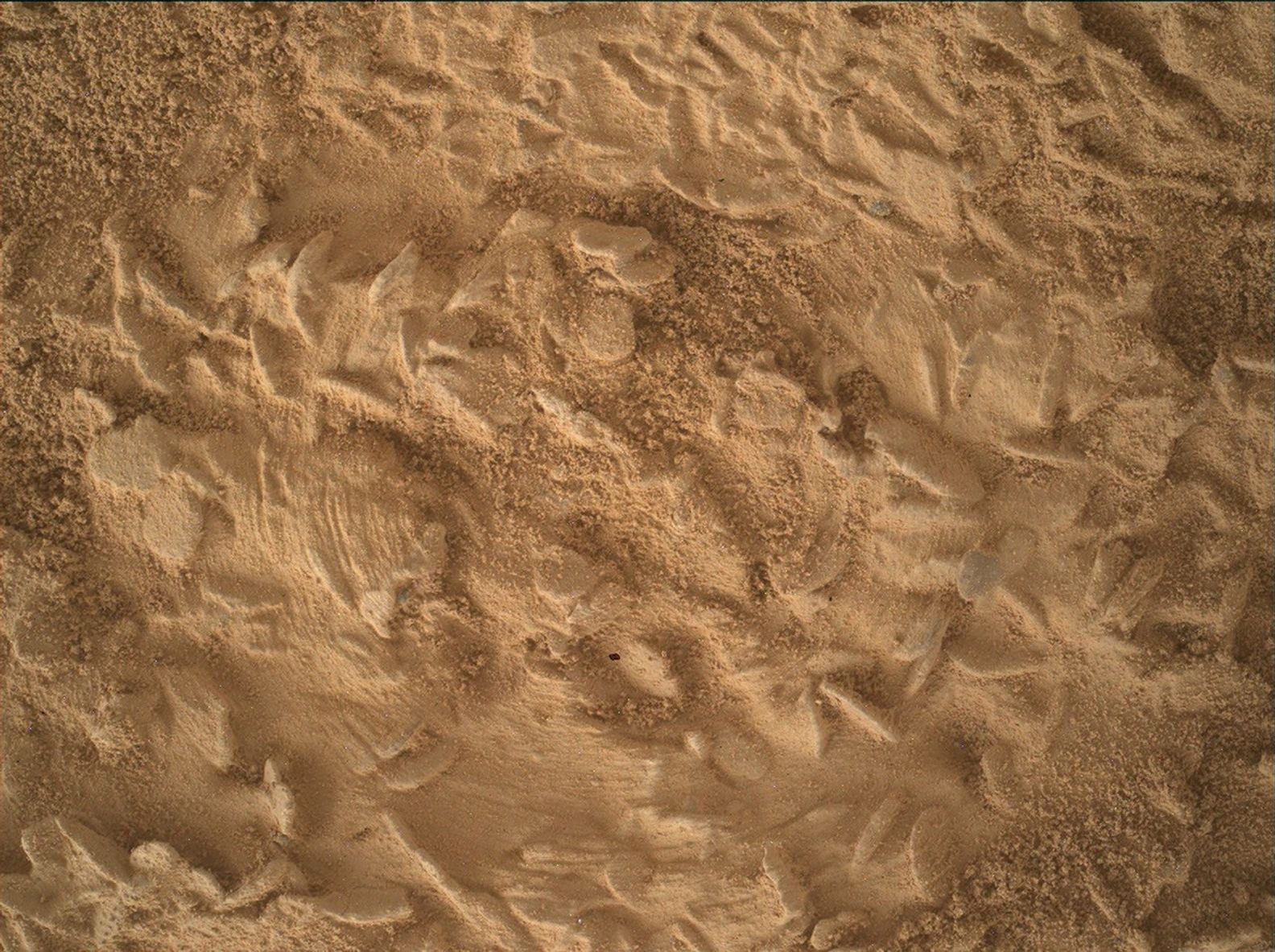
NASA’s Curiosity rover is preparing for a new drilling campaign at a location on Mars named Nazca. The rover has returned to a spot just a few meters away from a previously studied rock block called Chiu Chiu. While Chiu Chiu itself was not a suitable candidate for drilling, the adjacent block proved to be much more promising. After receiving close-up views from post-drive imaging, the science team confirmed that the new site was jam-packed with disc- and needle-shaped lumps similar to those found at Chiu Chiu. The team quickly gave the go-ahead to proceed with preparations for drilling at Nazca.
Investigating Ancient Crystal Forms
One major hypothesis about how the distinctive disc and needle textures formed is that these shapes were originally created during the growth of crystals. Minerals tend to grow into specific shapes depending on their microscopic crystal structure. The relatively large sizes of the crystal forms at Nazca and Chiu Chiu are providing clues about the temperature at the time when they grew and the availability of salts and fluids.
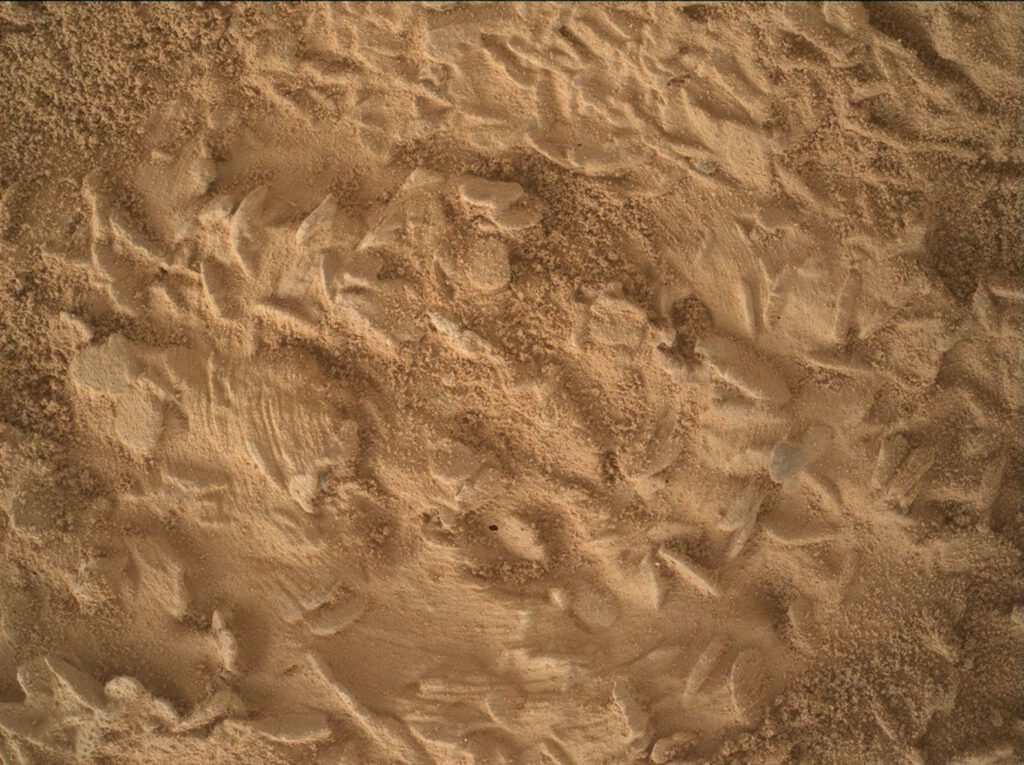
Scientists cannot necessarily assume that the modern-day composition represents the original mineral. Sometimes mineral crystals are replaced by other minerals some time after original crystallization. The new minerals are then known as pseudomorphs because they have the same shape as the first minerals but not the same composition or molecular structure. Understanding this process is key to interpreting the geological history of the area.
Advanced Imaging and Depth Profiling
As the team prepared for the drill preload test, they also planned several special observations aimed at highly detailed characterization of the crystal forms. The Mars Hand Lens Imager, or MAHLI, will execute a Quantitative Relief Model observation. This consists of five overlapping images taken at slightly different geometries. The combination of these images will enable a detailed three-dimensional relief model to be constructed. In addition, MAHLI will add extra frames to its highest-resolution imaging by doubling the number of focus mechanism steps. Together, these observations will increase the resolution of the 3D models of the crystal forms.
Meanwhile, the Chemistry and Camera instrument, specifically its Laser-Induced Breakdown Spectrometer (LIBS) component, will conduct a depth profile experiment. This will obtain compositional information from slightly deeper layers within a nearby crystal-form-rich target named Toucan. Normally, the 150 LIBS laser shots from each sol’s observation are spaced out over a five-point raster at 30 shots per point. This time, the team is concentrating all 150 laser shots on the same spot on the rock. Since each laser shot vaporizes a very small amount of the rock to form a plasma, the 150-shot profile should penetrate approximately five times deeper than a normal 30-shot point observation. This will allow scientists to observe the composition deeper inside the exposed crystal form and see whether it is different from the surface-level composition.
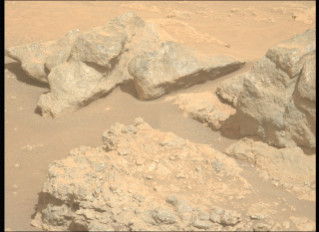
The LIBS, Dynamic and Thermal Radiometer (DRT), and Alpha Particle X-ray Spectrometer (APXS) will also be applied to the Nazca spot before the preload test to characterize its surface composition as thoroughly as possible. The third LIBS observation of the plan will target Condor, a nearby block in which a finely layered texture is exposed.
Monitoring Martian Clouds
The mission also continued to observe the modern Martian environment as twilight cloud season begins. The plan included some nighttime imaging of Phobos, one of Mars’ two satellites. Capturing images of Phobos and the nearby sky when Phobos is full can show sunlight reflecting off the moon and scattering in the Martian atmosphere. This provides a good way to estimate the particle sizes in the Martian clouds. While similar measurements can sometimes be made with solar observations, the Phobos data allow scientists to measure cloud particle sizes later in the night. The team expects to be measuring high-altitude carbon dioxide clouds in this observation.
Source: NASA
