


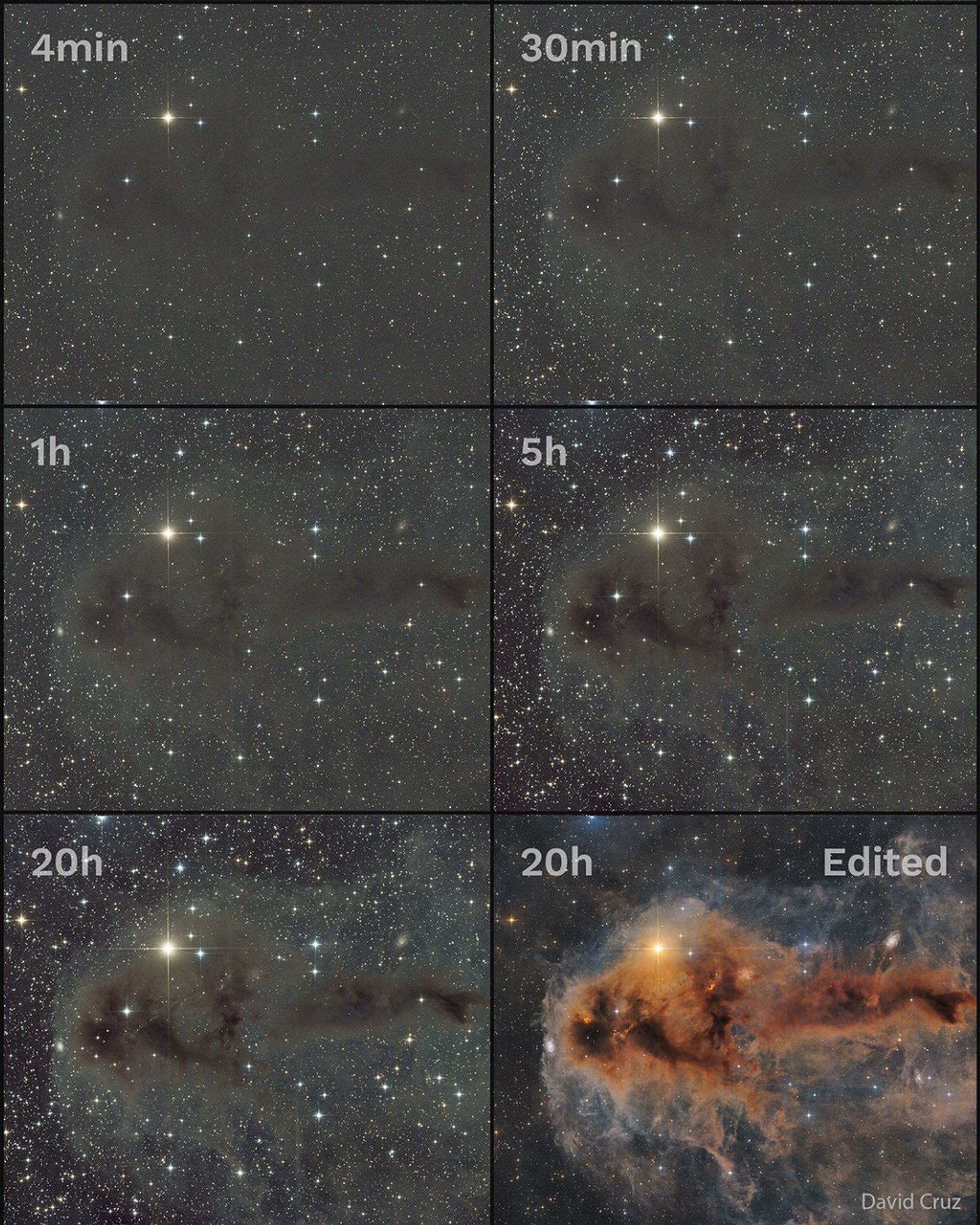
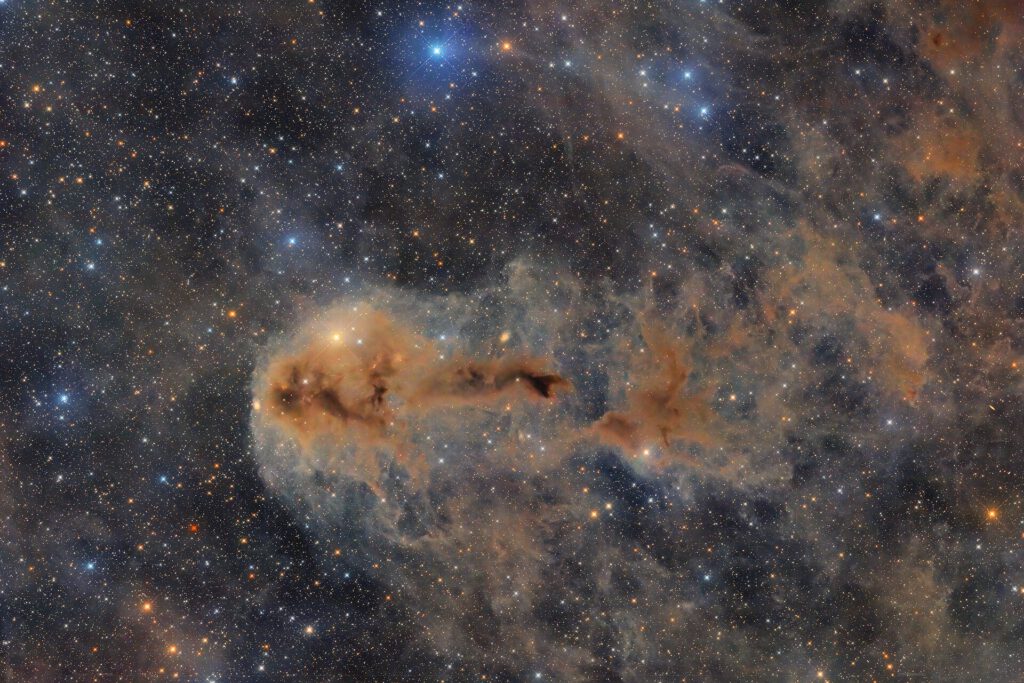
NASA’s Astronomy Picture of the Day for November 23, 2026, showcases a deep-space view of Lynds 1251, a dense cloud of interstellar dust and gas. This celestial structure, often referred to as the Rotten Fish Nebula, stands out for its opacity and the energetic processes occurring within its dark boundaries.
Unveiling the Dark Nebula
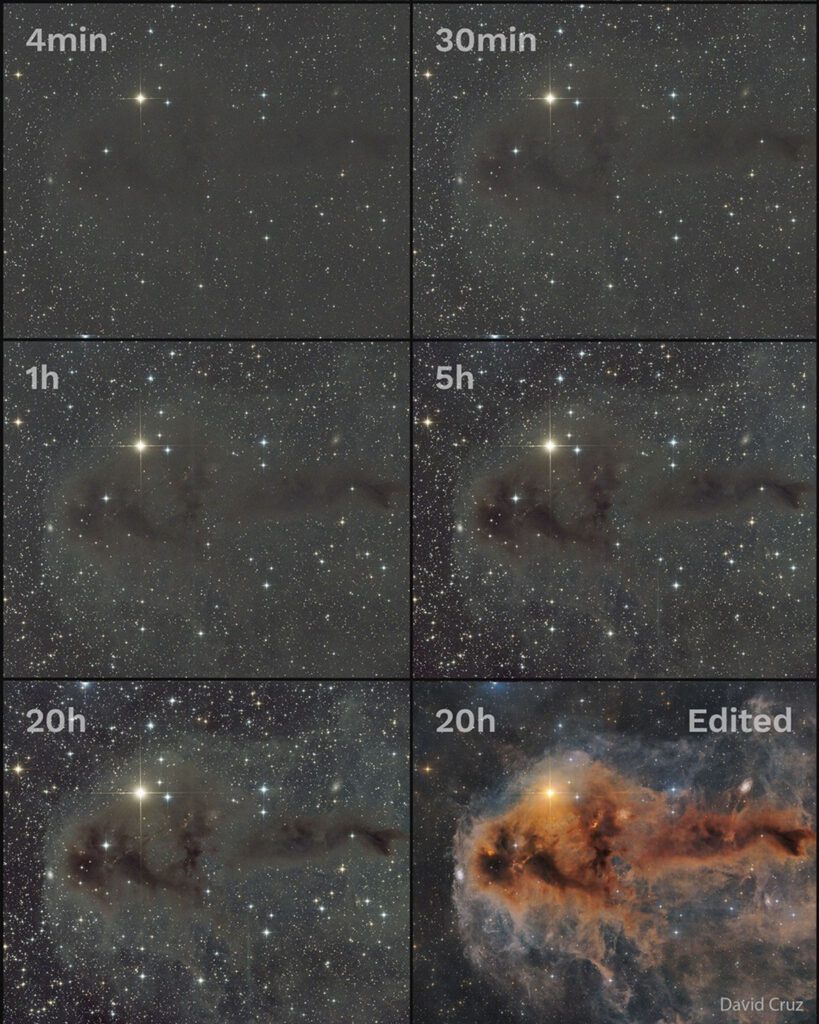
The featured image captures the nebula through a long-exposure technique that simulates the human eye’s gradual adaptation to low light. According to the explanation provided by the astronomy team, staring into this region of space for twenty hours would reveal a strange, dark structure emerging from the background starfield. Digital processing was then applied to brighten the image and enhance the colors, making the details of this star-forming region visible.
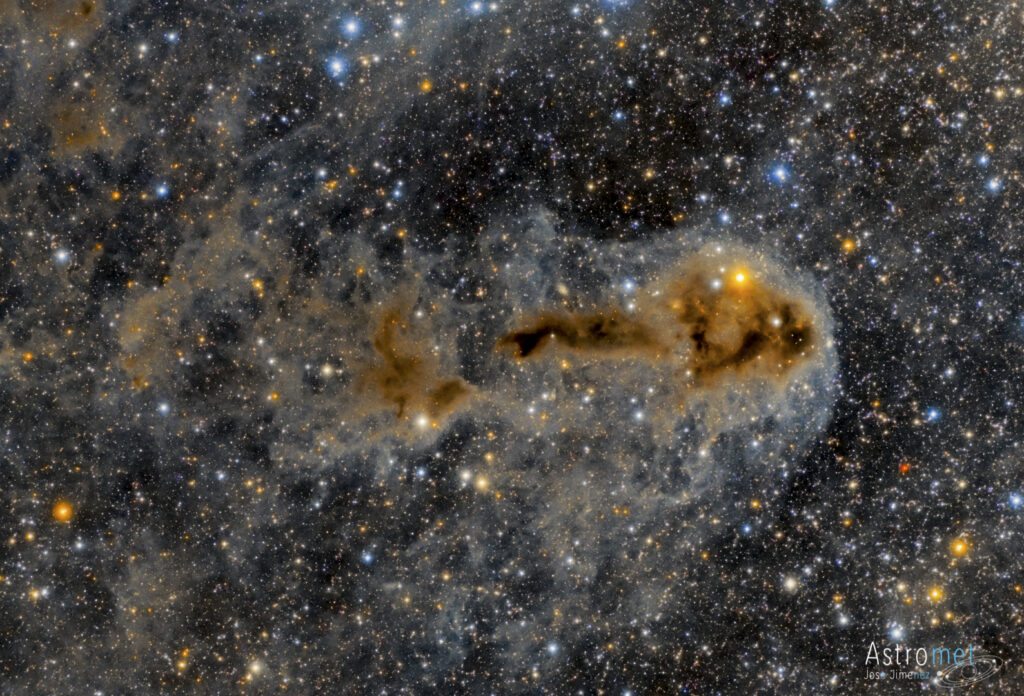
Lynds 1251 is characterized by opaque brown-appearing dust that blocks the light from stars behind it. This dust is not merely a barrier; it is the raw material for new stars. The region is home to young stars that are currently in the process of forming, surrounded by the very dust clouds that once obscured them.
Energy and Stellar Winds
Beyond the static dust, the nebula is a site of dynamic activity. The image reveals evidence of energetic shock waves, fast stellar winds, and powerfully beamed jets. These phenomena are typical of active star-forming regions, where the birth of new stars disrupts the surrounding gas and dust.
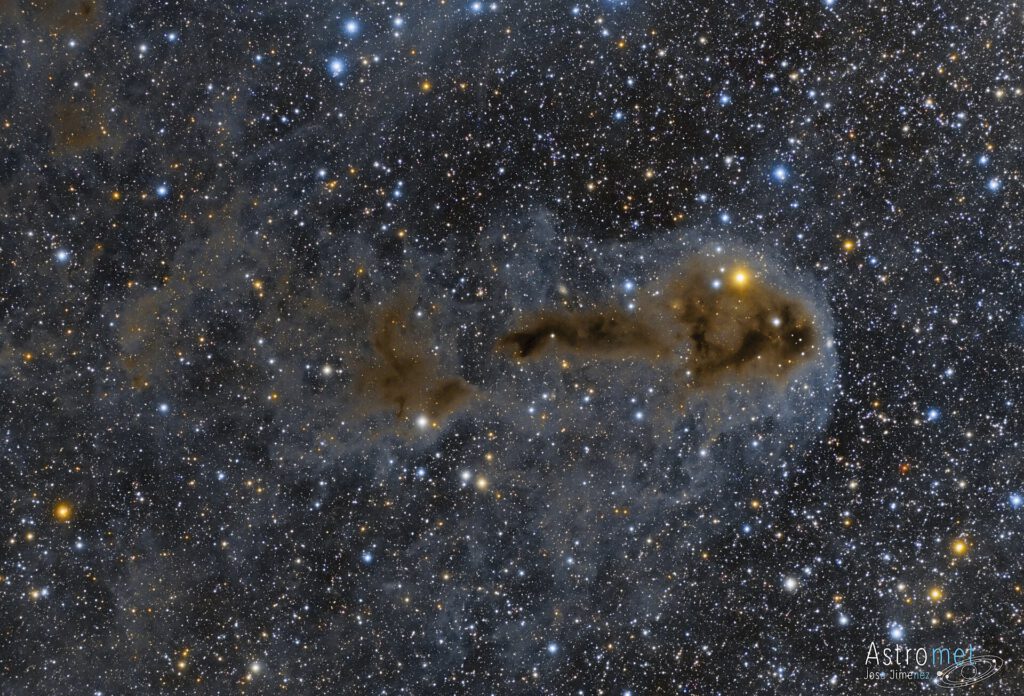
The “Rotten Fish” nickname, while informal, refers to the nebula’s shape and the turbulent nature of the gas within it. The combination of dark dust lanes and bright, energetic emissions creates a striking contrast that highlights the complexity of interstellar environments.
Tomorrow’s featured image will shift focus from individual nebulae to larger structures, showcasing galaxies ringing in a cosmic display.
Source: NASA
