


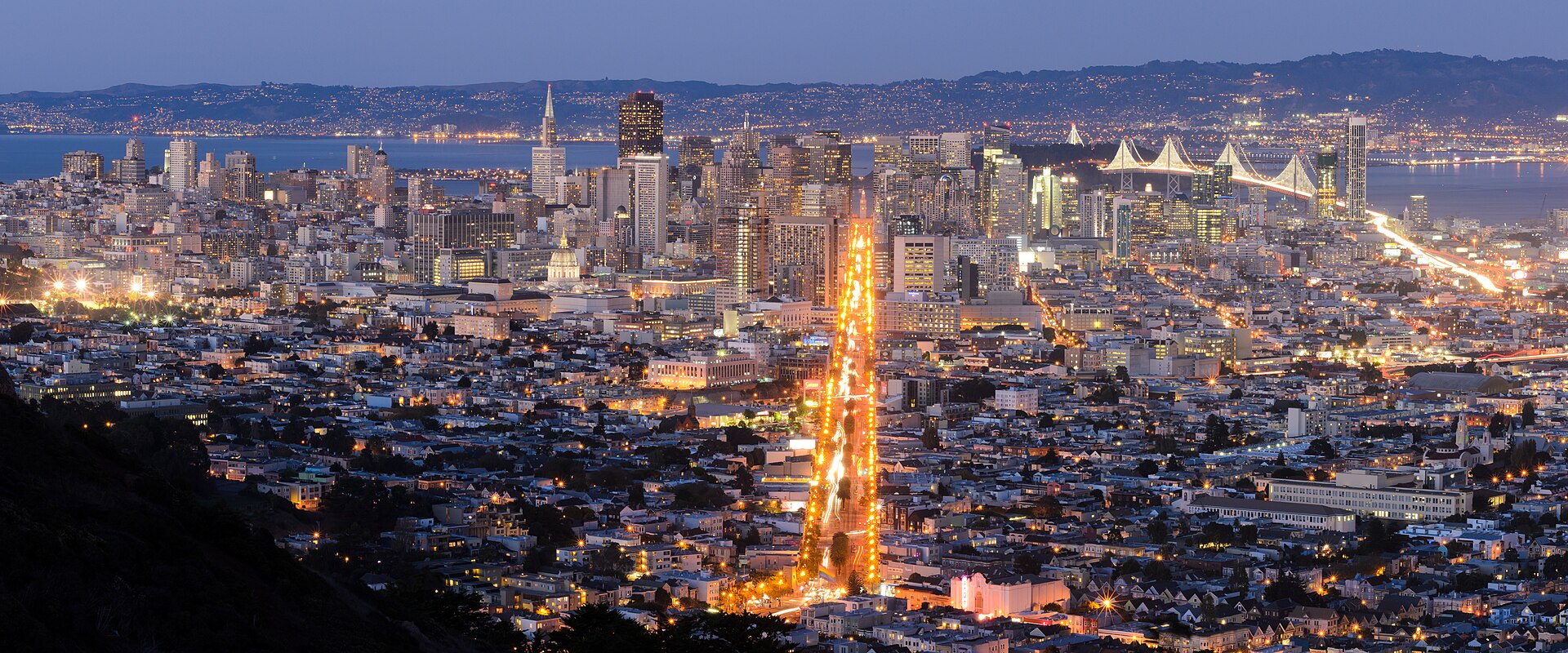
San Francisco is experiencing a significant economic rejuvenation, with artificial intelligence serving as the primary engine for growth. The city, which suffered a resident exodus and downtown decline during the pandemic, is now seeing soaring rents, falling office vacancies, and a surge in business activity. This revival is largely fueled by the presence of leading AI companies such as OpenAI and Anthropic, which have attracted top engineering talent and substantial venture capital.
Anthropic listing and Nvidia profits
The momentum in the local tech sector was highlighted last week when Anthropic, the company behind the Claude chatbot, listed on New York’s Nasdaq stock exchange. This move adds to the city’s status as a global hub for AI development, with thousands of start-ups establishing a foothold in the area. The economic impact extends beyond the tech sector itself. Lauren Goldboss, who owns a small dog-walking company, has expanded her staff and fleet to meet demand from AI start-ups using her new office service, Paw Perk. Her business growth illustrates how the AI boom is benefiting other local industries.
However, the rapid expansion has sparked concerns about a potential market correction. The International Monetary Fund recently warned that a significant downward correction in AI share prices is a possibility. These fears were compounded by a scandal involving Jensen Huang, the former boss of Nvidia, which caused some wider declines in AI stocks. Despite this turbulence, Nvidia remains highly profitable. The company reported that its latest quarterly profits doubled from a year earlier to reach $65bn (£49bn).
San Francisco AI boom vs Silicon Valley
San Francisco is uniquely positioned to be affected by any downturn in the AI sector. A study found that 60% of all venture capital invested in US AI firms from 2023 to 2025 went to companies located in San Francisco. This concentration dwarfs the percentage given to companies in Silicon Valley, which lies 40 miles to the south. Consequently, a crash in San Francisco could hit the city harder than the wider Bay Area.

Despite the heavy investment, the AI boom has not generated the same level of employment as previous tech cycles. Jeff Bellisario, executive director of the Bay Area Council Economic Institute, noted that hiring is not on the scale expected given the amount of venture capital and new company formation. Ted Egan, the chief economist for the City and County of San Francisco, added that while it is a good time for tech, the city is not seeing tonnes of overall tech job growth. The city remains approximately 35,000 jobs short of its pre-pandemic peak, according to Enrico Moretti, an economics professor at the University of California, Berkeley.
Most spending by AI firms is directed toward data centres and computing power, much of which is located outside the Bay Area. San Francisco acts as the brain of the boom, but not the brawn. If a crash occurs, the main impact would likely be on the local service sector. Less AI hiring and potential layoffs would ripple through restaurants, retail, and personal services. Office vacancies could rise, reducing downtown foot traffic and weakening rents and house prices.

Some factors may cushion the blow. Healthcare and tourism are also growing in the city, helped by improved downtown safety and cleanliness. Egan stated that tourism growth has been healthy, signaling confidence in San Francisco. He does not expect an AI crash to fundamentally alter the city’s economic trajectory, viewing it as a hiccup rather than a major course correction. City officials are encouraged to maintain financial reserves and encourage growth in sectors beyond technology. For business owners like Goldboss, the strategy is to build while the boom lasts and adapt if the market shifts.
Source: BBC
