


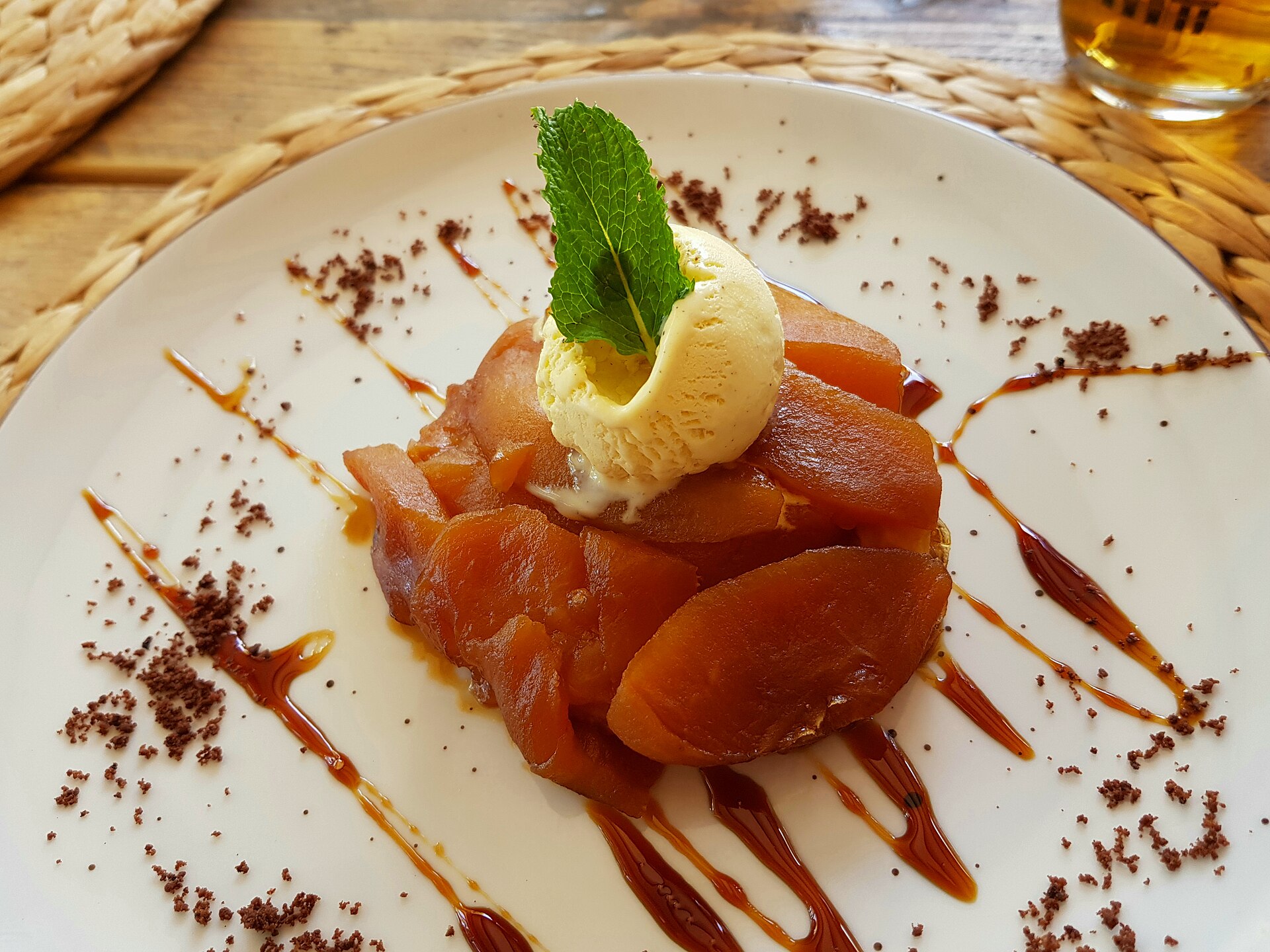
Autumn evenings in London often bring a chill that calls for something warm and sweet. Chef Jackson Boxer, known for his work at Brunswick House and Vesper, has developed a dessert that captures the essence of a tarte tatin without the technical difficulty of handling hot caramel or rolling pastry. The result is a straightforward roast apples recipe that delivers deep, bittersweet caramel notes and tender fruit.
Simplifying the Tarte Tatin Method
The traditional tarte tatin relies on a precise balance of butter, sugar, apples, and puff pastry. While the flavor profile is iconic, the process requires significant skill to achieve the right level of caramelisation without burning the sugar or undercooking the fruit. Boxer argues that the pastry often obscures the quality of the apples themselves. By removing the pastry layer, the focus shifts entirely to the fruit and the sauce it creates.
This approach eliminates the risk of handling seething caramel, which can be dangerous for home cooks. Instead, the butter and sugar interact directly with the apples in the pan. The fruit releases pectin and juices that help thicken the sauce, creating a natural toffee consistency. The apples retain their structure, avoiding the mushy texture that can occur when fruit is overcooked.
Preparing the Fruit for Caramelisation
The key to this dish lies in the preparation of the apples. Boxer recommends using Braeburn or Discovery varieties, which hold their shape well during roasting. The apples are peeled, cored, and cut into quarters. Rather than cooking them immediately, the pieces are placed on a tray and left uncovered in the refrigerator for two hours. This drying step is critical, as it removes excess moisture from the fruit’s surface.
Removing moisture ensures that the sugar caramelises evenly rather than steaming the apples. For those who do not have time for refrigeration, the apples can be dried in an oven set to a very low temperature, approximately 80C or 60C with a fan, for 30 minutes. This step guarantees that the final dish has a nice, even browning and that the apples maintain their integrity.
The cooking process begins in an ovenproof nonstick pan. Softened butter is pressed across the base of the pan, followed by an even layer of caster sugar. The dried apple quarters are arranged cut-side up, often in a fan shape to maximize surface area. The pan is placed on a medium heat on the stovetop for five to ten minutes. During this time, the cook should gently shake the pan to help the sugar melt and coat the apples evenly. The goal is to reach a dark, rich caramel colour.
Once the sugar has melted and caramelised, the pan is transferred to an oven preheated to 210C, or 190C with a fan. The apples bake for 30 minutes until they are browned and bubbling. After removing the pan from the oven, the dessert should cool for 10 minutes. This resting period allows the sauce to thicken slightly and makes the dish easier to serve.
Serving and Variations
The finished roast apples are divided between warmed bowls. The dish is traditionally served with a generous spoon of soured cream, which cuts through the sweetness of the toffee sauce. A dusting of ground cinnamon and a handful of toasted walnuts adds texture and warmth. Boxer notes that the dish is particularly suitable for outdoor settings, such as after watching fireworks, where the smoke can add an extra dimension to the flavour.
The recipe requires only a few core ingredients: six apples, 100g of unsalted butter, 100g of caster sugar, and 500g of soured cream for serving. Ground cinnamon and toasted walnuts are used as garnishes. This simplicity allows the natural acidity of the apples to shine, tempered by the rich, caramelised sugar. It is a practical solution for those who want the complex flavours of a classic French dessert without the labour-intensive preparation.
Source: The Guardian
